



Why Can RO Permeate Still Contain Excessive Bacteria Even Though RO Membranes Trap Bacteria?| Insights by AQUALITEK
RO membranes can physically reject bacteria, yet permeate bacterial counts may still exceed limits. This Best-practice article explains the real causes, risks, and proven control measures in industrial and commercial RO systems.
- Introduction
- Key Point: RO Membranes Block Bacteria, But RO Systems Do Not Automatically Sterilize Water
- Main Reasons Why RO Permeate Can Still Have High Bacterial Counts
- 1. Bacterial Growth on the Permeate Side (Biofilm Formation)
- 2. Contamination in Product Water Tanks and Distribution Systems
- 3. Micro-Leaks or Seal Failures in the Membrane System
- 4. Biofouling and Bacterial Shedding from the Membrane Surface
- 5. Recontamination After the RO Unit (Post-Treatment Equipment)
- 6. Infrequent System Operation or Long Shutdown Periods
- 7. Incorrect Sampling or Testing Methods
- How to Identify the True Source of Bacteria
- Quick Diagnostic Approach
- Effective Control Measures
- Best Practices to Control Bacteria in RO Permeate
- Important Misconception to Avoid
- Conclusion
Introduction
Reverse Osmosis (RO) membranes have pore sizes small enough to physically reject bacteria, typically ranging from 0.2–2.0 μm, while RO membranes effectively block particles larger than ~0.001 μm.
So why do some RO systems still produce permeate with excessive bacterial counts?
In practice, bacterial contamination in RO permeate rarely originates from membrane passage. Instead, it is usually caused by system design, operation, or post-treatment issues. This article explains the real mechanisms behind this phenomenon and how to control them.
Key Point: RO Membranes Block Bacteria, But RO Systems Do Not Automatically Sterilize Water
RO is a physical separation process, not a sterilization process. Even when membranes are intact, bacteria can still appear in permeate due to secondary contamination.
Main Reasons Why RO Permeate Can Still Have High Bacterial Counts
1. Bacterial Growth on the Permeate Side (Biofilm Formation)
Even though bacteria cannot pass through intact RO membranes, they can grow downstream if conditions allow.
Common causes:
•Low mineral content permeate (favorable for regrowth)
•Warm water temperature
•Stagnant water zones
•Long retention time in permeate piping or tanks
Once bacteria colonize the permeate side, RO offers no further barrier.
2. Contamination in Product Water Tanks and Distribution Systems
Product water tanks are the most common source of bacterial contamination.
Typical issues:
•No regular tank cleaning or disinfection
•Dead corners or poor tank design
•Atmospheric vents without sterile filters
•Long-term low turnover of stored water
⚠ Even perfectly clean RO permeate can become contaminated within hours in an unprotected tank.
3. Micro-Leaks or Seal Failures in the Membrane System
Bacteria may bypass membranes through:
•Damaged O-rings
•Improper membrane installation
•Cracked end caps
•Leaking interconnectors
These defects allow feed water to short-circuit directly into permeate flow, carrying bacteria with it.
4. Biofouling and Bacterial Shedding from the Membrane Surface
In biofouled systems:
•Bacteria attach to the feed side
•Portions of biofilm can detach
•Bacterial fragments or cells may migrate downstream via leaks or turbulence
This does not mean bacteria pass through the membrane pores, but rather enter through structural vulnerabilities.
5. Recontamination After the RO Unit (Post-Treatment Equipment)
Common post-RO contamination sources:
•Mixed-bed ion exchange resins
•UV systems with insufficient dose
•Cartridge filters without regular replacement
•Polishing filters acting as bacterial incubators
Any downstream unit without disinfection control can negate RO’s bacterial barrier.
6. Infrequent System Operation or Long Shutdown Periods
During shutdown:
•Water stagnates
•Residual disinfectants are absent
•Temperature rises
This creates ideal conditions for bacterial multiplication in:
•Permeate piping
•Pressure vessels
•Tanks
7. Incorrect Sampling or Testing Methods
Sometimes the issue is not the water—but the test.
Examples:
•Non-sterile sampling containers
•Sampling after long stagnation
•Poor laboratory handling
•Biofilm detachment during sampling
Always confirm contamination with repeat, controlled sampling.
How to Identify the True Source of Bacteria
Quick Diagnostic Approach
|
Test Location |
Interpretation |
|
RO permeate outlet |
If clean → contamination is downstream |
|
Tank inlet vs outlet |
Tank-related growth |
|
Before & after UV |
UV effectiveness |
|
Individual membrane trains |
Localized leakage or biofouling |
Effective Control Measures
Best Practices to Control Bacteria in RO Permeate
✔ Regular disinfection of permeate tanks
✔ Use of sterile air filters on tank vents
✔ Continuous or periodic UV sterilization
✔ Eliminate dead legs in piping
✔ Maintain regular system operation
✔ Periodic hot water or chemical sanitation (if compatible)
✔ Strict CIP and flushing procedures
Important Misconception to Avoid
❌ “RO water is sterile by default”
❌ “If bacteria appear, the membrane must be broken”
In reality:
RO membranes block bacteria, but RO systems require hygienic design and operation to maintain microbiological quality.
Conclusion
Excessive bacteria in RO permeate are almost never caused by bacteria passing through intact RO membranes. Instead, they result from post-membrane contamination, biofilm growth, seal leakage, or storage and distribution issues.
Understanding this distinction allows operators to fix the real problem, avoid unnecessary membrane replacement, and maintain stable microbiological control.



Request More Information or Expert Advice
Share a few details, and we’ll provide deeper insights, tailored suggestions, or product support.
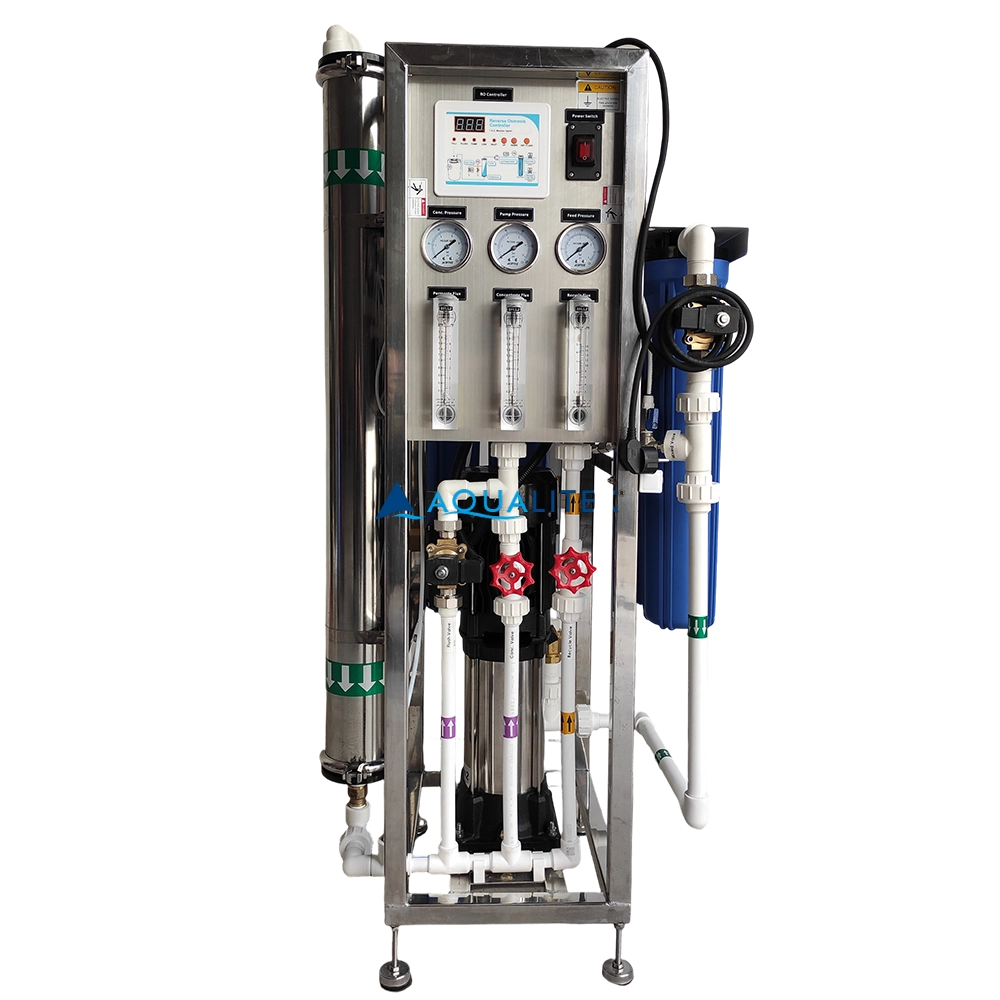
Our 500 LPH Reverse Osmosis (RO) System is engineered to provide high-quality purified water for commercial applications. Designed with advanced RO technology, durable components, and a user-friendly interface, this system ensures consistent performance, low maintenance, and long-term reliability.
With its compact design and robust skid-mounted frame, it’s an excellent choice for businesses that demand efficiency and quality in water purification.

AQUALITEK 20 TPH Uninterrupted (1 Working + 1 Standby) Ultrafiltration System delivers continuous, energy-efficient water purification for industry. Industrial Ultrafiltration System 20 TPH; 20 TPH Ultrafiltration Water Treatment Plant — high flux, low maintenance, reliable performance.
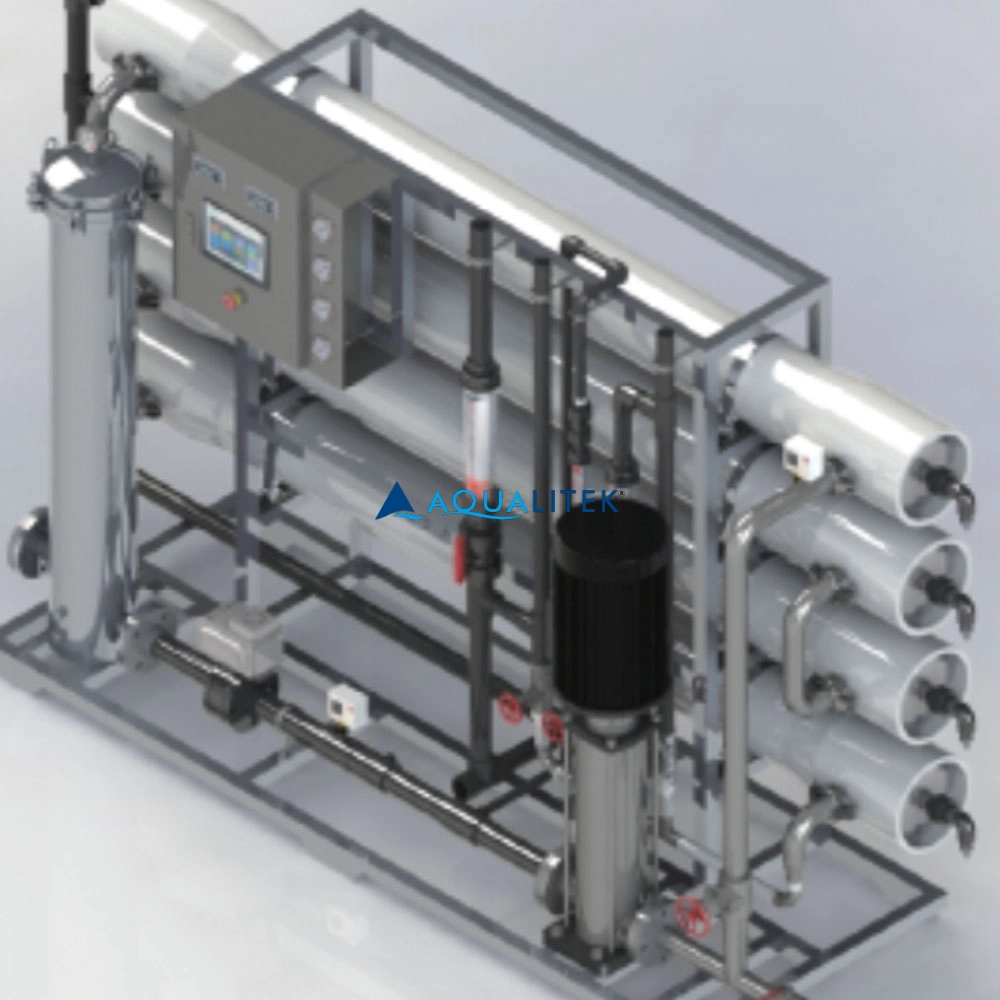
BWE series Reverse Osmosis (RO) systems are pre-engineered and pre-assembled units with 8” membrane housings for brackish water(higher TDS).The large volumes can help meet your a variety of industrial applications.T hey are designed for overall superior performance, high recovery rates and offer great savings with low maintenance and operation costs.

-
An IBC (Intermediate Bulk Container) tank is a robust, reusable industrial-grade vessel designed for the storage and transport of liquids, powders, and granules. Its space-efficient cubic shape and integrated pallet base make it ideal for easy handling and stacking, offering a cost-effective solution for bulk quantities.
Copyright © 2025 AQUALITEK. All rights reserved.
AQT
AQT