



Slight Water Seepage at Both Ends of the RO Membrane Housing: Is It Serious and How Should It Be Handled?Insights by AQUALITEK
Slight water seepage at both ends of an RO membrane housing is a common issue, but it should never be ignored. This article explains the causes, risks, inspection steps, and correct handling methods to prevent membrane damage and system failure.
- Introduction
- Is Slight Seepage at the Membrane Housing Ends Serious?
- Common Causes of Water Seepage at Both Ends
- 1. Aging or Damaged O-Rings
- 2. Improper End-Cap Installation
- 3. Contaminated Sealing Surfaces
- 4. Overpressure or Pressure Surges
- 5. Temperature Fluctuations
- How to Assess the Severity of the Seepage
- What Should Be Done Immediately?
- Step 1: Reduce System Pressure Safely
- Step 2: Isolate and Depressurize the Vessel
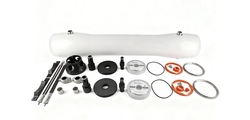
- Step 3: Inspect and Replace Sealing Components
- Step 4: Clean and Reinstall Correctly
- Step 5: Restart and Monitor Closely
- Can the System Continue Running with Minor Seepage?
- How to Prevent Future Seepage Issues
- Conclusion
Introduction
During routine inspection or operation of an industrial RO system, operators may发现 slight water seepage at one or both ends of the membrane pressure vessel (membrane shell). Because the leakage is often minor—no visible spray or pressure drop—it is sometimes underestimated or ignored.
However, any leakage at the membrane housing ends is a warning signal. If not handled properly, it can escalate into membrane damage, sudden seal failure, or even safety incidents.
This article provides a clear, practical guide to evaluate the severity of end-cap seepage and outlines the correct corrective actions.
Is Slight Seepage at the Membrane Housing Ends Serious?
Short Answer:
Yes—potentially serious, even if the leakage appears minor.
Why It Matters
The membrane housing operates under high internal pressure (often 10–70 bar depending on application). End seals are critical pressure-bearing components. Slight seepage usually indicates:
•Seal degradation
•Incorrect installation
•Mechanical deformation
•Pressure or temperature fluctuations
What starts as “minor sweating” can quickly become a sudden seal blowout.
Common Causes of Water Seepage at Both Ends
1. Aging or Damaged O-Rings
•Elastomer hardening over time
•Chemical attack (oxidants, cleaning agents)
•Compression set or micro-cracks
This is the most common cause.
2. Improper End-Cap Installation
•Uneven tightening
•Misaligned end plates
•Incorrect insertion depth
Even new O-rings will leak if installation is not correct.
3. Contaminated Sealing Surfaces
•Sand, rust, or debris on grooves
•Residual grease mixed with particles
•Scratches on the sealing face
These prevent proper O-ring seating.
4. Overpressure or Pressure Surges
•Sudden valve closure
•Frequent high-pressure pump start/stop
•Abnormal concentrate throttling
This can momentarily exceed the seal’s design limit.
5. Temperature Fluctuations
•Cold water causing seal shrinkage
•Hot CIP or feedwater causing expansion
Repeated thermal cycling accelerates leakage.
How to Assess the Severity of the Seepage
Mild (Early Warning)
•Slow seepage or “sweating”
•No visible pressure drop
•No deformation of end caps
Action: Plan corrective maintenance promptly.
Moderate (Escalating Risk)
•Continuous dripping
•Worsens with pressure increase
•Localized wetness around locking ring
Action: Immediate controlled shutdown recommended.
Severe (High Risk)
•Visible spray or sudden leakage
•End cap movement
•Audible abnormal sounds
Action: Emergency shutdown required.
What Should Be Done Immediately?
Step 1: Reduce System Pressure Safely
•Gradually throttle down the high-pressure pump
•Avoid sudden depressurization
•Switch to low-pressure flush if possible
Step 2: Isolate and Depressurize the Vessel
•Confirm zero internal pressure
•Lock out the high-pressure pump
•Follow standard safety procedures
⚠ Never disassemble end caps under pressure.
Step 3: Inspect and Replace Sealing Components
Focus on:
•O-rings (replace, do not reuse)
•Back-up rings (if equipped)
•End-cap grooves and sealing faces
Use only manufacturer-recommended materials and sizes.
Step 4: Clean and Reinstall Correctly
•Clean grooves with lint-free cloth
•Apply compatible silicone lubricant lightly
•Ensure even, fully seated installation
Avoid twisting or pinching the O-ring.
Step 5: Restart and Monitor Closely
•Start with low-pressure flushing
•Gradually raise operating pressure
•Observe both ends for at least 30–60 minutes
Can the System Continue Running with Minor Seepage?
Best Practice Recommendation:
No. Do not operate long-term with known seepage.
Risks of Continued Operation
•Sudden seal blowout
•Membrane element displacement
•Water hammer damage
•Safety hazards to personnel
Short-term operation may be tolerated only under supervision, but permanent operation is not recommended.
How to Prevent Future Seepage Issues
Preventive Measures
•Replace O-rings during every membrane change
•Keep spare seals in proper storage conditions
•Avoid frequent pressure shocks
•Control maximum operating pressure
•Inspect end caps during every major maintenance
Operational Best Practices
•Follow correct startup and shutdown sequences
•Avoid dry starts and rapid pressurization
•Record pressure trends and anomalies
Conclusion
Slight water seepage at both ends of an RO membrane housing is not a trivial issue. It is often an early indicator of seal degradation, installation problems, or abnormal operating conditions.
Timely inspection and corrective action:
•Prevent catastrophic leakage
•Protect membrane elements
•Ensure system safety and reliability
In RO systems, “small leaks” should always be treated as big warnings.


Request More Information or Expert Advice
Share a few details, and we’ll provide deeper insights, tailored suggestions, or product support.
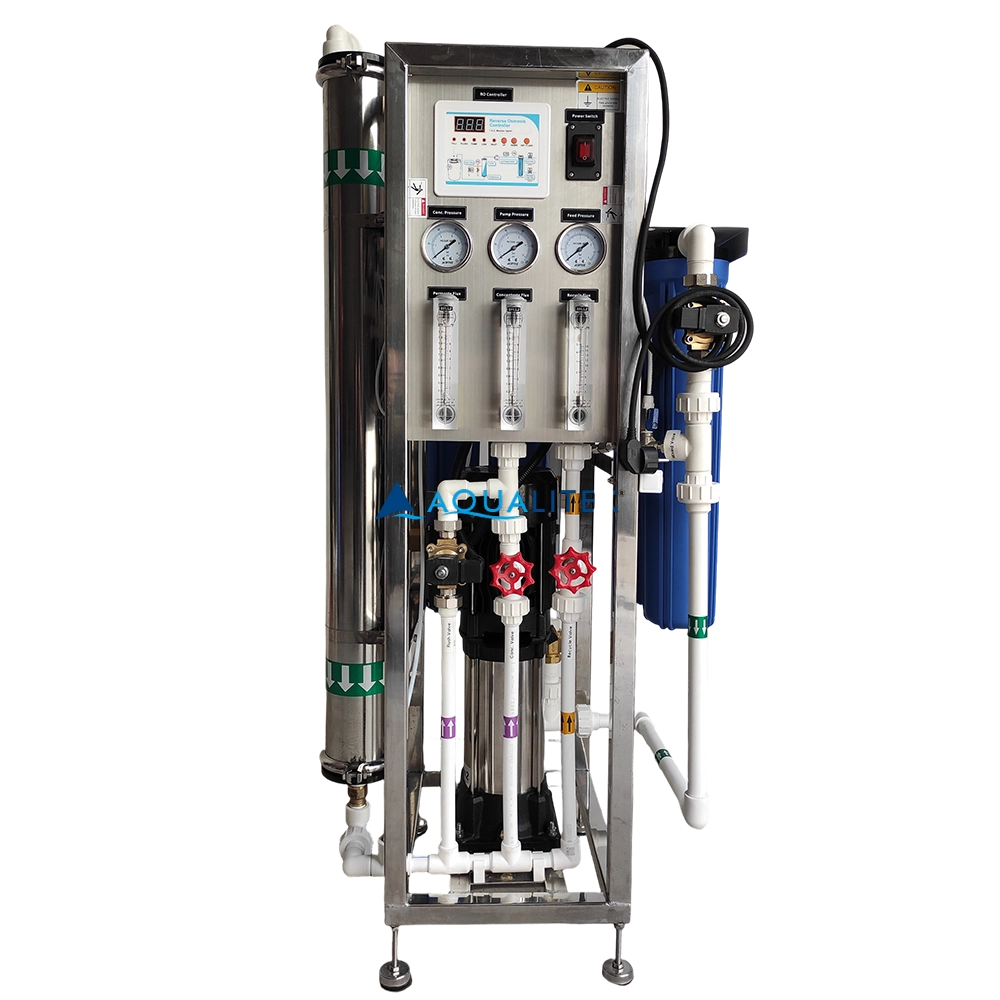
Our 500 LPH Reverse Osmosis (RO) System is engineered to provide high-quality purified water for commercial applications. Designed with advanced RO technology, durable components, and a user-friendly interface, this system ensures consistent performance, low maintenance, and long-term reliability.
With its compact design and robust skid-mounted frame, it’s an excellent choice for businesses that demand efficiency and quality in water purification.
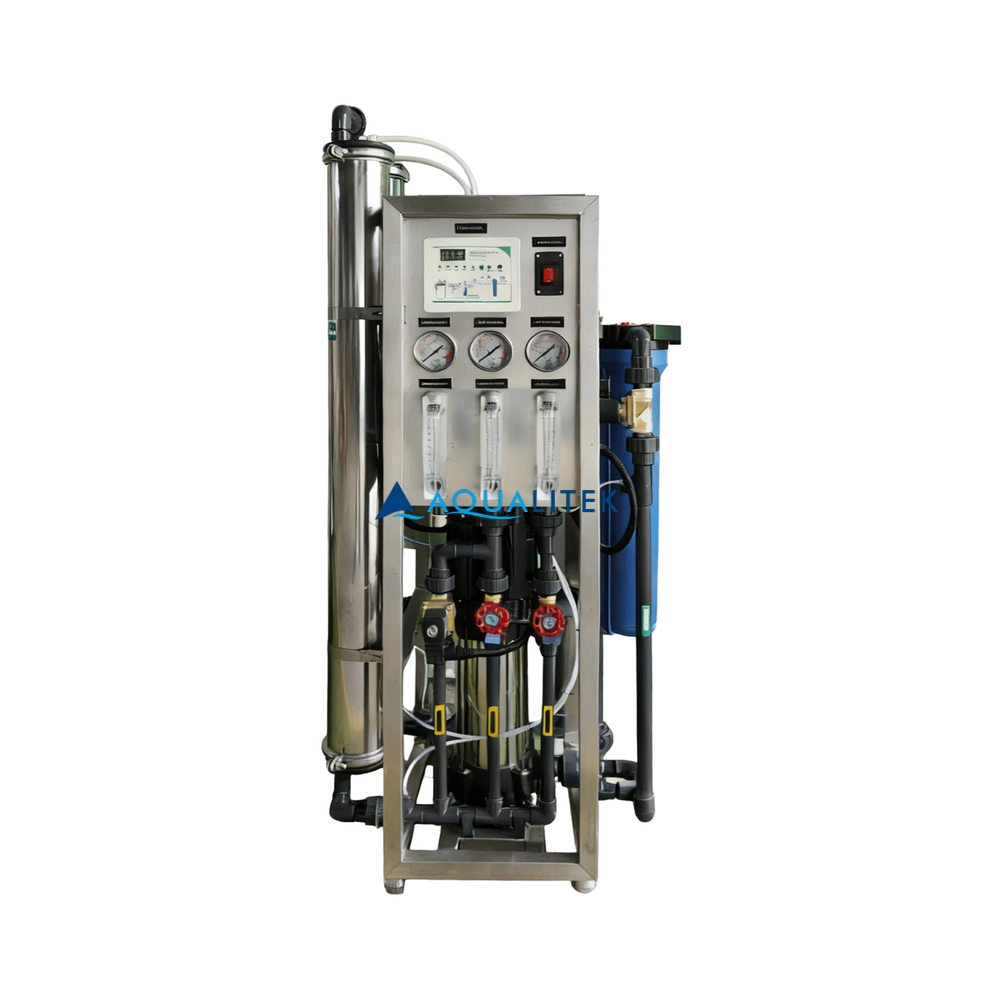
TWV series Reverse Osmosis (RO) systems are pre-engineered and pre-assembled units with 2.5”/4” membrane housings(single element type)for tap water(lower TDS).They are designed for overall superior performance, high recovery rates and offer great savings with low maintenance and operation costs.
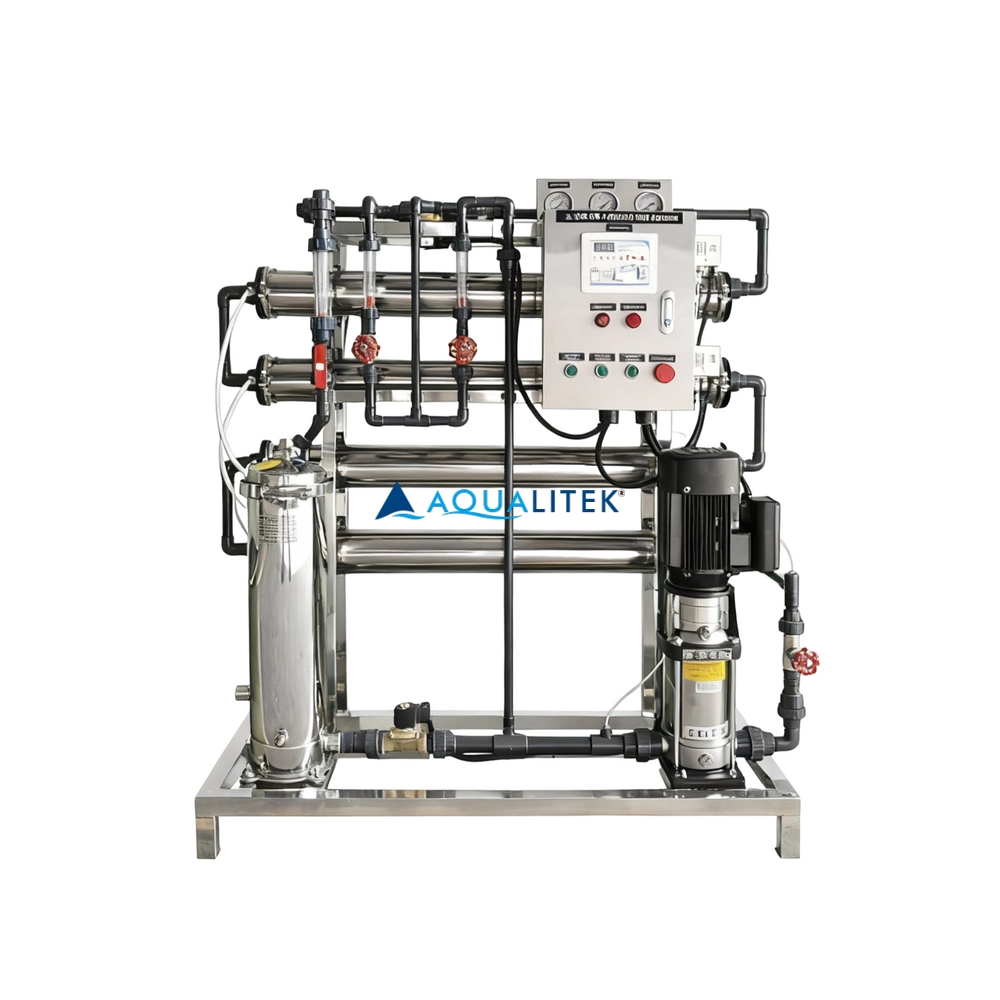
TWF series Reverse Osmosis (RO) systems are pre-engineered and pre-assembled units with 4” membrane housings(multiple elements type) for tap water(lower TDS) .The medium large volumes can help meet your a variety of commercial and industrial applications. They are designed for overall superior performance, high recovery rates and offer great savings with low maintenance and operation costs.

TWE series Reverse Osmosis (RO) systems are pre-engineered and pre-assembled units with 8” membrane housings for tap water (lower TDS). The large volumes can help meet your a variety of industrial applications. They are designed for overall superior performance, high recovery rates and offer great savings with low maintenance and operation costs.
© 2026 AQUALITEK. All rights reserved.
AQUALITEK- Aimee Hoo
AQUALITEK - Aimee Hoo