



Best Guide: What Water Accumulation at One End of an RO Membrane Element Really Means| Insights by AQUALITEK
When an RO membrane element is removed from the pressure vessel and one end is found filled with water, it is often a sign of abnormal flow distribution, seal failure, or internal damage. This article explains the possible causes, how to diagnose them, and what operators should do next.
- Introduction
- 1. Is Water Accumulation Normal?
- 2. Main Causes of Water Accumulation on One Membrane End
- 2.1 Brine Seal Failure or Incorrect Installation
- 2.2 Membrane Telescoping (End-Face Deformation)
- 2.3 Damaged or Loose O-Rings on Interconnectors
- 2.4 Blocked Concentrate Outlet or Uneven Concentrate Flow
- 2.5 Pressure Vessel Damage or Misalignment
- 2.6 Incorrect Shutdown Procedure Causing Water Entrapment
- 3. What Problems Does This Condition Indicate?
- 4. How to Diagnose the Exact Cause
- 5. What Should Operators Do Next?
- 5.1 Do NOT reinstall the membrane without fixing the cause.
- 5.2 Replace damaged components immediately:
- 5.3 Check system pressure and flow distribution
- 5.4 Perform a full vessel inspection
- 5.5 Improve installation procedures
- Conclusion
Introduction
In a healthy RO system, water flows evenly through the membrane element and exits uniformly. However, during maintenance or membrane replacement, operators may find that one end of a membrane element is noticeably flooded with water while the other appears relatively dry.
This is not normal and typically indicates a mechanical or operational issue inside the pressure vessel or the membrane itself. Understanding the root causes is crucial for preventing performance loss and premature membrane failure.
1. Is Water Accumulation Normal?
No.
A properly functioning membrane element—after system shutdown, depressurizing, and disassembly—should contain only residual moisture, not a large pocket of water at one specific end.
Significant water pooling indicates a flow imbalance or sealing failure inside the pressure vessel.
2. Main Causes of Water Accumulation on One Membrane End
2.1 Brine Seal Failure or Incorrect Installation
The brine seal prevents concentrate from bypassing the membrane. If:
•the brine seal is installed backward
•the seal is worn, torn, or deformed
•the membrane was pushed in with excessive force
•lubrication during installation was insufficient
Water bypasses the membrane and accumulates at the upstream end.
Result:
Feed water short-circuits the membrane → uneven flow → poor rejection and higher conductivity.
2.2 Membrane Telescoping (End-Face Deformation)
High-pressure shocks or sudden flow surges may cause the membrane to shift or deform (known as telescoping).
Signs include:
•One end appears stretched or bulged
•Feed spacer pushes out
•Water accumulates in the deformed section
This is serious.
Telescoped membranes cannot be repaired and must be replaced immediately.
2.3 Damaged or Loose O-Rings on Interconnectors
Membrane elements are connected using plastic interconnectors with O-rings.
If these O-rings:
•fall off
•are cut
•are too old/hardened
•are not properly seated
Then internal bypass flow occurs, leading to partial flooding at one end.
2.4 Blocked Concentrate Outlet or Uneven Concentrate Flow
If the concentrate outlet or flow restrictor becomes clogged:
•Flow is restricted
•Pressure drops unevenly
•Water may “back up” into one end of the membrane element
Indicators:
•Sudden low pressure
•High differential pressure
•Poor permeate production
2.5 Pressure Vessel Damage or Misalignment
Inside a pressure vessel, proper alignment ensures correct flow. Misalignment or internal damage can cause:
•Membrane not seating correctly
•Concentrate channel obstruction
•Water pooling at the inlet or outlet end
Pipe stress or dropping the vessel can also deform the internal shell.
2.6 Incorrect Shutdown Procedure Causing Water Entrapment
Improper shutdown (especially in multi-stage systems) can leave high-pressure water trapped inside.
Examples:
•Not fully depressurizing
•Closing valves in the wrong sequence
•Concentrate valve stuck
This can cause water to collect on the feed end.
While not always harmful, it often accompanies other flow irregularities.
3. What Problems Does This Condition Indicate?
•Flow bypass (main cause)
•Reduced salt rejection
•Lower permeate flowIf one end of the element contains water, the system may be suffering from:
•Higher operating pressure
•Increased fouling at membrane entrance
•Uneven fouling on membrane surface
•Localized damage to the membrane layer
Left unaddressed, these issues will significantly shorten membrane lifespan.
4. How to Diagnose the Exact Cause
✔ Check the brine seal direction
Arrow or thicker side should face the feed flow.✔ Inspect the brine seal for tears or deformation
Replace if there is any doubt.✔ Inspect interconnector O-rings
Look for:
•Cracks
•Cuts
•Missing O-rings
•Flattened seals
✔ Evaluate the membrane for telescoping
Look for bulging, uneven ends, or misaligned spacers.
✔ Check the concentrate outlet
Ensure it is not blocked by scale or particles.
✔ Inspect the pressure vessel interior
Look for surface scratches, deformation, or misalignment.
✔ Review shutdown logs
Identify if pressure was properly released.
5. What Should Operators Do Next?
5.1 Do NOT reinstall the membrane without fixing the cause.
This guarantees repeated failure.
5.2 Replace damaged components immediately:
•Brine seal
•O-rings
•Damaged interconnectors
•Telescoped membranes
5.3 Check system pressure and flow distribution
Uneven flow is a sign of pump or valve malfunction.
5.4 Perform a full vessel inspection
Especially if multiple membranes show similar symptoms.
5.5 Improve installation procedures
Operators should be trained to:
•Use silicone lubricant
•Insert membranes gently
•Align elements properly
•Confirm brine seal orientation
Proper installation is one of the most effective ways to prevent bypass damage.
Conclusion
Water accumulation at one end of a removed membrane element is not normal and almost always indicates internal bypass, sealing failure, or mechanical deformation. Operators should treat this as a major warning sign of improper flow within the pressure vessel. Early diagnosis and correction can prevent severe membrane damage and system performance loss.



Request More Information or Expert Advice
Share a few details, and we’ll provide deeper insights, tailored suggestions, or product support.
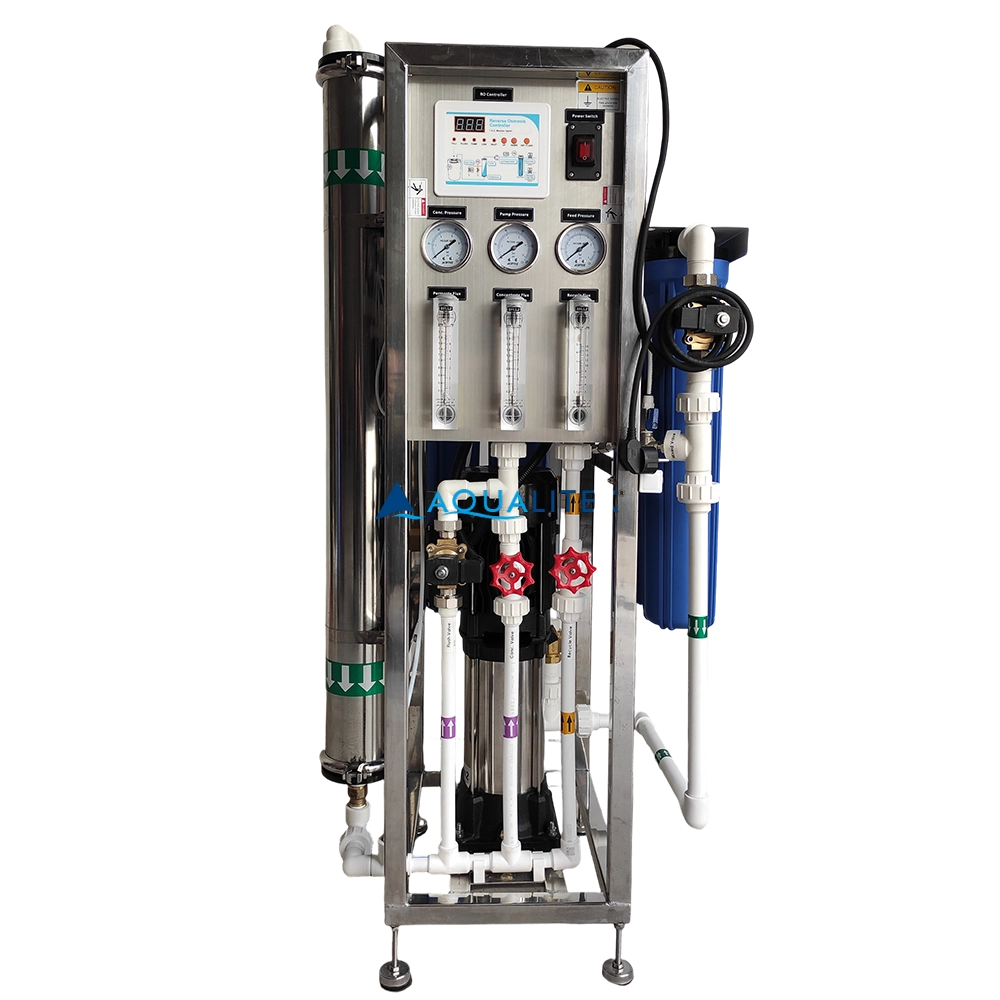
Our 500 LPH Reverse Osmosis (RO) System is engineered to provide high-quality purified water for commercial applications. Designed with advanced RO technology, durable components, and a user-friendly interface, this system ensures consistent performance, low maintenance, and long-term reliability.
With its compact design and robust skid-mounted frame, it’s an excellent choice for businesses that demand efficiency and quality in water purification.
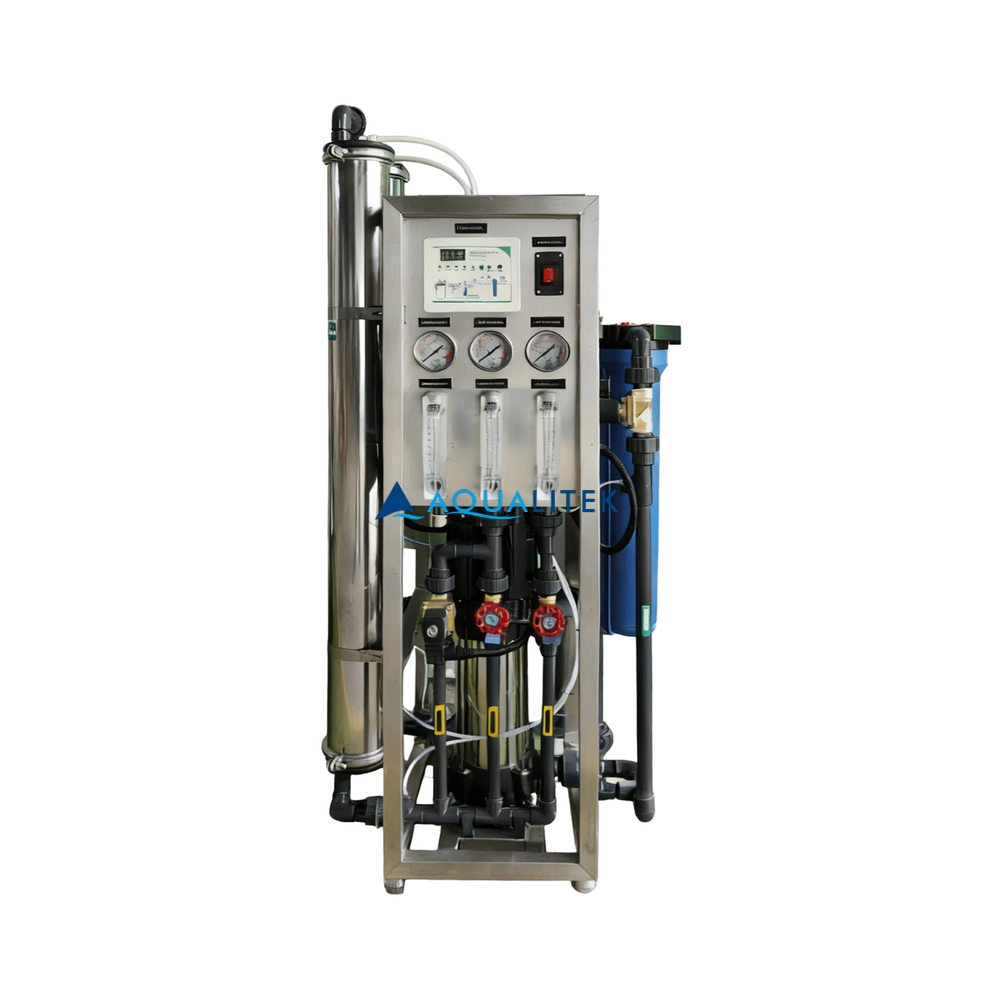
TWV series Reverse Osmosis (RO) systems are pre-engineered and pre-assembled units with 2.5”/4” membrane housings(single element type)for tap water(lower TDS).They are designed for overall superior performance, high recovery rates and offer great savings with low maintenance and operation costs.
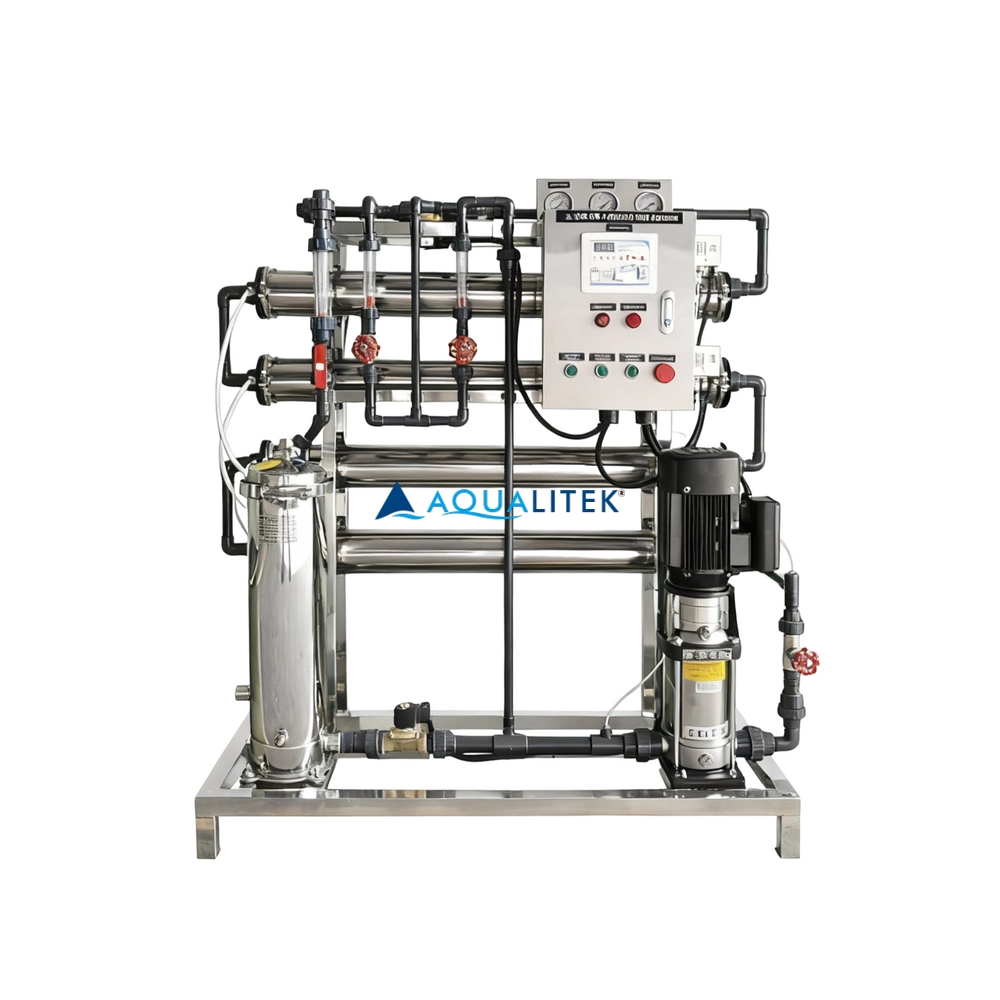
TWF series Reverse Osmosis (RO) systems are pre-engineered and pre-assembled units with 4” membrane housings(multiple elements type) for tap water(lower TDS) .The medium large volumes can help meet your a variety of commercial and industrial applications. They are designed for overall superior performance, high recovery rates and offer great savings with low maintenance and operation costs.

TWE series Reverse Osmosis (RO) systems are pre-engineered and pre-assembled units with 8” membrane housings for tap water (lower TDS). The large volumes can help meet your a variety of industrial applications. They are designed for overall superior performance, high recovery rates and offer great savings with low maintenance and operation costs.
© 2026 AQUALITEK. All rights reserved.
AQUALITEK- Aimee Hoo
AQUALITEK - Aimee Hoo