




What Tasks Still Require Manual Intervention in a Fully Automated RO System?| Insights by AQUALITEK
Even the most advanced fully automated RO (Reverse Osmosis) systems cannot operate 100% unattended. This article explains which operational, maintenance, and monitoring tasks still require manual intervention—and why these actions are essential for long-term system stability, membrane protection, and water quality control.
- What Tasks Still Require Manual Intervention in a Fully Automated RO System?
- 1. Manual Inspection of Pretreatment Equipment
- 2. Filter Cartridge Replacement
- 3. Membrane System Performance Review
- 4. Chemical Cleaning (CIP) Operations
- 5. Manual Instrument Calibration
- 6. Mechanical Inspection & Preventive Maintenance
- 7. Chemical Dosing System Management
- 8. Emergency Response & Troubleshooting
- 9. Housekeeping and Cleaning
- Conclusion
What Tasks Still Require Manual Intervention in a Fully Automated RO System?
Modern RO systems feature PLC control, online instruments, auto-flushing, auto-start/stop, and alarm protection.
However, “fully automated” does not mean “maintenance-free.”
Certain tasks still rely on human inspection, judgment, and physical handling to ensure long-term stable performance.
Below are the key areas where manual intervention remains essential.
1. Manual Inspection of Pretreatment Equipment
Even with automation, pretreatment performance cannot be judged solely by sensors.
Regular manual checks include:
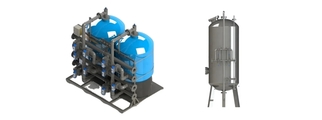
•Visual inspection of multimedia filters (mudball formation, channeling, surface cracks)
•Checking sediment filter pressure difference
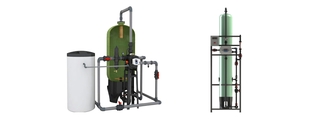
•Verifying softener salt tank brine level and salt quality
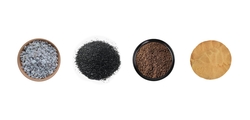
•Inspecting activated carbon condition (odor, surface hardness)
•Checking chemical dosing tank levels and replenishing chemicals manually
Automation can monitor pressure or flow, but humans must inspect physical media conditions.
2. Filter Cartridge Replacement
Automation can trigger warnings based on pressure drop, but:
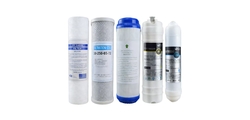
•PP sediment filters
•CTO activated carbon filters
•Security filters
still require manual removal and installation.
Proper tightening, O-ring lubrication, and leak testing cannot be automated.
3. Membrane System Performance Review
Online data is helpful, but human verification is still needed.
Manual tasks:
•Reviewing trends for permeate conductivity, pressure, and recovery
•Verifying if performance decline is due to fouling, scaling, or instrument drift
•Deciding whether chemical cleaning is required
•Judging if a membrane should be replaced
Algorithms cannot fully assess complex fouling patterns—operator experience is irreplaceable.
4. Chemical Cleaning (CIP) Operations
Some systems support semi-automated CIP, but cleaning still requires:
•Preparing and mixing chemicals manually
•Adjusting pH and concentration
•Connecting/disconnecting CIP tanks and hoses
•Inspecting cleaning results afterward
•Flushing and restoring the system to service
CIP is a critical operation, and industry standards still require human supervision.
5. Manual Instrument Calibration
Online sensors drift over time.
Instruments requiring periodic manual calibration:
•Conductivity meters
•pH probes
•ORP meters
•Turbidity sensors
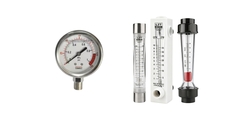
•Flow meters
•Pressure gauges
Accurate readings cannot rely on automation alone—handheld reference meters are needed.
6. Mechanical Inspection & Preventive Maintenance
Automation cannot detect all mechanical failures.
Required manual checks:
•High-pressure pump vibration and noise
•Motor lubrication
•Coupling alignment
•Valve seals and actuator condition
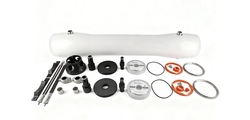
•Membrane housing end-cap O-rings
•Piping connection leaks
These tasks depend on human sensory judgment: sight, sound, vibration.
7. Chemical Dosing System Management
Operators must periodically:
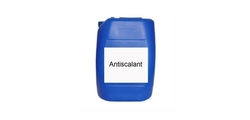
•Refill antiscalant, sodium bisulfite, NaOH, HCl
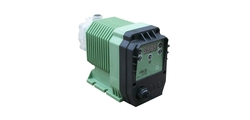
•Check the peristaltic pump tubing
•Verify dosing pump accuracy
•Clean or replace injection quills
These tasks are partly measurable by sensors but physical actions are still manual.
8. Emergency Response & Troubleshooting
Automation can trigger alarms but cannot resolve:
•Sudden turbidity spikes
•Power outages
•Raw water pump failure
•Pretreatment malfunction
•Pump cavitation
•Membrane damage
•Abnormal noise or leaks
Human intervention is essential for decision-making and corrective action.
9. Housekeeping and Cleaning
Examples include:
•Cleaning chemical dosing rooms
•Removing accumulated dust or sludge
•Inspecting drain systems
•Preventing biological growth in tanks or pipes
No RO system is designed to perform housekeeping by itself.
Conclusion
Even in a highly automated RO system, the following still require manual intervention:
1.Pretreatment inspection
2.Filter replacement
3.Membrane performance assessment
4.Chemical cleaning operations
5.Instrument calibration
6.Mechanical checks
7.Chemical dosing management
8.Emergency troubleshooting
9.Plant housekeeping
Automation significantly reduces workload, but skilled human oversight remains essential for protecting membranes, optimizing performance, and ensuring long-term operational safety.


Request More Information or Expert Advice
Share a few details, and we’ll provide deeper insights, tailored suggestions, or product support.
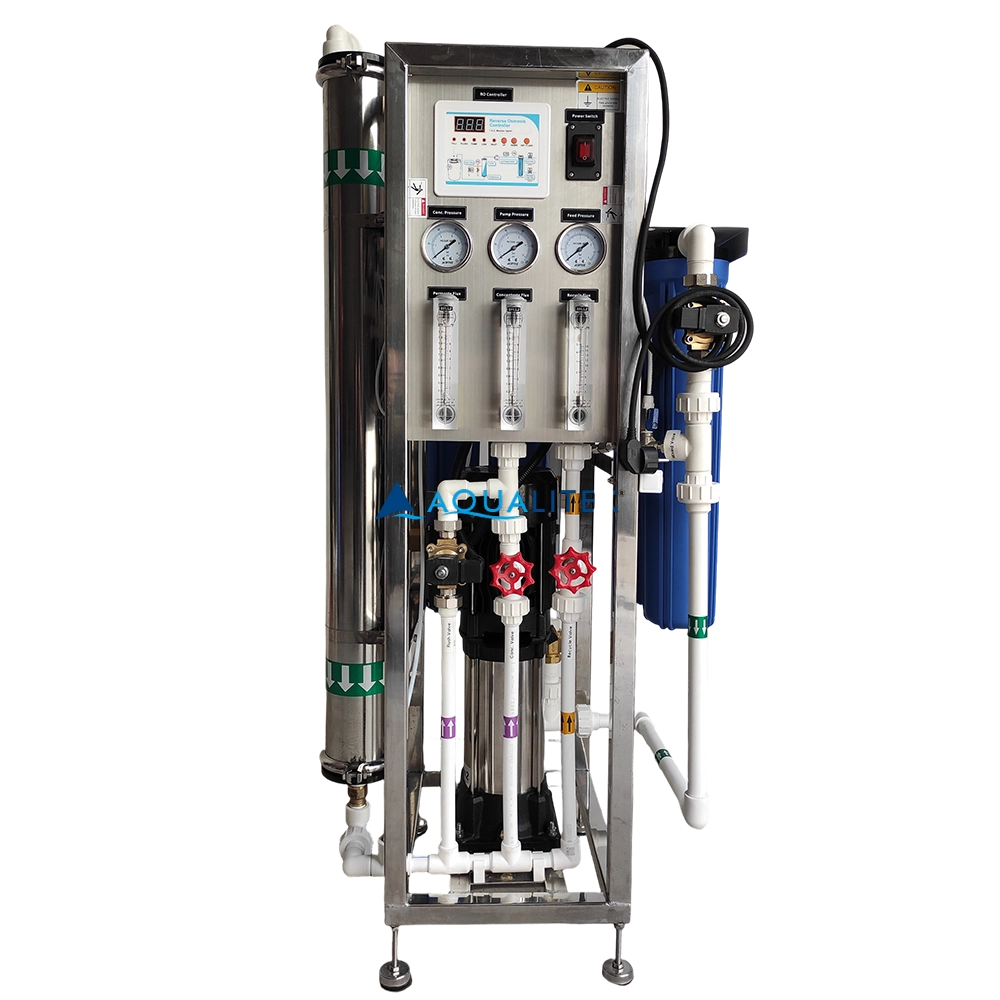
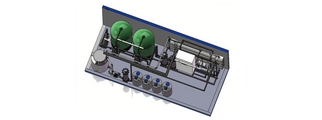
Our 500 LPH Reverse Osmosis (RO) System is engineered to provide high-quality purified water for commercial applications. Designed with advanced RO technology, durable components, and a user-friendly interface, this system ensures consistent performance, low maintenance, and long-term reliability.
With its compact design and robust skid-mounted frame, it’s an excellent choice for businesses that demand efficiency and quality in water purification.
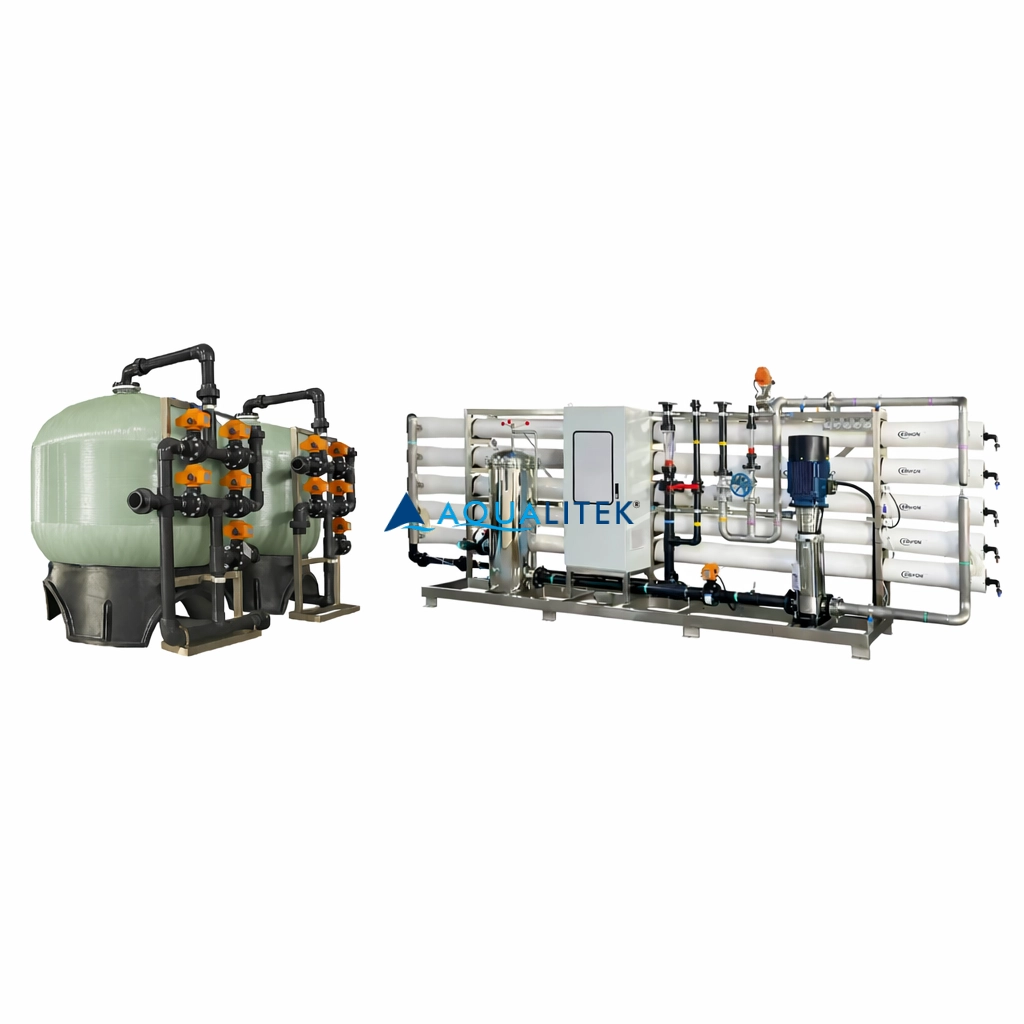
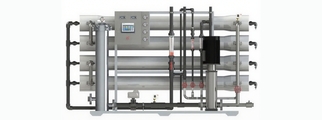
30TPH Industrial Reverse Osmosis (RO) System designed for industrial and municipal water treatment. High salt rejection, energy-efficient design, PLC control, and customizable configuration.
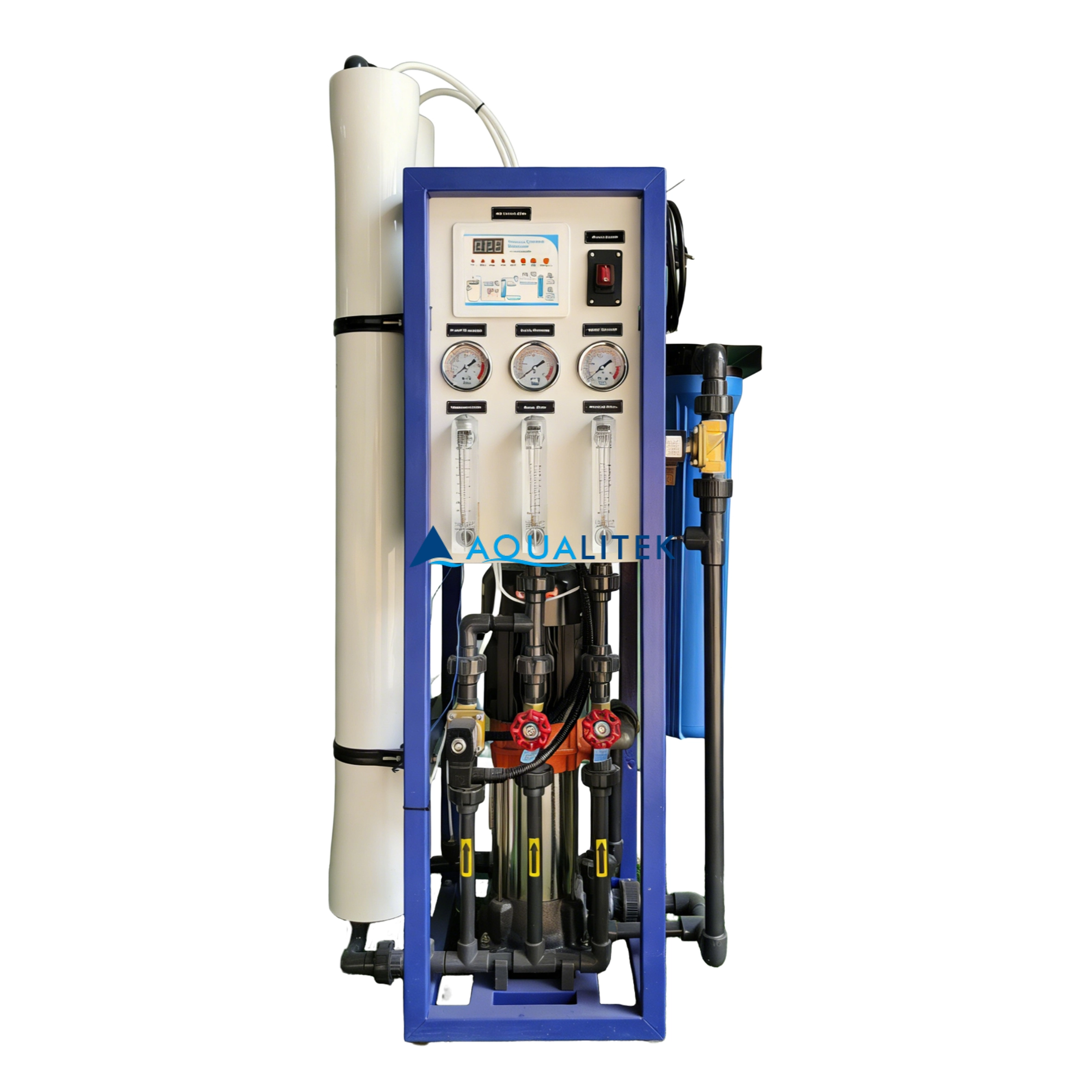
AQUALITEK's 500LPH Panel Mounted Reverse Osmosis Water Purification System delivers reliable 500 LPH RO water production. This compact industrial reverse osmosis unit is ideal for small scale industrial RO needs, ensuring efficient and high-quality purified water in a space-saving design.
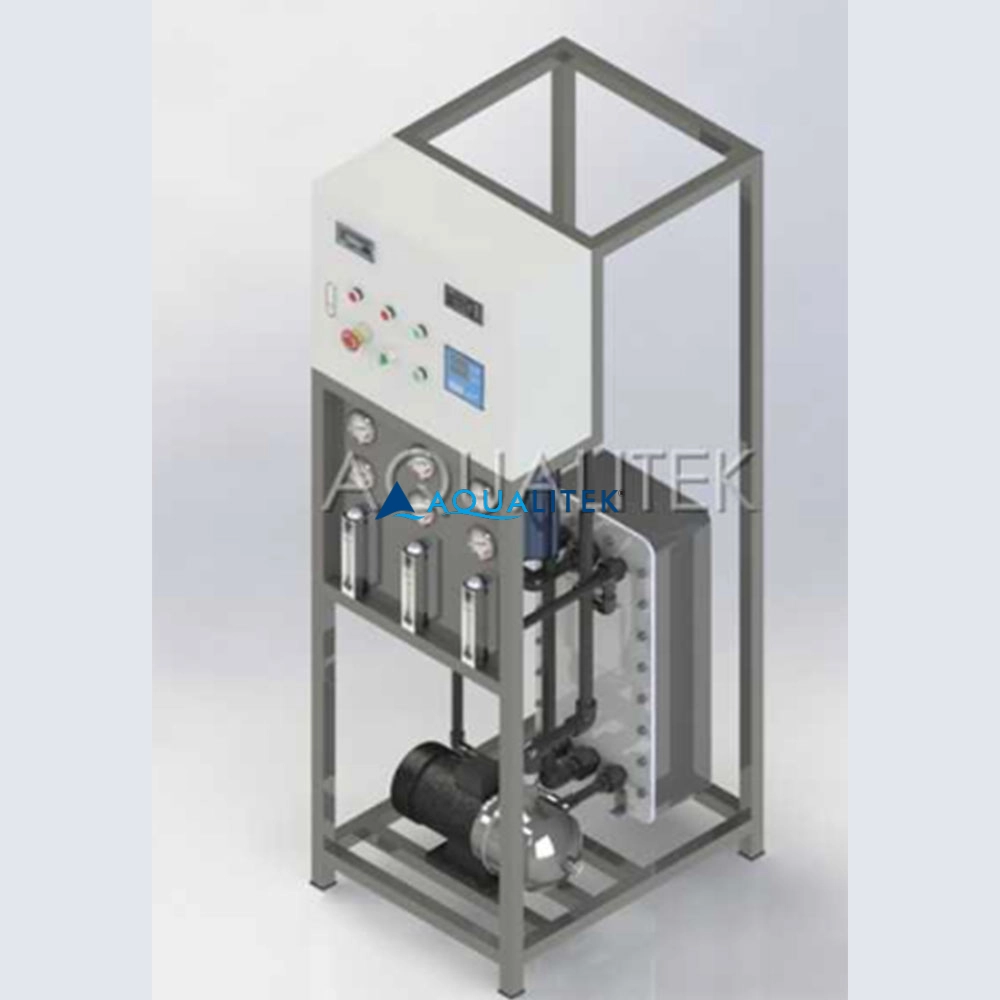
Electrodeionization (EDI) system is an advanced water purification technology that combines ion exchange and electrochemical processes to produce ultra-pure water. Unlike traditional deionization methods, which rely on chemical regeneration, EDI utilizes electric fields to drive the movement of ions through ion-exchange membranes, effectively removing dissolved salts and other ionic contaminants.
This process is continuous and does not require the use of chemicals for regeneration, making it an environmentally friendly and cost-effective solution for producing high-quality deionized water. EDI systems are widely used in applications requiring ultrapure water, such as in the pharmaceutical, semiconductor, power generation, and biotechnology industries, as well as for laboratory use.
By offering high-purity water without the need for chemical regeneration, EDI systems provide a sustainable, efficient, and reliable alternative to traditional deionization methods, making them an ideal choice for industries where water quality and process control are critical.
© 2026 AQUALITEK. All rights reserved.
AQUALITEK- Aimee Hoo
AQUALITEK - Aimee Hoo