




Why Does RO Permeate Conductivity Temporarily Increase After Membrane Cleaning?| Insights by AQUALITEK
A short-term rise in RO permeate conductivity after chemical cleaning is common. Learn the real reasons behind it, whether it’s normal, and how to restore stable water quality quickly.
- Introduction
- 1. Residual Cleaning Chemicals Inside the Membrane
- Primary and Most Common Reason
- 2. Temporary Change in Membrane Surface Characteristics
- Clean Membranes Are More “Open” Initially
- 3. Osmotic and Concentration Equilibrium Adjustment
- System Needs Time to Rebalance
- 4. Insufficient Post-Cleaning Flushing
- Operational, Not Membrane-Related
- 5. Temperature Effects After Cleaning
- How Long Is a “Normal” Conductivity Increase?
- When Should You Be Concerned?
- Best Practices to Minimize Conductivity Spikes
- Conclusion
Introduction
During routine operation, RO permeate conductivity is one of the most critical indicators of membrane performance.
However, many operators observe a puzzling phenomenon:
Immediately after chemical cleaning, permeate conductivity increases instead of improving.
This often raises concerns about membrane damage or cleaning failure.
In reality, a short-term conductivity increase after cleaning is usually normal—but only under specific conditions.
This article explains why this happens, how long it should last, and when it becomes a warning sign.
1. Residual Cleaning Chemicals Inside the Membrane
Primary and Most Common Reason
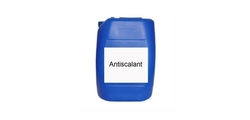
After CIP (Clean-In-Place), small amounts of cleaning agents may remain:
•Inside membrane pores
•Between membrane leaves
•In the permeate channel
Many cleaning chemicals contain:
•Sodium salts
•Chelating agents
•Acids or alkalis with high ionic strength
These dissolved ions temporarily increase permeate conductivity.
✅ This effect disappears once thorough flushing is completed.
2. Temporary Change in Membrane Surface Characteristics
Clean Membranes Are More “Open” Initially
Before cleaning, fouling layers partially block:
•Active membrane surface
•Water transport pathways
After cleaning:
•Fouling is removed
•Effective membrane area increases
•Salt passage may rise briefly
This does not mean membrane rejection has permanently decreased.
It reflects a transitional stabilization period.
3. Osmotic and Concentration Equilibrium Adjustment
System Needs Time to Rebalance
After cleaning:
•Salt distribution inside the membrane module is disrupted
•Permeate and concentrate channels require re-equilibration
During this short phase:
•Salt diffusion temporarily increases
•Conductivity readings appear higher
This effect typically stabilizes within:
•30 minutes to several hours (industrial systems)
4. Insufficient Post-Cleaning Flushing
Operational, Not Membrane-Related
If flushing time or flow rate is insufficient:
•Cleaning solution mixes with permeate
•Conductivity remains elevated
Common mistakes include:
•Rushing system restart
•Connecting product water tank too early
•Low flushing flow velocity
This is one of the most avoidable causes.
5. Temperature Effects After Cleaning
Cleaning is often performed at:
•Higher-than-normal water temperatures
Higher temperature results in:
•Increased ion mobility
•Higher conductivity readings
Once temperature returns to normal operating range, conductivity typically drops accordingly.
How Long Is a “Normal” Conductivity Increase?
|
Situation |
Expected Duration |
|
Proper flushing |
30–120 minutes |
|
Large industrial RO |
Up to 4–8 hours |
|
Still rising after 24 hours |
⚠️ Abnormal |
If conductivity does not trend downward, further investigation is required.
When Should You Be Concerned?
Investigate immediately if:
•Conductivity remains high after extended flushing
•Salt rejection is permanently reduced
•Differential pressure is abnormal
•Cleaning involved incompatible chemicals
Possible causes then include:
•Membrane oxidation damage
•Incorrect cleaning pH
•Overexposure to cleaning agents
Best Practices to Minimize Conductivity Spikes
•Flush with RO permeate or qualified feed water
•Monitor pH and conductivity simultaneously
•Delay connection to product water tank
•Resume operation gradually
•Record baseline conductivity after stabilization
Conclusion
A temporary increase in RO permeate conductivity after membrane cleaning is normal and expected in most systems.
It is usually caused by:
•Residual cleaning chemicals
•Temporary membrane surface changes
•Incomplete flushing
•Temperature effects
The key is not the spike itself—but how quickly conductivity stabilizes.
Proper post-cleaning procedures ensure membrane performance improves, not degrades.


Request More Information or Expert Advice
Share a few details, and we’ll provide deeper insights, tailored suggestions, or product support.
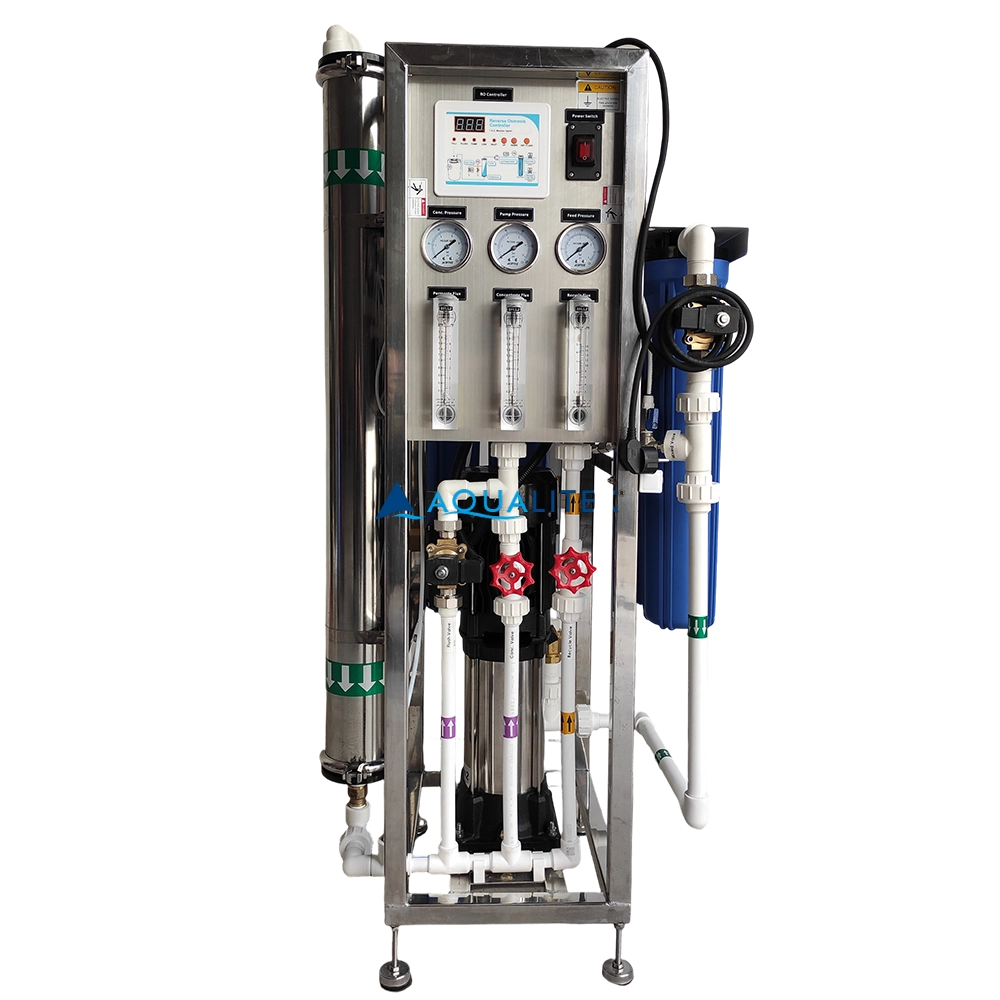
Our 500 LPH Reverse Osmosis (RO) System is engineered to provide high-quality purified water for commercial applications. Designed with advanced RO technology, durable components, and a user-friendly interface, this system ensures consistent performance, low maintenance, and long-term reliability.
With its compact design and robust skid-mounted frame, it’s an excellent choice for businesses that demand efficiency and quality in water purification.
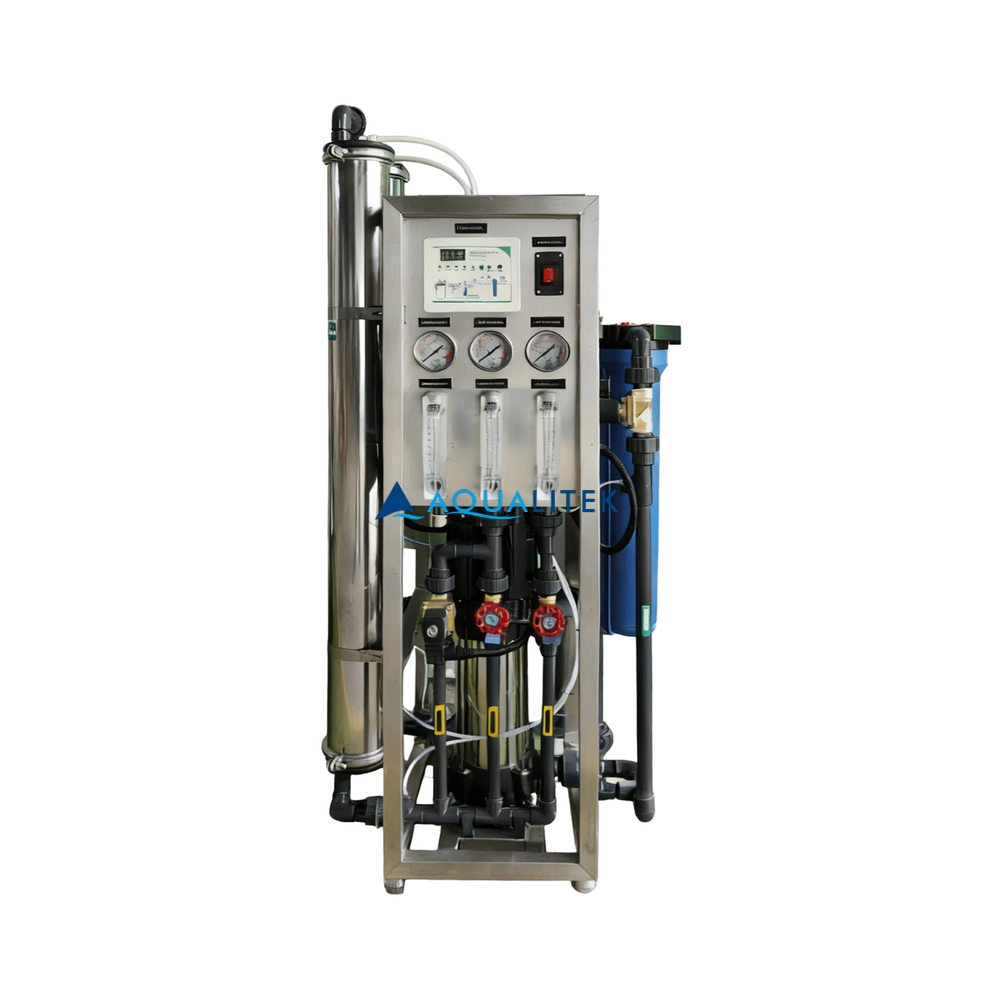
TWV series Reverse Osmosis (RO) systems are pre-engineered and pre-assembled units with 2.5”/4” membrane housings(single element type)for tap water(lower TDS).They are designed for overall superior performance, high recovery rates and offer great savings with low maintenance and operation costs.
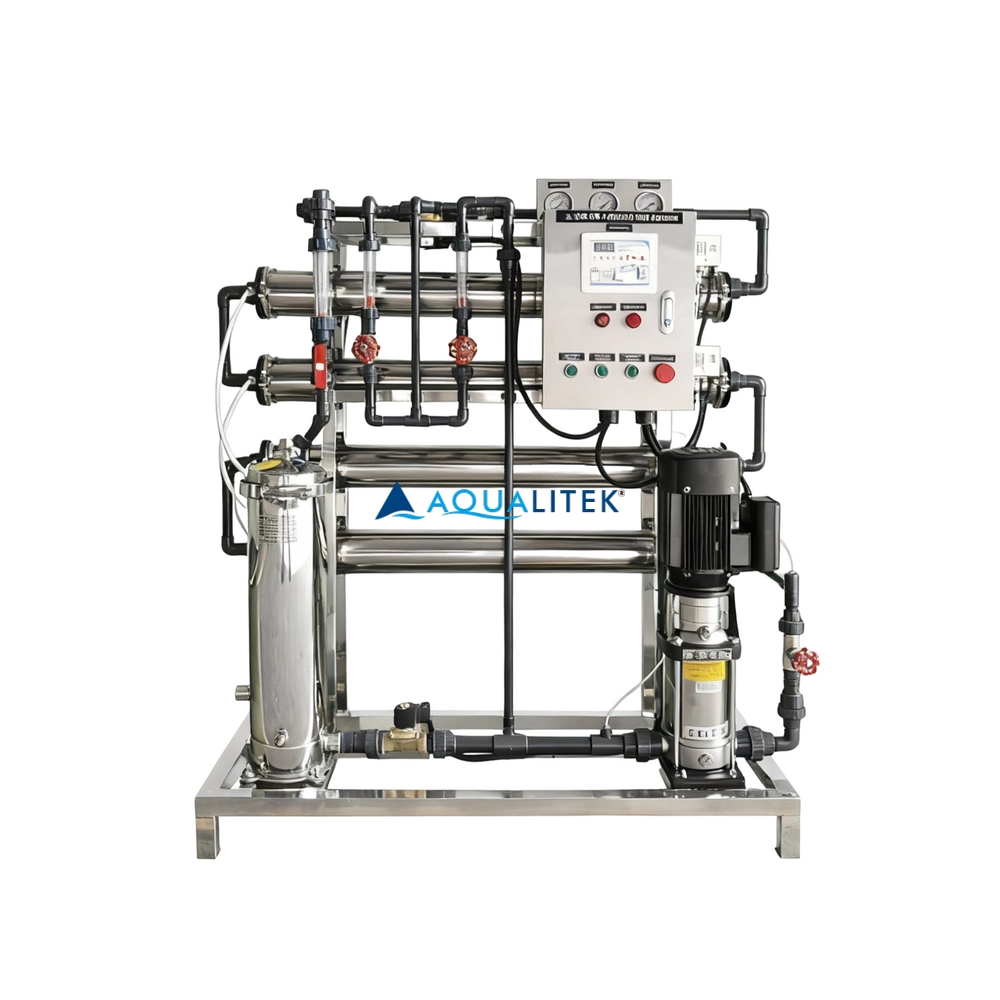
TWF series Reverse Osmosis (RO) systems are pre-engineered and pre-assembled units with 4” membrane housings(multiple elements type) for tap water(lower TDS) .The medium large volumes can help meet your a variety of commercial and industrial applications. They are designed for overall superior performance, high recovery rates and offer great savings with low maintenance and operation costs.

TWE series Reverse Osmosis (RO) systems are pre-engineered and pre-assembled units with 8” membrane housings for tap water (lower TDS). The large volumes can help meet your a variety of industrial applications. They are designed for overall superior performance, high recovery rates and offer great savings with low maintenance and operation costs.
© 2026 AQUALITEK. All rights reserved.
AQUALITEK- Aimee Hoo
AQUALITEK - Aimee Hoo