




Materials of Construction for Industrial RO Units
- Material Selection Principles for Industrial Reverse Osmosis Systems
- Why material choice matters for industrial reverse osmosis
- Key selection criteria
- Standards and guidance to reference
- Common Materials and Their Properties
- Stainless steel (304 vs 316/316L)
- Plastic materials: PVC, CPVC, HDPE, PP
- Fiber-reinforced plastic (FRP) and composites
- Pressure Vessels, Piping and Component Choices
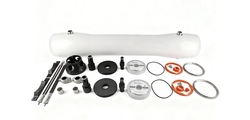
- Pressure vessels and membrane housings
- Pumps, valves and fittings
- Seals, gaskets and elastomers
- Design, Corrosion Control and Lifecycle Considerations
- Corrosion mechanisms and prevention
- Cleaning and sanitation compatibility
- Total cost of ownership and lifecycle analysis
- Installation, Testing and Compliance
- Fabrication and weld quality
- Monitoring and control instrumentation
- Regulatory and certification requirements
- FAQ — Materials of Construction for Industrial RO Units
- Q: Is SS316 always necessary for industrial RO systems?
- Q: Can FRP be used for high-pressure membrane housings?
- Q: What elastomer should I choose for RO seals exposed to CIP?
- Q: How do I prevent galvanic corrosion in mixed-metal systems?
- Q: How often should material compatibility be re-evaluated?
- Contact & Product Information

Choosing the right materials of construction for industrial reverse osmosis units is one of the most critical decisions for long-term system performance, contamination control, and total cost of ownership. The correct material selection reduces corrosion, scaling, and biofouling risks while ensuring mechanical integrity under pressure, chemical cleaning compatibility, and regulatory compliance for manufacturing and processing applications.
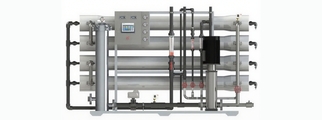
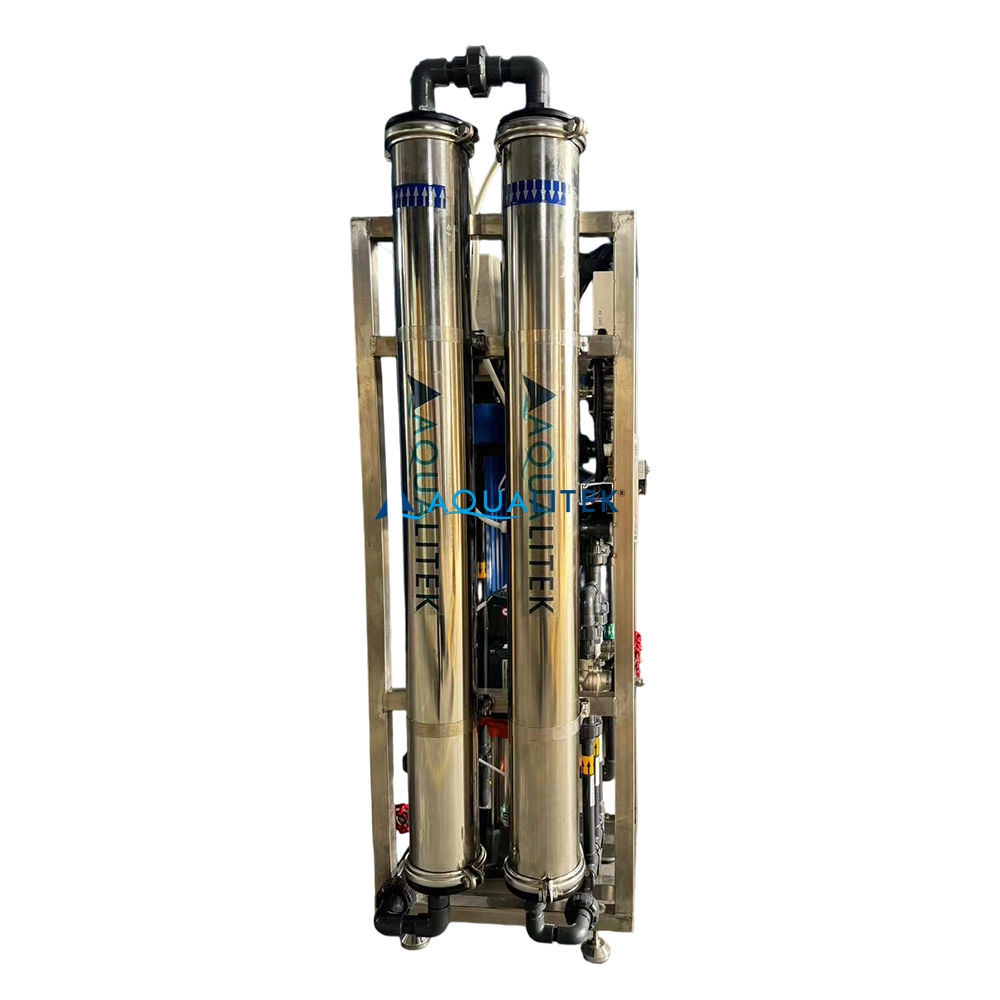
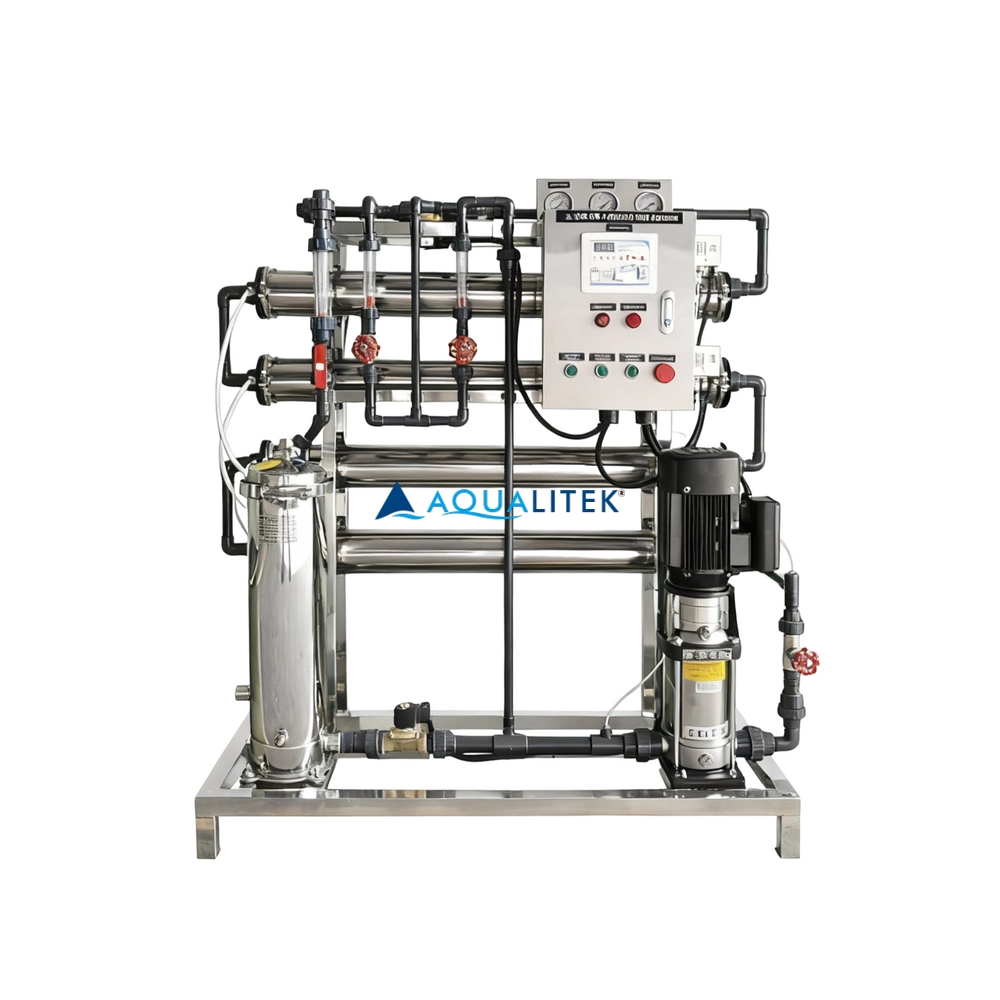
AQUALITEK 4TPH Industrial Reverse Osmosis Water Purification RO System, high-efficiency industrial-grade RO water treatment plant for manufacturing & processing, commercial reverse osmosis filtration system ideal for electronic component cleaning water use.
Material Selection Principles for Industrial Reverse Osmosis Systems
Why material choice matters for industrial reverse osmosis
Industrial reverse osmosis (RO) units operate under high pressures and often handle feedwaters with varied chemistry (high TDS, chlorides, hardness, organics). Materials must resist localized corrosion (pitting, crevice), stress corrosion cracking, and general corrosion. They must also tolerate cleaning chemicals used in CIP cycles (acids, alkalis, oxidants) and provide sanitary surfaces where required for electronic or precision manufacturing rinse water. Poor material choice leads to premature failures, membrane damage, and water quality issues (conductivity spikes, metallic contamination).
Key selection criteria
When specifying materials, consider: mechanical strength at operating pressure, corrosion resistance in chloride or brackish environments, compatibility with cleaning chemicals (e.g., NaOH, HCl, citric acid, hydrogen peroxide), weldability and fabrication quality, surface finish (to limit biofilm attachment), and cost/lifecycle analysis. Also account for standards and certifications required by the end use and local regulations.
Standards and guidance to reference
Reference industry and regulatory guidance when choosing materials. Useful resources include the Reverse Osmosis overview on Wikipedia for general membrane concepts, certification and material safety information from NSF International, and engineering guidance from the International Water Association (IWA). For public health and water quality context, consult the World Health Organization (WHO) materials on water safety and treatment approaches.
Common Materials and Their Properties
Stainless steel (304 vs 316/316L)
Stainless steels are widely used for pressure vessels, piping, and frames. SS304 is economical and suitable for low-chloride, non-aggressive feedwaters. SS316/316L contains molybdenum, improving resistance to chloride pitting and crevice corrosion—making it the preferred choice for brackish or coastal feedwaters and higher-purity process water. 316L (low carbon) further reduces risk of sensitization during welding, improving long-term corrosion resistance.
Plastic materials: PVC, CPVC, HDPE, PP
Thermoplastics are common for low-pressure piping, headers, and drain lines. PVC and CPVC are economical and chemically resistant to many cleaning agents, but they have lower temperature ratings and limited mechanical strength under high pressure. HDPE and PP offer better resistance to impact and some chemical compatibilities; however, they generally are not used for high-pressure RO pressure vessels where metal or FRP is required. Plastics are often used for pre-treatment piping, brine drains, and sampling lines.
Fiber-reinforced plastic (FRP) and composites
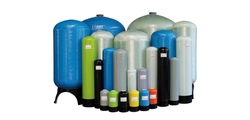
FRP pressure vessels and housings are lightweight and corrosion-resistant. They can be engineered for required pressure ratings but may have limitations regarding long-term chemical compatibility with certain oxidants and solvents. FRP is useful when corrosion resistance outweighs mechanical considerations, but ensure proper resin selection and quality manufacturing to avoid delamination or permeation issues.
| Material | Corrosion Resistance | Pressure/Strength | Compatibility with CIP | Typical Use |
|---|---|---|---|---|
| SS304 | Moderate (poor in high chlorides) | High | Good with non-oxidizing cleaners | Piping, vessels (low-chloride systems) |
| SS316 / 316L | High (better with chlorides) | High | Excellent | High-purity piping, pressure vessels |
| FRP | High (depending on resin) | Medium to High | Variable (check resin compatibility) | Pressure housings, tanks |
| PVC / CPVC | Good (not for high-temp/high-pressure) | Low to Medium | Good | Pre-treatment piping, drains |
| HDPE / PP | Good | Medium | Good | Piping, storage tanks |
Pressure Vessels, Piping and Component Choices
Pressure vessels and membrane housings
Pressure vessels that hold RO membrane elements must withstand transmembrane pressure and exhibit long-term dimensional stability. Commonly used materials include SS316/316L, carbon steel lined with corrosion-resistant coatings, and FRP with a suitable resin system. For electronic component cleaning water (ultra-clean rinse), specify SS316L or high-grade FRP with validated inert liners to avoid leaching metals.
Pumps, valves and fittings
High-pressure pumps are typically stainless steel wetted end or specially coated alloys. Valves and fittings should match the piping material to prevent galvanic corrosion; for mixed-metal systems, use isolation strategies or dielectric unions. Select valve types (ball, diaphragm, butterfly) based on chemical compatibility and the need for sanitary control. For accurate concentrate control and sampling, use corrosion-resistant sampling ports and needle valves rated for operating pressures.
Seals, gaskets and elastomers
Elastomers in seals and gaskets must resist oxidizing cleaners and high pH/acid exposures. EPDM, PTFE (Teflon), and Viton are commonly used depending on chemical exposure: PTFE has excellent chemical resistance but limited flexibility; EPDM is good for hot water and some alkalis; Viton offers broad chemical resistance including many solvents and oxidants. Always match elastomer selection to the CIP chemistry and operating temperatures to avoid premature failures and particulate contamination.
Design, Corrosion Control and Lifecycle Considerations
Corrosion mechanisms and prevention
Common corrosion mechanisms in industrial RO systems include chloride-induced pitting, crevice corrosion near gaskets and welds, and microbiologically influenced corrosion (MIC) in stagnant sections. Preventive measures include: using 316/316L in chloride environments, designing welds and joints to minimize crevices, ensuring proper drainage to avoid dead-legs, and using biocides/CIP regimes proven compatible with materials. Cathodic protection is rarely used in RO skid interiors but can be relevant for external tanks in certain installations.
Cleaning and sanitation compatibility
CIP chemicals like citric acid, hydrochloric acid, sodium hydroxide, and peroxide or chlorine-based oxidants are essential for control of inorganic scale and biofouling. Material compatibility charts should be consulted before specifying a CIP protocol. For example, repeated exposure to hypochlorite can damage stainless steel and many elastomers; therefore, if chlorination is used, select materials and gaskets known to tolerate residual oxidant exposure or use alternative oxidants (e.g., hydrogen peroxide) compatible with the chosen materials.
Total cost of ownership and lifecycle analysis
Initial material cost is only one part of the lifecycle. A more corrosion-resistant material (e.g., SS316L) may cost more upfront but reduce downtime, membrane damage, and maintenance costs. Consider extended warranties, ease of repair, spare part availability, and the impact of material failures on product quality (especially for electronic component cleaning where ionic contamination is critical). A lifecycle cost model should include CAPEX, maintenance, cleaning chemical consumption, downtime risk, and disposal costs for end-of-life components.
Installation, Testing and Compliance
Fabrication and weld quality
High-quality fabrication with certified welders and post-weld treatment (pickling/passivation for stainless steel) reduces corrosion initiation points. Ensure pressure testing (hydrostatic or pneumatic per local code) and leak testing are performed after installation. For stainless components used in high-purity applications, electropolishing can further reduce surface roughness and limit biofilm attachment.
Monitoring and control instrumentation
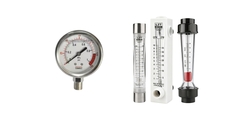
Material choice affects sensor placement and longevity. Conductivity probes, pressure gauges, and flow meters should be specified with wetted materials compatible with system chemistry and operating conditions. Provide accessible sampling points and isolation valves made from compatible materials to enable routine checks without system contamination.
Regulatory and certification requirements
Depending on the application (e.g., food processing, pharmaceutical rinse, electronic cleaning), the system may require certifications or compliance with local and international standards. Use NSF/ANSI certified components for potable or food-contact applications where required. Document material certificates, weld reports, and traceability for critical applications to meet audit and quality requirements.
FAQ — Materials of Construction for Industrial RO Units
Q: Is SS316 always necessary for industrial RO systems?
A: Not always. SS316/316L is recommended for chloride-rich or coastal environments and high-purity applications. For non-aggressive feedwaters or where budget constraints exist, SS304 or a combination with plastic piping may be acceptable. Perform a feedwater chemical analysis and lifecycle cost comparison before deciding.
Q: Can FRP be used for high-pressure membrane housings?
A: Yes, FRP can be engineered for required pressures, but resin selection and manufacturing quality are crucial. Verify chemical compatibility with CIP agents and validate that the FRP vessel meets required pressure ratings and certification.
Q: What elastomer should I choose for RO seals exposed to CIP?
A: Selection depends on the CIP chemistry. PTFE offers broad chemical resistance but limited elasticity; EPDM is good for hot water and alkalis; Viton is highly chemical resistant but costlier. Match to your exact CIP protocol and temperature range.
Q: How do I prevent galvanic corrosion in mixed-metal systems?
A: Minimize dissimilar metal contacts, use dielectric unions where needed, and design to avoid electrical pathways between metals. Maintain similar metallurgy in wetted parts where possible.
Q: How often should material compatibility be re-evaluated?
A: Re-evaluate whenever feedwater chemistry changes, a new CIP chemical is introduced, or when scaling/biofouling issues arise. Annual reviews of operating data and incident reports help catch material-related issues early.
Contact & Product Information
For help specifying materials for your industrial reverse osmosis application or to learn more about the AQUALITEK 4TPH Industrial Reverse Osmosis Water Purification RO System, contact our sales engineers or view the product page. Our team can provide feedwater analysis, material certificates, and a lifecycle cost comparison tailored to your facility.
500 LPH Reverse Osmosis TWV - 412 (RO): In-Depth Review
Top 10 water softener system Manufacturers and Supplier Brands

4TPH Industrial Reverse Osmosis RO System: Technical Overview
Membrane Fouling: Causes and Prevention in RO
Solutions
Are AQT’s water treatment products certified?
Yes! Our products comply with international quality and safety standards, including ISO, CE, and NSF certifications. We prioritize high-quality materials, advanced technology, and strict quality control to ensure superior performance and reliability.
Can I use AQT’s water treatment systems for seawater desalination?
Yes! We provide seawater desalination systems using advanced reverse osmosis (RO) technology, specifically designed to convert seawater into fresh, drinkable water. These systems are ideal for coastal communities, marine applications, and industrial desalination projects.
Membrane Water Treatment Systems
How long do membranes last?
With proper maintenance and CIP, UF and RO membranes can last 3–5 years, depending on feed water quality and system design.
Water Filters
How do I choose between a media filter and a micron filter?
Media filters are ideal for high-volume solids removal and can be backwashed. Micron filters offer precise filtration for fine particles and are best for polishing applications.
Ion Exchange Water Treatment Systems
Can ion exchange work with seawater or high-TDS water?
Ion exchange is more suitable for low to moderate TDS water. High-TDS applications often use RO as a primary treatment.
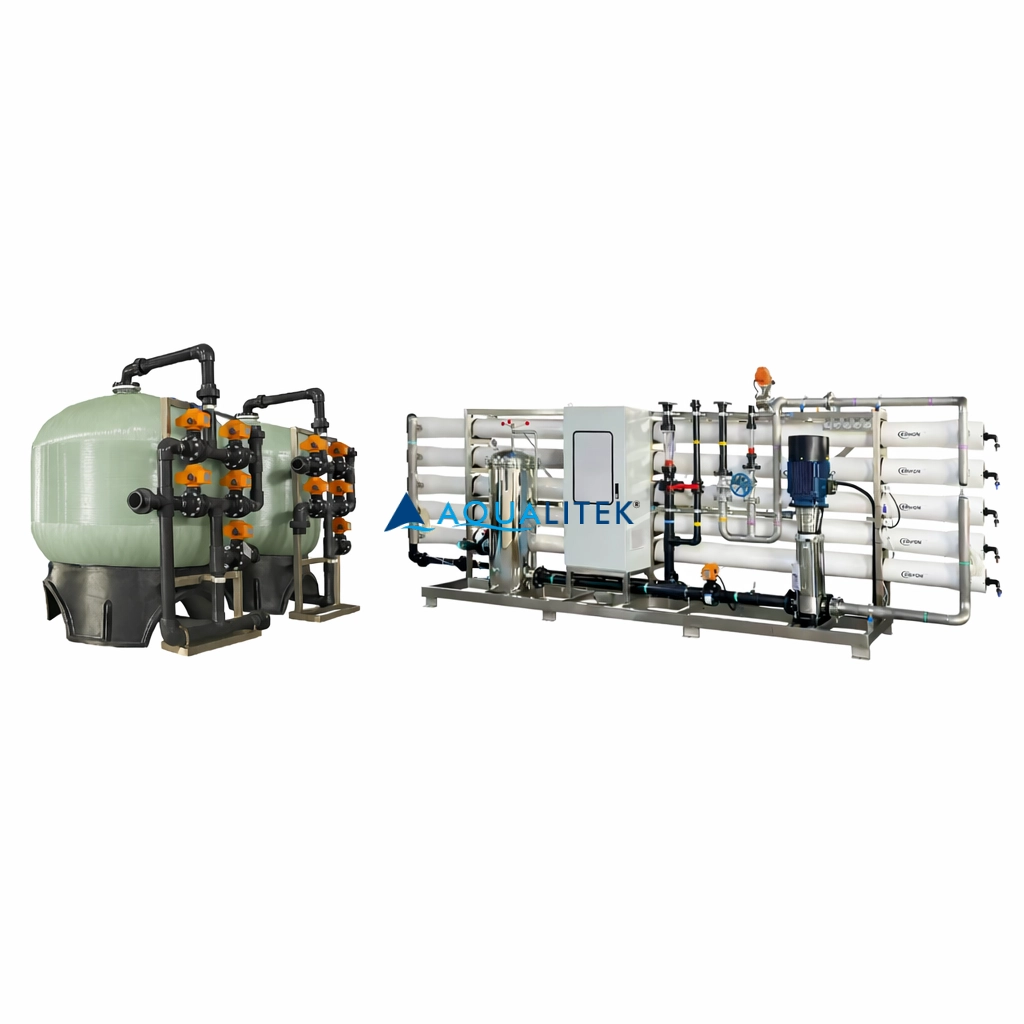
30TPH Industrial Reverse Osmosis (RO) System
30TPH Industrial Reverse Osmosis (RO) System designed for industrial and municipal water treatment. High salt rejection, energy-efficient design, PLC control, and customizable configuration.
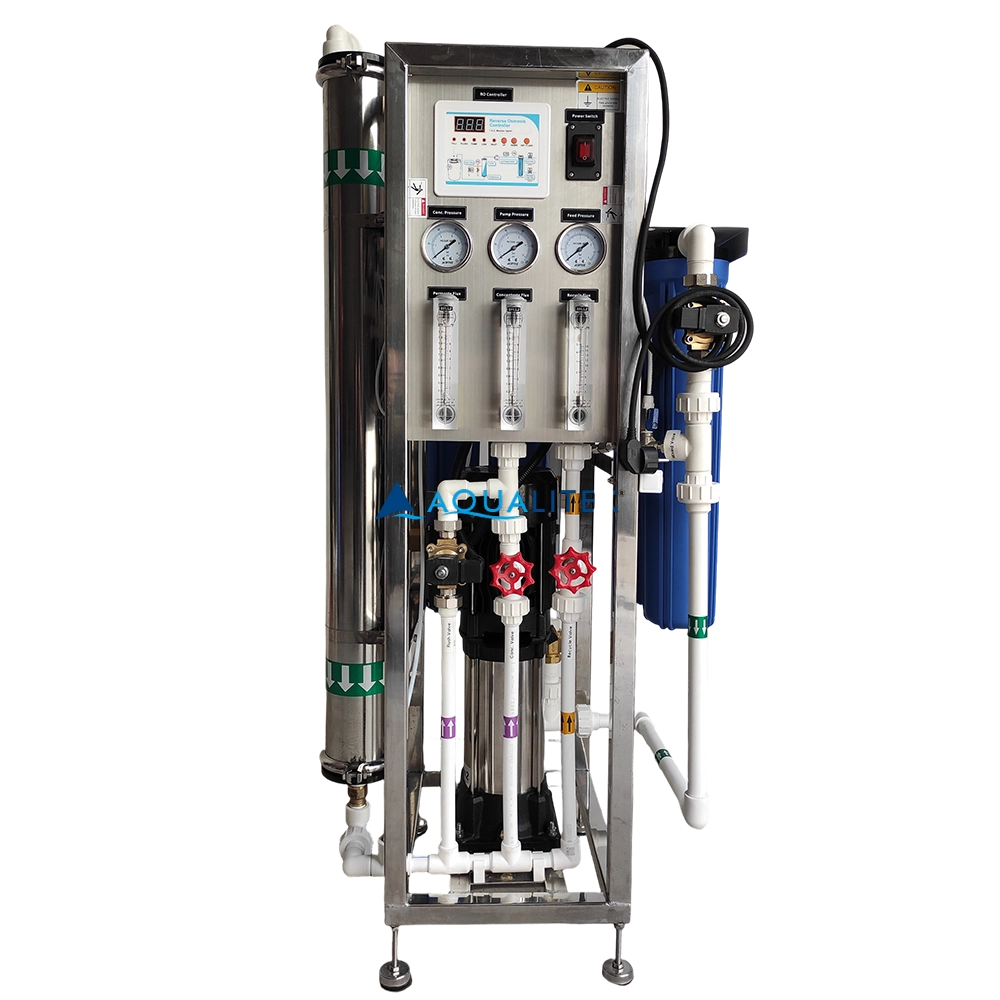
500 LPH Reverse Osmosis (RO) Water Purification Machine TWV - 412
Our 500 LPH Reverse Osmosis (RO) System is engineered to provide high-quality purified water for commercial applications. Designed with advanced RO technology, durable components, and a user-friendly interface, this system ensures consistent performance, low maintenance, and long-term reliability.
With its compact design and robust skid-mounted frame, it’s an excellent choice for businesses that demand efficiency and quality in water purification.
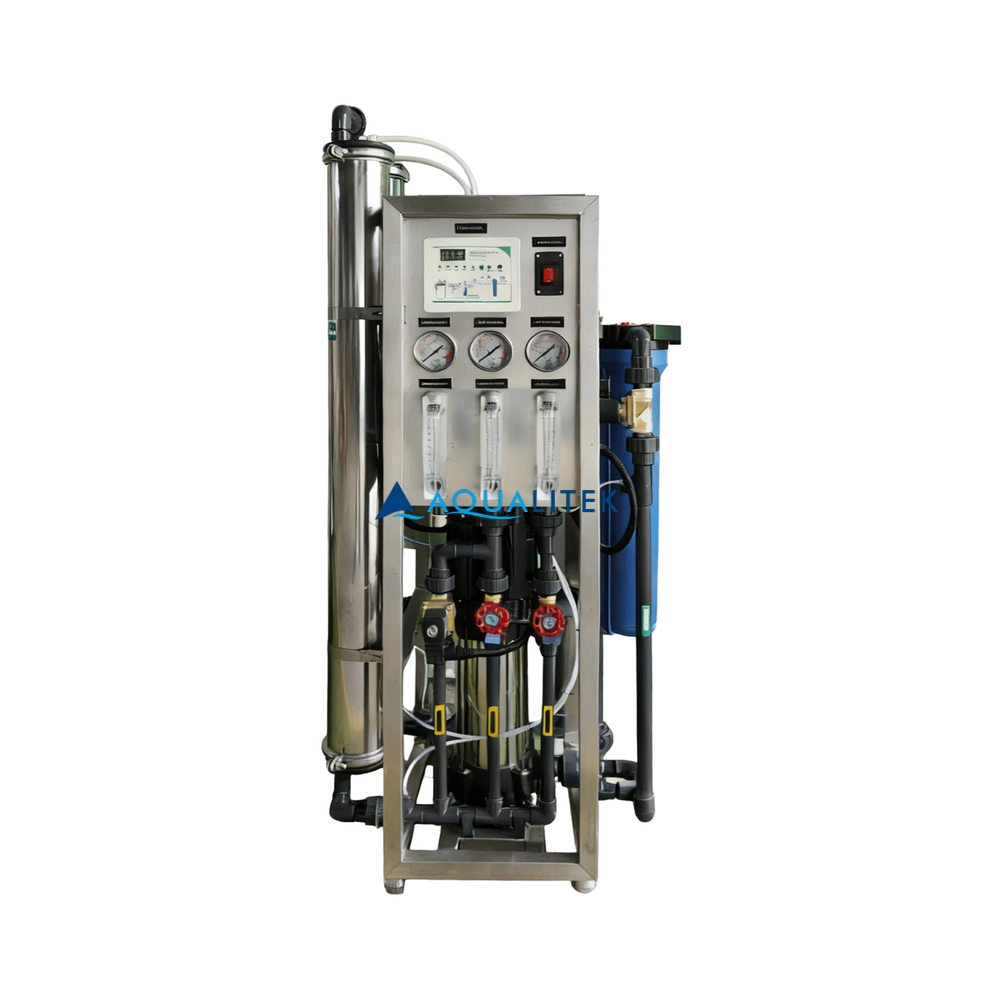
Tap Water Reverse Osmosis (TWRO) Systems TWV Series
TWV series Reverse Osmosis (RO) systems are pre-engineered and pre-assembled units with 2.5”/4” membrane housings(single element type)for tap water(lower TDS).They are designed for overall superior performance, high recovery rates and offer great savings with low maintenance and operation costs.
Tap Water Reverse Osmosis (TWRO) Systems TWF Series
TWF series Reverse Osmosis (RO) systems are pre-engineered and pre-assembled units with 4” membrane housings(multiple elements type) for tap water(lower TDS) .The medium large volumes can help meet your a variety of commercial and industrial applications. They are designed for overall superior performance, high recovery rates and offer great savings with low maintenance and operation costs.
Request More Information
Contact us today for product catalogs, customization options, and a free quotation designed for your business needs.
Rest assured that your privacy is important to us, and all information provided will be handled with the utmost confidentiality.
© 2026 AQUALITEK. All rights reserved.
AQUALITEK- Aimee Hoo
AQUALITEK - Aimee Hoo