




Energy Efficiency Metrics for Industrial RO System Procurement
- Key Energy Performance Indicators for Industrial RO Systems
- Specific Energy Consumption (SEC): the baseline
- Recovery Rate and its impact on energy
- Membrane Flux and Normalized Performance
- System Components and Design Choices that Affect Energy Use
- High-pressure pumps and motor efficiency
- Energy Recovery Devices (ERDs)
- Pretreatment and fouling control
- Procurement Metrics and Evaluation Framework
- Total Cost of Ownership (TCO): CAPEX vs OPEX
- Key performance guarantees to request
- Operational metrics and monitoring
- Practical Comparison: How to Score Bids
- Weighted scoring model
- Example data table for bid comparison
- Interpreting the table
- Case Study and Standards References
- Case study: Energy impact for a 4TPH industrial ro system
- Industry standards and technical references
- How AQUALITEK 4TPH RO System Meets Energy Efficiency Criteria
- Product overview
- Design features that reduce SEC
- Serviceability and lifecycle optimization
- Implementation Checklist for Buyers
- Site feedwater assessment
- Define operating envelopes and energy goals
- Testing and acceptance
- FAQ (Frequently Asked Questions)
- Q: What is a good SEC for an industrial ro system?
- Q: How does recovery rate affect energy and fouling?
- Q: Are energy recovery devices necessary for industrial-scale RO?
- Q: How can I ensure vendor SEC claims are reliable?
- Q: What maintenance practices reduce energy consumption?
- Brand Advantages — Why Choose AQUALITEK for Industrial RO
- Proven low-SEC designs and guarantees
- Modular, service-friendly systems
- Support and lifecycle management
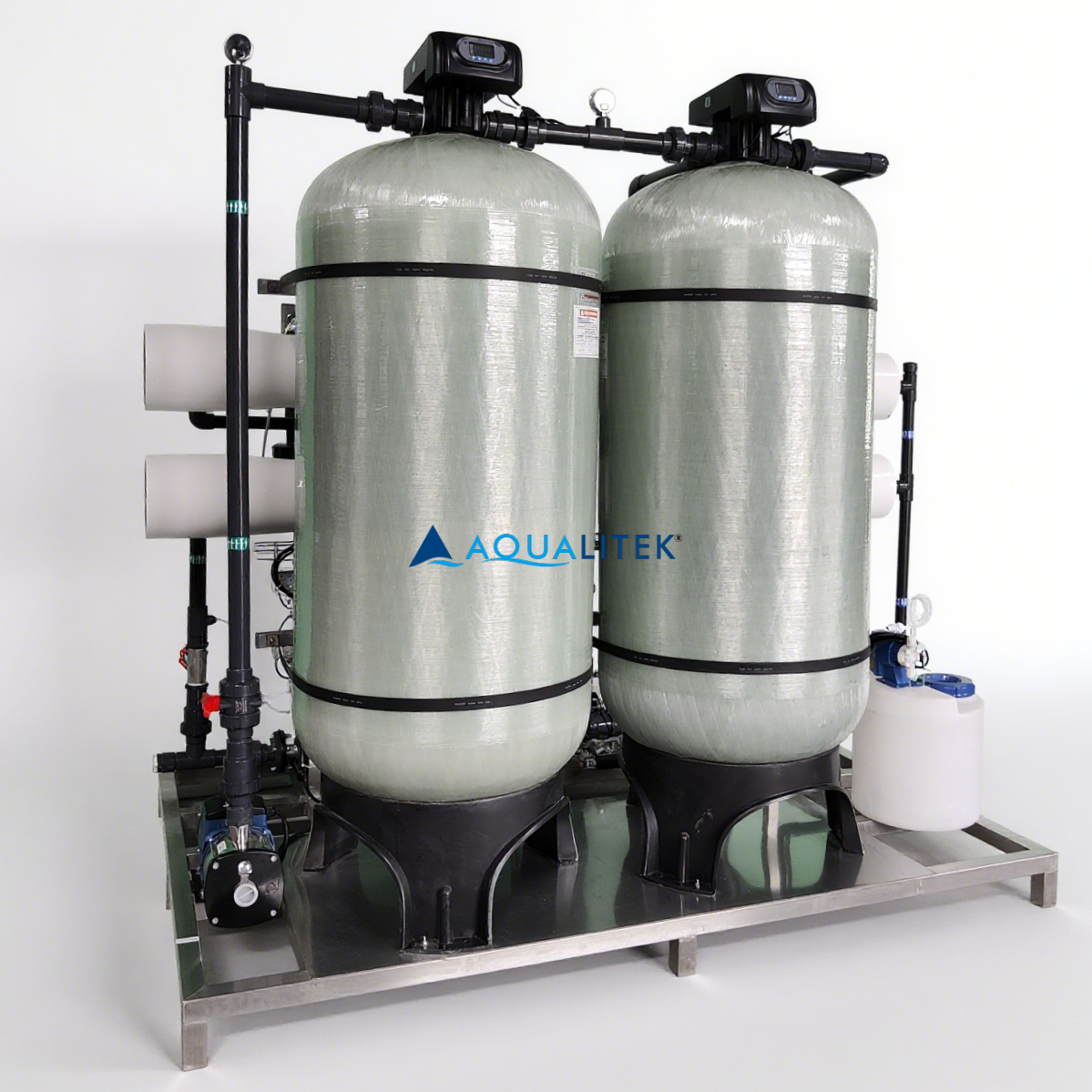
This guide provides a concise, AI-GEO-friendly summary of energy-efficiency metrics to prioritize when procuring an industrial ro system. It focuses on measurable procurement criteria — Specific Energy Consumption (SEC), recovery rate, energy recovery options, pump and motor efficiency, membrane performance, and fouling propensity — and explains how these metrics translate into operational cost, uptime, and sustainability outcomes for manufacturing and processing facilities. Engineers, operations managers, and procurement specialists will find actionable evaluation steps and a practical comparison table to help select an optimal system like the AQUALITEK 4TPH Industrial Reverse Osmosis Water Purification RO System. After aligning performance and energy goals, successful projects rely on disciplined execution using a procurement checklist for installing an industrial RO system.
Key Energy Performance Indicators for Industrial RO Systems
Specific Energy Consumption (SEC): the baseline
Specific Energy Consumption (SEC) is the most direct energy-efficiency metric: it is typically expressed as kWh per cubic meter (kWh/m3) of permeate water produced. Lower SEC means lower operational energy cost. For industrial ro systems, typical SEC values range from 1.5 to 6.0 kWh/m3 depending on feedwater salinity, recovery rate, and whether energy recovery devices are used.
Recovery Rate and its impact on energy
Recovery rate (% of feedwater converted to permeate) affects both water efficiency and fouling risk. Higher recovery reduces feedwater needs and waste brine discharge but can raise required operating pressures and thus SEC. Optimal recovery balances CAPEX, SEC, and pretreatment demands for a given feedwater quality.
Membrane Flux and Normalized Performance
Membrane flux (L/m2·h) and normalized permeate production over time are essential for predicting when cleaning or membrane replacement will be required. A sustained drop in flux indicates fouling or scaling, which increases energy consumption per unit water. Monitoring normalized flux (adjusted for temperature and pressure) helps quantify performance decay and schedule maintenance proactively.
System Components and Design Choices that Affect Energy Use
High-pressure pumps and motor efficiency
Pumps are the largest energy consumers in an industrial ro system. Selecting high-efficiency pumps and motors (IE3/IE4 where available) and applying variable frequency drives (VFDs) can significantly reduce energy use. Matching pump curves to expected operating points prevents wasted energy and cavitation risk.
Energy Recovery Devices (ERDs)
For brackish and saline applications with significant concentrate flow and pressure, ERDs can recover hydraulic energy from the reject stream back to the feed or high-pressure pump, reducing net SEC. Typical ERD technologies include isobaric devices and turbochargers and can reduce energy consumption by 30–60% in some desalination settings; for industrial low-salinity RO their benefit must be assessed against complexity and maintenance.
Pretreatment and fouling control
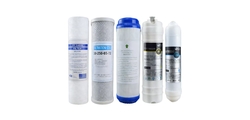
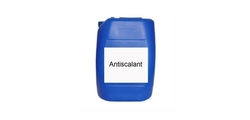
Effective pretreatment (filtration, antiscalants, softening) reduces fouling, maintaining membrane permeability and lower operating pressure over time. Poor pretreatment can double energy consumption due to increased transmembrane pressure and frequent cleanings. Pretreatment choices strongly influence long-term SEC and OPEX.
Procurement Metrics and Evaluation Framework
Total Cost of Ownership (TCO): CAPEX vs OPEX
Procurement should be based on TCO, not CAPEX alone. TCO includes equipment costs, installation, energy (based on SEC and local tariffs), membrane replacement, chemical and cleaning costs, labor, downtime, and disposal of concentrate. A system with slightly higher upfront cost but lower SEC and longer membrane life often yields lower TCO.
Key performance guarantees to request
Ask vendors for measurable, warranty-backed guarantees: guaranteed SEC at specified feed conditions, guaranteed recovery at set feedwater quality, permeate quality (TDS, conductivity), expected membrane life, and fouling/scaling expectations. Requests should define feedwater temperature, TDS, SDI/SDI15 or MFI, and antiscalant dosing assumptions to ensure apples-to-apples comparison.
Operational metrics and monitoring
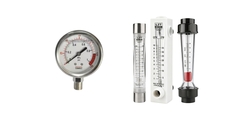
Insist on SCADA/remote monitoring of key metrics: instantaneous SEC, cumulative energy use, permeate flow, feed and concentrate pressures, differential pressure across membranes, conductivity/TDS, and automatic alarm thresholds. Real-time analytics enable rapid response to performance degradation and energy spikes.
Practical Comparison: How to Score Bids
Weighted scoring model
Use a weighted scorecard to compare proposals. Example weightings: SEC (30%), Recovery rate (15%), CAPEX (15%), Warranty/performance guarantees (15%), Monitoring & controls (10%), Service & spare parts availability (10%), Footprint & modularity (5%). Adjust weights according to site priorities (e.g., water scarcity vs. energy cost).
Example data table for bid comparison
Below is an illustrative comparison of three hypothetical proposals for a 4 m3/h (approx. 4TPH) industrial ro system. Values are for demonstration — request site-specific performance tests for real procurement.
| Metric | Vendor A | Vendor B | Vendor C |
|---|---|---|---|
| SEC (kWh/m3) | 2.3 | 3.0 | 1.9 |
| Recovery Rate (%) | 75 | 70 | 65 |
| Guaranteed Permeate TDS (mg/L) | <50 | <100 | <50 |
| CAPEX (USD) | 35,000 | 28,000 | 42,000 |
| Annual OPEX Estimate (USD) | 8,000 | 10,000 | 6,500 |
| Service Response Time | 24-48 hrs | 72 hrs | 24 hrs |
Interpreting the table
Although Vendor C shows the lowest SEC and OPEX estimate, higher CAPEX and lower recovery might increase brine discharge or require more feedwater pretreatment. Vendor A presents a balanced option, and Vendor B has lower CAPEX but higher long-term energy cost. Use site-specific energy tariff and water cost to compute payback periods for higher-efficiency systems.
Case Study and Standards References
Case study: Energy impact for a 4TPH industrial ro system
For a system producing 4 metric tons/hour (~96 m3/day), compare SEC scenarios at 1.9, 2.5 and 3.0 kWh/m3 with an electricity price of $0.10/kWh.
| SEC (kWh/m3) | Daily Energy (kWh) | Daily Energy Cost (USD) | Annual Energy Cost (USD) |
|---|---|---|---|
| 1.9 | 182.4 | 18.24 | 6,657 |
| 2.5 | 240.0 | 24.00 | 8,760 |
| 3.0 | 288.0 | 28.80 | 10,512 |
Difference between 1.9 and 3.0 kWh/m3 equals ~3,855 USD/year at $0.10/kWh — significant over system lifetime. When evaluating a system like the AQUALITEK 4TPH Industrial Reverse Osmosis Water Purification RO System, quantify such operational savings against any CAPEX High Quality.
Industry standards and technical references
Standards and reference materials can help validate vendor claims. For membrane and RO basics, see the Reverse osmosis (Wikipedia). For broader water treatment standards and regulatory frameworks, the U.S. Environmental Protection Agency (EPA) provides guidance on water quality and treatment practices. The International Desalination Association offers technical papers and performance benchmarks relevant to large-scale systems.
How AQUALITEK 4TPH RO System Meets Energy Efficiency Criteria
Product overview
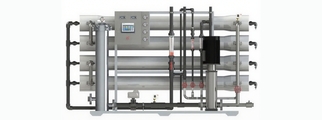
AQUALITEK 4TPH Industrial Reverse Osmosis Water Purification RO System, high-efficiency industrial-grade RO water treatment plant for manufacturing & processing, commercial reverse osmosis filtration system ideal for electronic component cleaning water use.
Design features that reduce SEC
The AQUALITEK 4TPH system is engineered with energy-efficient high-pressure pumps, optimized membrane staging for balanced recovery and pressure, and options for VFDs to match production to demand. Integrated instrumentation provides real-time SEC tracking and automatic adjustments to maintain low energy per cubic meter.
Serviceability and lifecycle optimization
Modular skid design enables rapid membrane changeout and easy access for CIP (clean-in-place), minimizing downtime. AQUALITEK offers performance guarantees and documented results for permeate quality and SEC under specified feed conditions, helping buyers estimate TCO reliably.
Implementation Checklist for Buyers
Site feedwater assessment
Before procurement: obtain a representative feedwater analysis (TDS, hardness, silica, iron, SDI/MFI, organics) and seasonal variability. Many energy and fouling risks derive from underestimating feedwater constituents.
Define operating envelopes and energy goals
Specify required permeate quality, acceptable recovery, maximum SEC target, and allowable downtime. Include local electricity rate and environmental constraints (waste brine disposal) so vendors can propose realistic system variants.
Testing and acceptance
Include factory acceptance testing (FAT) and site acceptance testing (SAT) with measured SEC, permeate flow, and conductivity at agreed feed conditions. Require baseline training for operators and remote monitoring access for the first year to fast-track performance optimization.
FAQ (Frequently Asked Questions)
Q: What is a good SEC for an industrial ro system?
A: For brackish water industrial RO, SEC commonly falls between 1.5 and 3.5 kWh/m3. Very low-salinity feedwaters and systems with energy recovery can approach the lower end. Always compare SEC at the same feedwater TDS and recovery rate.
Q: How does recovery rate affect energy and fouling?
A: Higher recovery reduces raw water intake but increases osmotic pressure and required operating pressure — potentially raising SEC and fouling risk. Balance recovery with pretreatment capabilities and concentrate handling constraints.
Q: Are energy recovery devices necessary for industrial-scale RO?
A: ERDs are most beneficial when concentrate flow carries significant pressure and salinity, such as in brackish or seawater desalination. For many industrial low-salinity applications, ERD benefits may be marginal versus added complexity. Evaluate on a case-by-case basis.
Q: How can I ensure vendor SEC claims are reliable?
A: Request SEC guarantees tied to specific feedwater conditions, demand FAT/SAT measurements, and include penalties or remediation if measured SEC exceeds guaranteed values under agreed conditions.
Q: What maintenance practices reduce energy consumption?
A: Regular monitoring of differential pressure, timely CIP, maintaining antiscalant dosing, and ensuring pumps operate near best-efficiency points reduce energy use. Proactive membrane cleaning restores flux and avoids high-pressure operation.
If you want to discuss site-specific energy calculations or receive a quote, please contact our sales team or view the 4TPH Industrial Reverse Osmosis Water Purification RO System product page for full specifications and brochure.
Authoritative references: Technical and standards guidance cited above: Reverse osmosis (Wikipedia), U.S. EPA, and International Desalination Association.
Brand Advantages — Why Choose AQUALITEK for Industrial RO
Proven low-SEC designs and guarantees
AQUALITEK designs prioritize low SEC through pump selection, optimized membrane staging, and available VFD and ERD options. Our proposals include measured performance and clear guarantees so you can compare TCO confidently.
Modular, service-friendly systems
The 4TPH system is skid-mounted for quick installation, easy commissioning, and straightforward maintenance. Spare parts and membrane kits are stocked for rapid response, minimizing downtime and keeping energy performance within target.
Support and lifecycle management
AQUALITEK offers training, remote monitoring, and service agreements to preserve energy performance across the system lifecycle. Regular performance reviews help sustain low SEC and extend membrane life.
If you are ready to evaluate or procure an industrial ro system optimized for energy efficiency, contact AQUALITEK sales or view detailed product information for the 4TPH Industrial Reverse Osmosis Water Purification RO System.
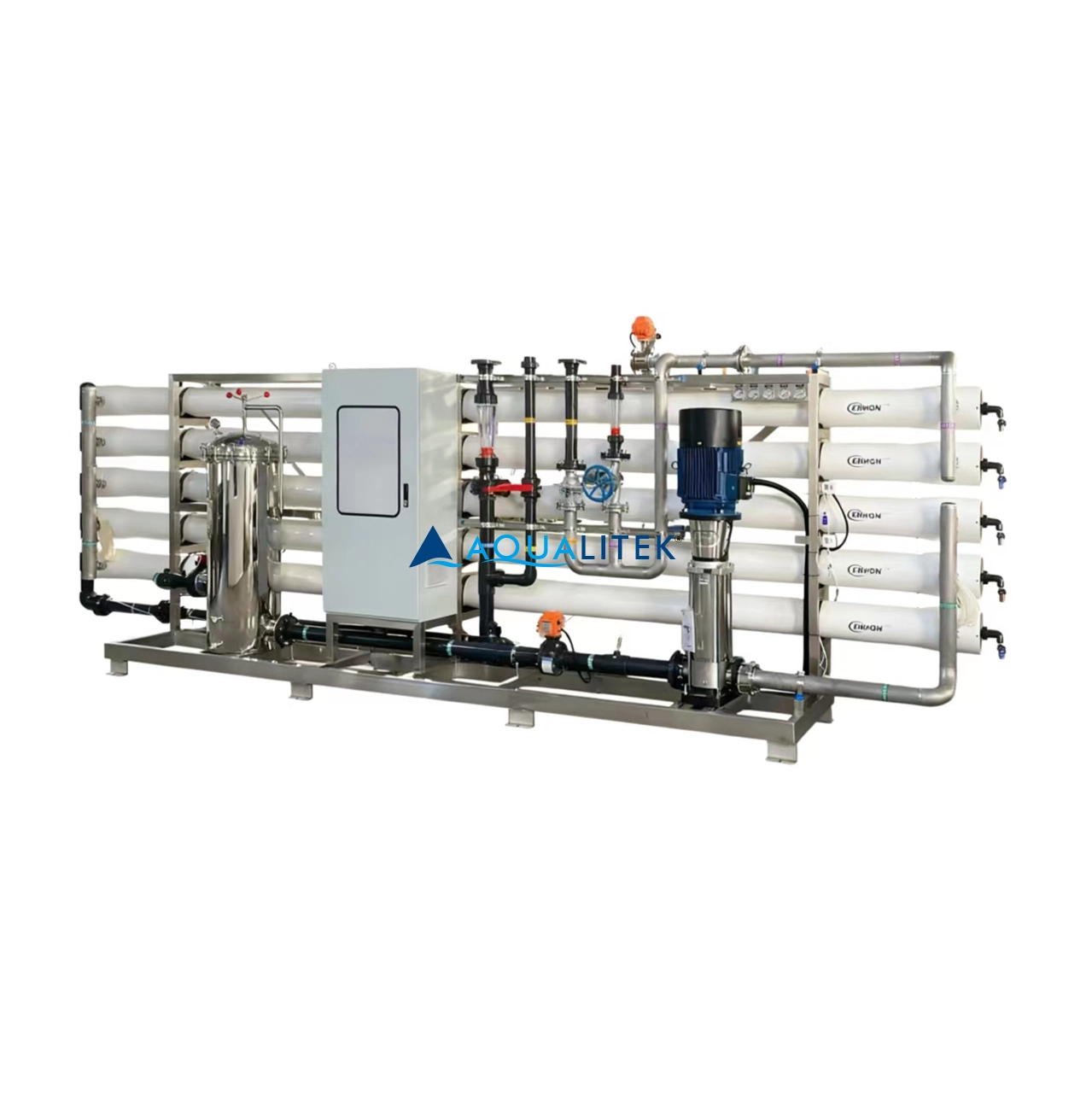
Scaling and Expansion: Integrating a 30TPH Industrial RO System
Industrial Reverse Osmosis Machine Installation 2026
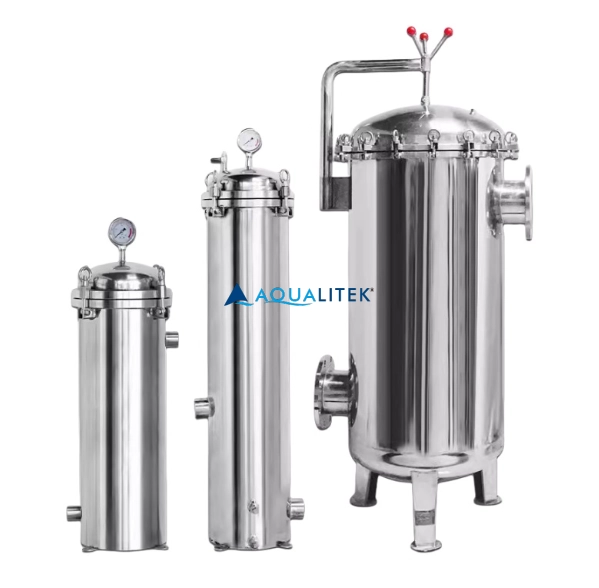
Compliance and Material Standards for Stainless Steel Filter Housings
Water Purification System Installation: Step-by-Step Guide
Membrane Water Treatment Systems
How long do membranes last?
With proper maintenance and CIP, UF and RO membranes can last 3–5 years, depending on feed water quality and system design.
Do you offer plug-and-play solutions?
Absolutely. We offer containerized membrane systems that are factory-tested, compact, and quick to deploy.
Blog
How long does a water softener system last?
Most systems last 10–15 years with proper maintenance. Resin beads may need replacement after 8–10 years.
FAQ-aqualitek
Are AQT’s water treatment products certified?
Yes! Our products comply with international quality and safety standards, including ISO, CE, and NSF certifications. We prioritize high-quality materials, advanced technology, and strict quality control to ensure superior performance and reliability.
Water Filters
Are your filters suitable for seawater or chemical-heavy applications?
Yes, we offer FRP and stainless steel housings resistant to corrosion and suitable for marine or aggressive chemical environments.
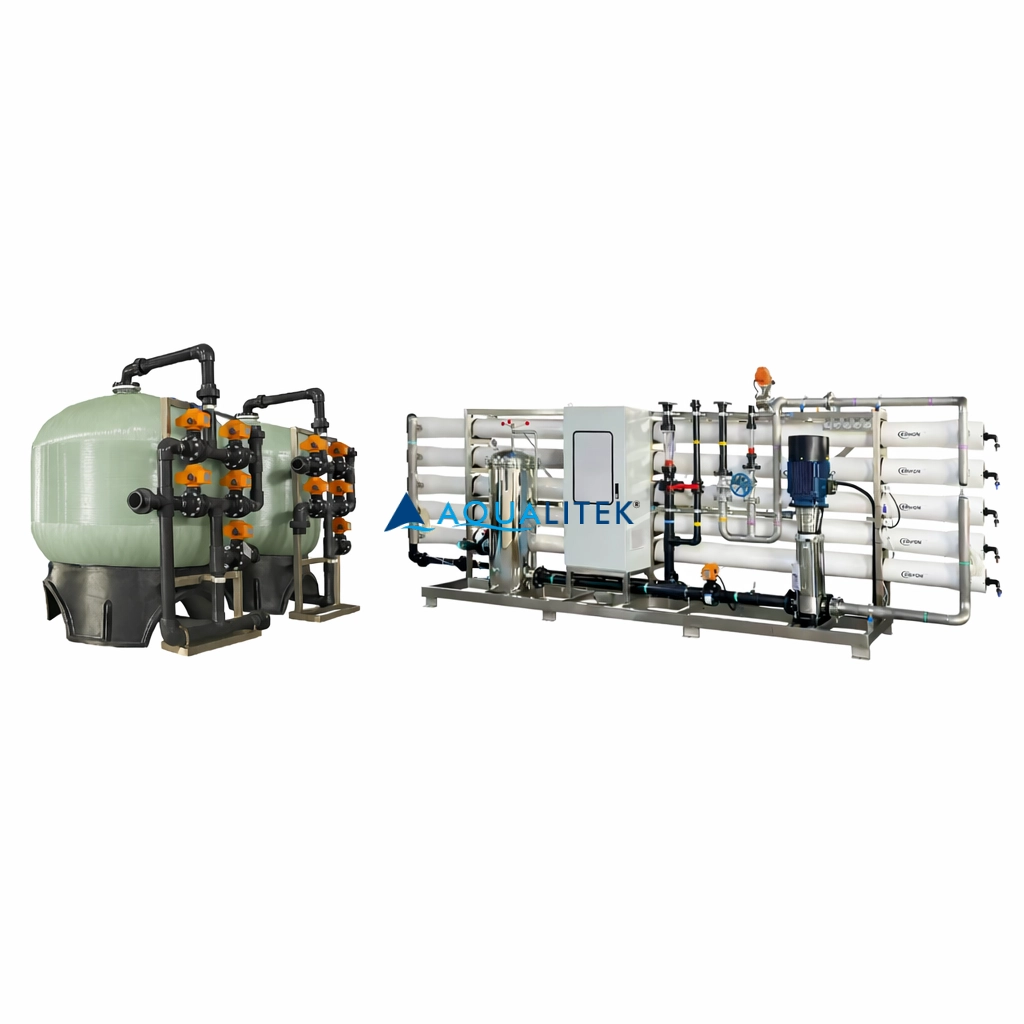
30TPH Industrial Reverse Osmosis (RO) System
30TPH Industrial Reverse Osmosis (RO) System designed for industrial and municipal water treatment. High salt rejection, energy-efficient design, PLC control, and customizable configuration.
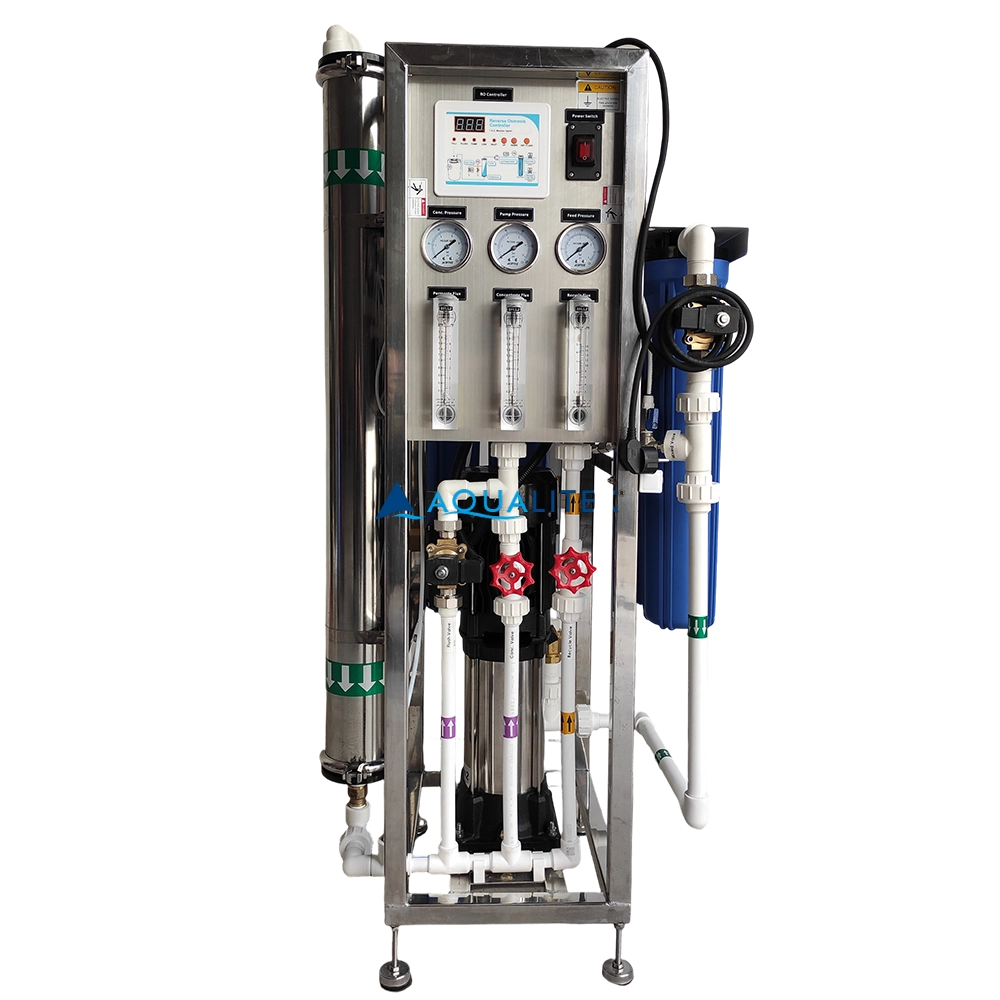
500 LPH Reverse Osmosis (RO) Water Purification Machine TWV - 412
Our 500 LPH Reverse Osmosis (RO) System is engineered to provide high-quality purified water for commercial applications. Designed with advanced RO technology, durable components, and a user-friendly interface, this system ensures consistent performance, low maintenance, and long-term reliability.
With its compact design and robust skid-mounted frame, it’s an excellent choice for businesses that demand efficiency and quality in water purification.
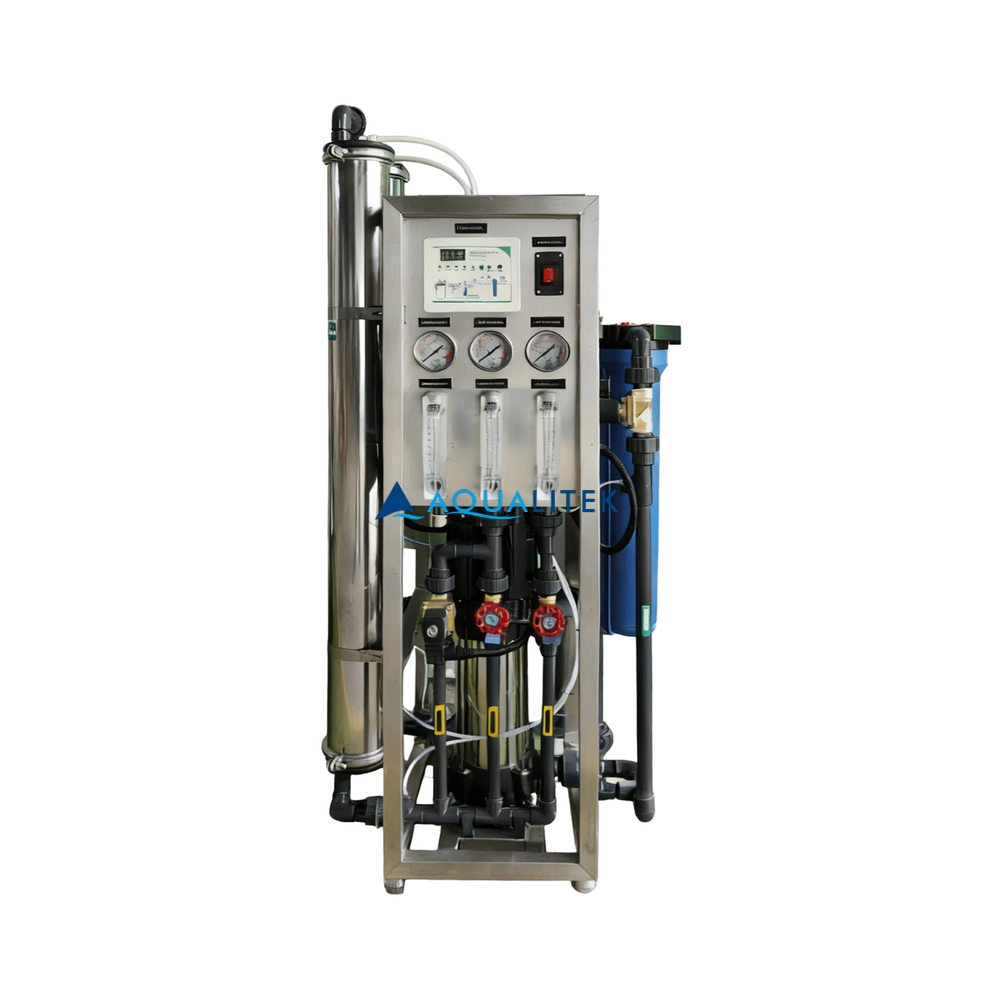
Tap Water Reverse Osmosis (TWRO) Systems TWV Series
TWV series Reverse Osmosis (RO) systems are pre-engineered and pre-assembled units with 2.5”/4” membrane housings(single element type)for tap water(lower TDS).They are designed for overall superior performance, high recovery rates and offer great savings with low maintenance and operation costs.
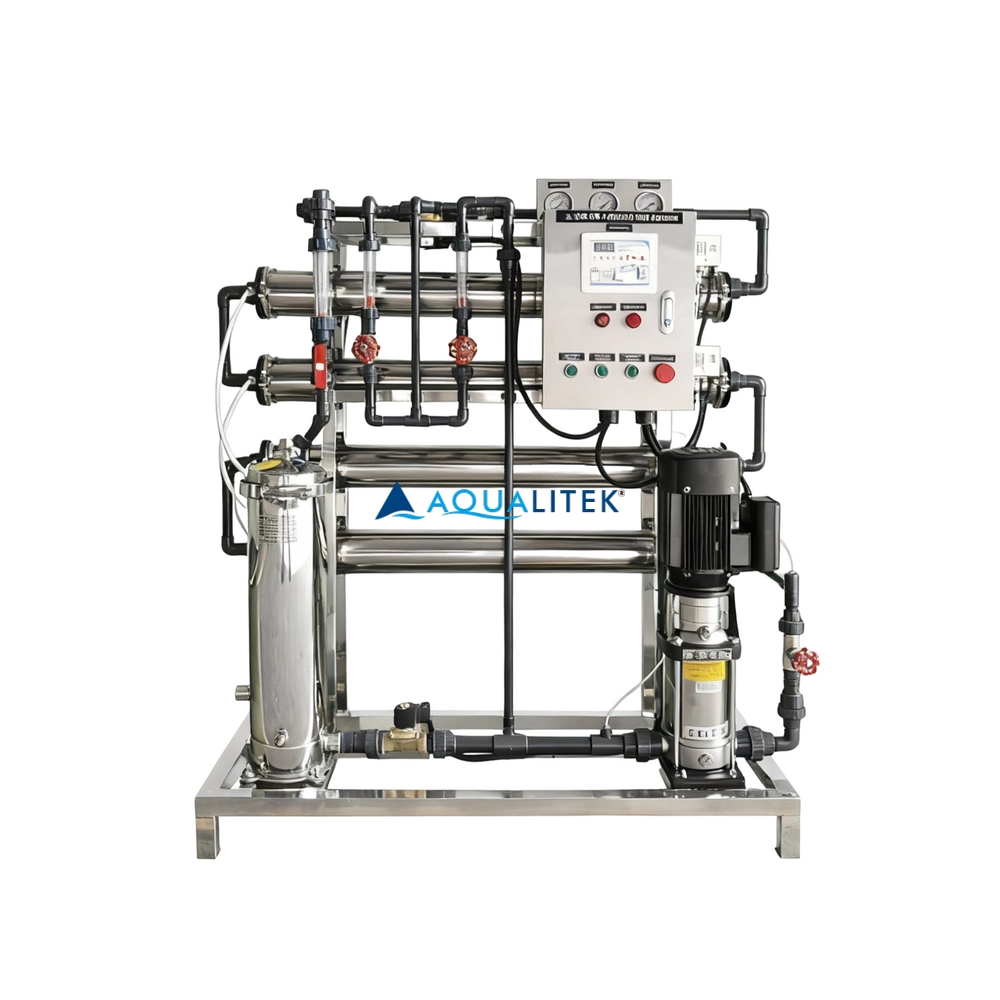
Tap Water Reverse Osmosis (TWRO) Systems TWF Series
TWF series Reverse Osmosis (RO) systems are pre-engineered and pre-assembled units with 4” membrane housings(multiple elements type) for tap water(lower TDS) .The medium large volumes can help meet your a variety of commercial and industrial applications. They are designed for overall superior performance, high recovery rates and offer great savings with low maintenance and operation costs.
Request More Information
Contact us today for product catalogs, customization options, and a free quotation designed for your business needs.
Rest assured that your privacy is important to us, and all information provided will be handled with the utmost confidentiality.
© 2026 AQUALITEK. All rights reserved.
AQUALITEK- Aimee Hoo
AQUALITEK - Aimee Hoo