




What are best practices for RO system start-up?
- Essential Guide to Reverse Osmosis System Start-Up: Best Practices and Common Questions
- 1. What is the Correct Startup Sequence for an Industrial RO System?
- 2. How Do I Prevent Scale Formation in My RO System?
- 3. What Are the Key Performance Metrics for RO Systems?
- 4. How Do I Properly Design a Commercial RO System?
- 5. What Are Common Issues During RO System Start-Up and How Can They Be Prevented?
- 6. How Do I Maintain My RO System to Ensure Longevity?
- 7. What Are the Benefits of Choosing AQUALITEK for My RO System Needs?
Essential Guide to Reverse Osmosis System Start-Up: Best Practices and Common Questions
Starting up a Reverse Osmosis (RO) system requires meticulous attention to detail to ensure optimal performance and extend the system's lifespan. Below, we address common questions and provide expert insights to guide you through the process.
1. What is the Correct Startup Sequence for an Industrial RO System?
A proper startup sequence is crucial to protect the RO membrane and associated components:
Pre-Startup Checklist: Ensure the feed water source is stable, all valves are correctly positioned, electrical connections are secure, and the pretreatment system is functioning properly.
Startup Steps:
- Start the Pretreatment System: Activate filters and softeners to provide clean water to the RO unit.
- Start the Feed Pump: Introduce low-pressure water to the system, allowing for air flushing and membrane protection.
- Open Concentrate Valve Fully: Reduce back pressure on the membrane.
- Gradually Start the High-Pressure Pump: Slowly increase pressure to operating levels.
- Adjust Flow and Pressure: Set the system to designed operating parameters.
Following this sequence minimizes the risk of membrane damage and ensures system stability. ((https://www.aqualitek.com/best-guide-what-is-the-correct-startup-sequence-for-an-industrial-ro-system-insights-by-aqualitek.html))
2. How Do I Prevent Scale Formation in My RO System?
Scale formation can impede RO system efficiency. To prevent this:
Chemical Injections: Use scale inhibitors to slow crystal growth when salts exceed solubility.
Acid Injection: Prevents calcium carbonate scale but may increase CO₂ concentration, affecting downstream processes.
Water Softening: Removes hardness ions but involves higher costs and maintenance.
Regular monitoring and appropriate chemical treatments are essential to control scaling.
3. What Are the Key Performance Metrics for RO Systems?
Monitoring the following metrics ensures optimal RO system performance:
Recovery Rate: The ratio of permeate flow to feed flow, typically ranging from 60% to 85% for brackish water RO systems.
Salt Rejection Rate: Measures the system's ability to remove dissolved solids, with high-quality systems achieving 95% to 99% rejection.
Permeate Flow: The volume of purified water produced, measured in gallons per day (GPD) or liters per hour (LPH).
Differential Pressure: Indicates potential fouling or scaling issues by measuring pressure differences across the membrane.
Regular monitoring of these metrics helps in maintaining system efficiency and longevity.
4. How Do I Properly Design a Commercial RO System?
Proper design considerations include:
Sizing: Determine daily water requirements and add a 20% to 30% margin to account for variations.
Storage Tanks: Choose between bladder tanks for smaller applications and atmospheric tanks for larger ones, considering factors like storage capacity and water distribution needs.
Water Chemistry Analysis: Conduct comprehensive water analyses to assess parameters like total hardness, TDS, iron, pH, and SDI, which influence system design and performance.
Accurate design tailored to specific needs ensures system efficiency and longevity.
5. What Are Common Issues During RO System Start-Up and How Can They Be Prevented?
Common start-up issues include:
Air Trapping: Ensure no air is trapped in pipes or pressure vessels to prevent pressure spikes.
Improper Valve Settings: Verify that all inlet and outlet valves are correctly positioned to avoid system damage.
Chemical Over-Injection: Avoid over-injecting pre-treatment chemicals to prevent membrane fouling.
Implementing a thorough pre-startup checklist and following the correct startup sequence can mitigate these issues. ((https://www.aqualitek.com/best-guide-what-is-the-correct-startup-sequence-for-an-industrial-ro-system-insights-by-aqualitek.html))
6. How Do I Maintain My RO System to Ensure Longevity?
Effective maintenance strategies include:
Regular Inspections: Conduct weekly visual inspections for leaks, unusual noises, or vibrations.
Membrane Cleaning: Implement cleaning protocols when performance declines by 10-15%, using appropriate cleaners for different types of fouling.
Preventing Fouling and Scaling: Monitor feed water quality, use antiscalants, and perform cleaning-in-place (CIP) procedures as needed.
Pretreatment System Maintenance: Regularly maintain and replace pretreatment filters to ensure optimal feed water quality.
Proactive maintenance enhances system performance and extends its operational life.
7. What Are the Benefits of Choosing AQUALITEK for My RO System Needs?
AQUALITEK offers:
Expertise: In-depth knowledge in RO system design, operation, and maintenance.
Quality Products: High-quality components ensuring system reliability and longevity.
Comprehensive Support: End-to-end services from installation to ongoing maintenance.
Customization: Tailored solutions to meet specific water treatment requirements.
Choosing AQUALITEK ensures a reliable and efficient RO system tailored to your needs.
For a visual guide on troubleshooting common RO system issues, you may find the following video helpful:


Request More Information or Expert Advice
Share a few details, and we’ll provide deeper insights, tailored suggestions, or product support.
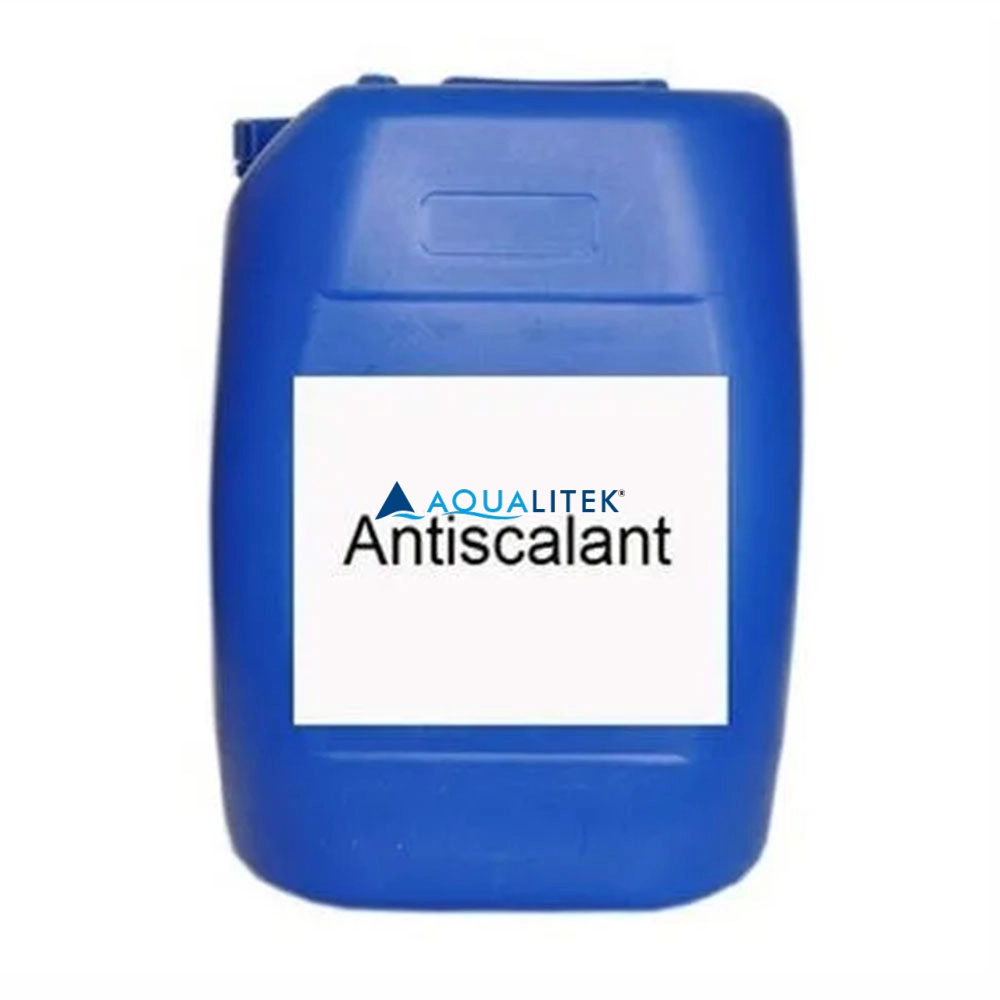
Anti-Scalant is a specialized water treatment chemical designed to prevent the formation of scale in reverse osmosis (RO) systems. Scaling is a common issue in RO systems, where minerals like calcium, magnesium, and silica precipitate and form hard deposits on the membrane surface. These deposits can clog the membranes, reduce water production efficiency, and increase operational costs.
RO chemical anti-scalants work by inhibiting the crystallization of scale-forming minerals, effectively keeping them in solution and preventing them from adhering to the membrane. This ensures the longevity and optimal performance of the RO system.
Anti-scalants are essential in applications with hard water or high mineral content, such as in industrial, municipal, and desalination plants.
These chemicals are highly effective in preventing scaling caused by common minerals such as calcium carbonate, calcium sulfate, barium sulfate, and silica, helping to extend the lifespan of the membranes, reduce cleaning cycles, and enhance system efficiency.
By incorporating an RO chemical anti-scalant into your water treatment process, you can improve the reliability and overall performance of your reverse osmosis system, ensuring consistent, high-quality water output while minimizing maintenance costs.
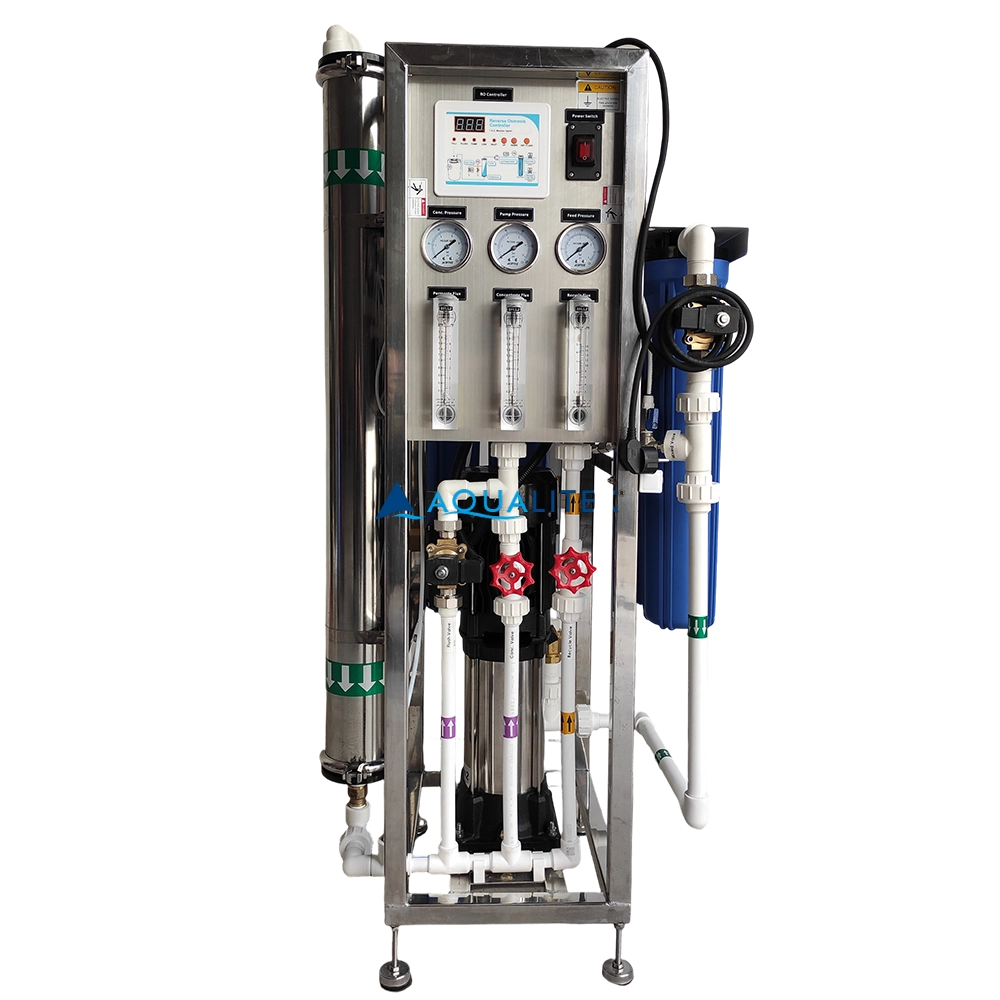
Our 500 LPH Reverse Osmosis (RO) System is engineered to provide high-quality purified water for commercial applications. Designed with advanced RO technology, durable components, and a user-friendly interface, this system ensures consistent performance, low maintenance, and long-term reliability.
With its compact design and robust skid-mounted frame, it’s an excellent choice for businesses that demand efficiency and quality in water purification.
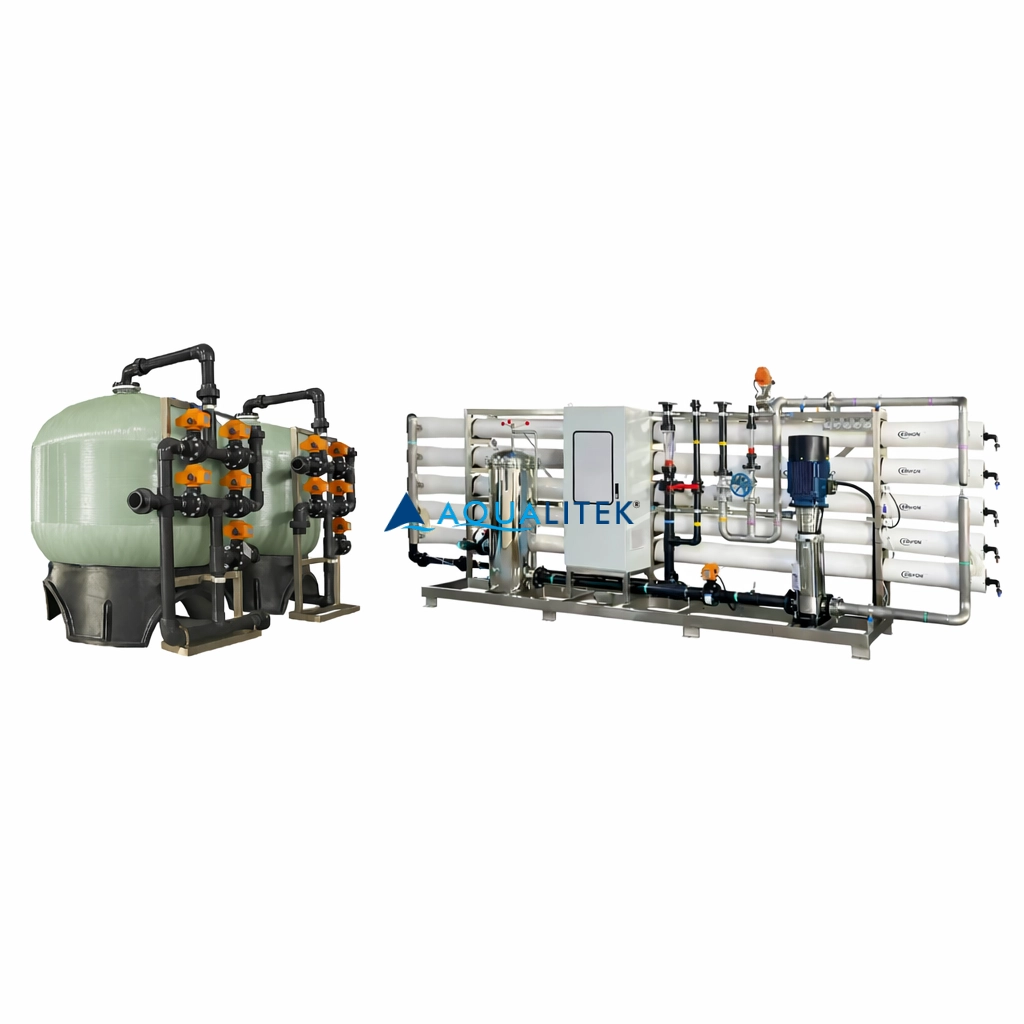
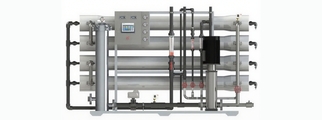
30TPH Industrial Reverse Osmosis (RO) System designed for industrial and municipal water treatment. High salt rejection, energy-efficient design, PLC control, and customizable configuration.
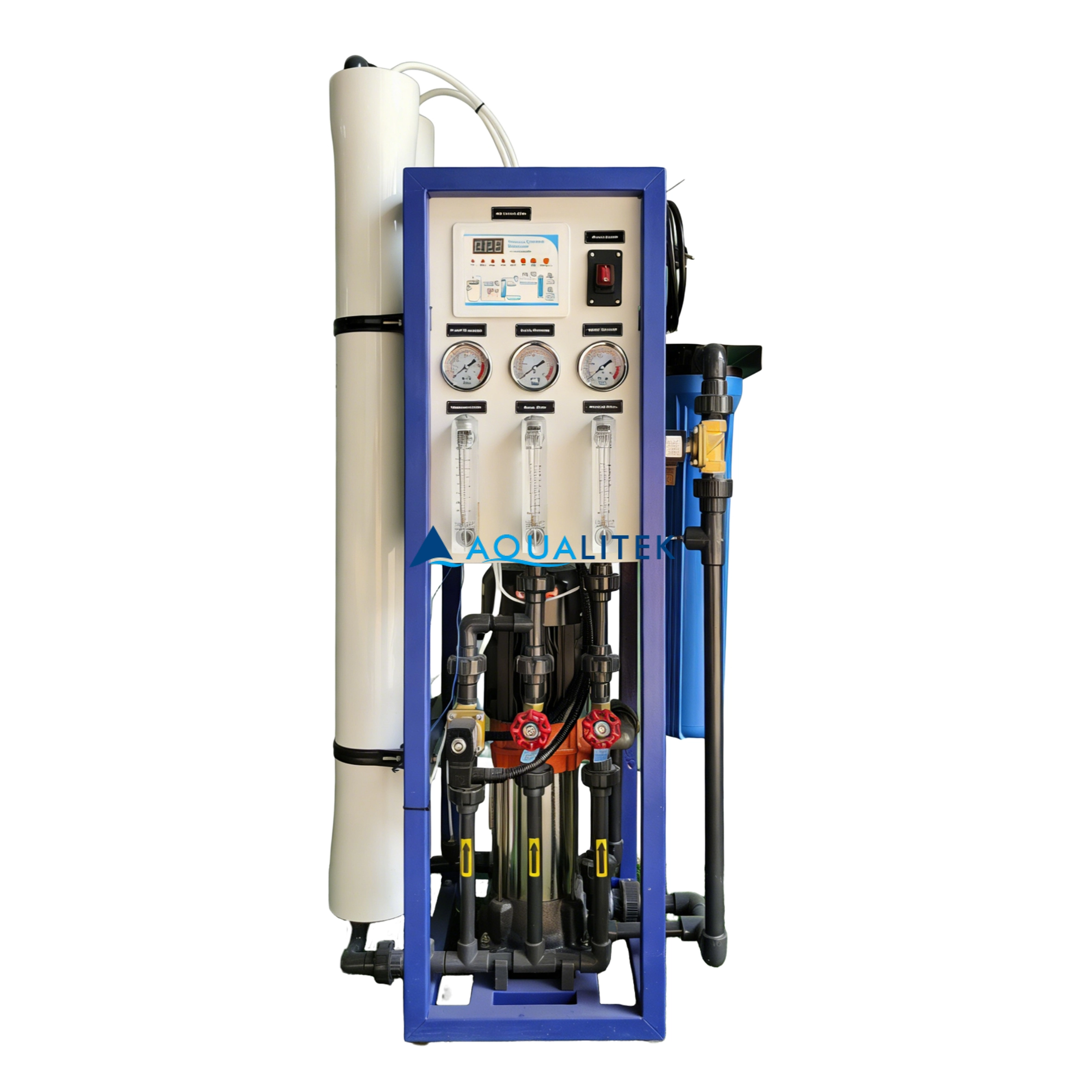
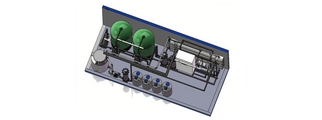
AQUALITEK's 500LPH Panel Mounted Reverse Osmosis Water Purification System delivers reliable 500 LPH RO water production. This compact industrial reverse osmosis unit is ideal for small scale industrial RO needs, ensuring efficient and high-quality purified water in a space-saving design.
© 2026 AQUALITEK. All rights reserved.
AQUALITEK- Aimee Hoo
AQUALITEK - Aimee Hoo