




Why Is the pH Value of RO Treated Water Usually Lower Than That of the Influent?| Insights by AQUALITEK
RO (Reverse Osmosis) produced water often shows a slightly lower pH compared to the feed water. This article explains the scientific reasons behind this phenomenon, the impact on system performance, and what operators should know when monitoring RO permeate pH.
- Why RO Permeate Water Usually Has a Lower pH Than the Influent
- 1. RO Removes Buffering Ions, Making Water Less Stable
- 2. CO₂ Passes Through the RO Membrane More Easily Than Alkalinity
- 3. Temperature and Pressure Changes Increase CO₂ Solubility
- 4. Permeate Tends to Be Slightly Acidic by Nature
- 5. No Mineral Content Means No Neutralization Capacity
- 6. Permeate pH Is Not a Reliable Indicator of Membrane Status
- 7. Is Low pH Harmful? What Should Operators Do?
- Conclusion
Why RO Permeate Water Usually Has a Lower pH Than the Influent
Reverse osmosis does more than remove salts and impurities—it also changes water chemistry. One noticeable effect is a drop in pH. While this is normal, many operators are unsure why it happens. Understanding the root causes can help with troubleshooting, system optimization, and ensuring proper post-treatment.
Below is a complete explanation of why RO permeate typically has a lower pH.
1. RO Removes Buffering Ions, Making Water Less Stable
Feed water usually contains carbonate and bicarbonate ions (HCO₃⁻ / CO₃²⁻), which act as natural alkalinity buffers, stabilizing the pH.
However, RO membranes remove:
•Bicarbonate
•Carbonate
•Other alkalinity species
Result:
RO permeate has extremely low alkalinity, meaning its pH can shift easily even with very small amounts of dissolved gases.
Even a little dissolved CO₂ can significantly lower the pH.
2. CO₂ Passes Through the RO Membrane More Easily Than Alkalinity
CO₂ is:
•Neutral in charge
•Very small in molecular size
•Highly permeable through RO membranes
Because CO₂ passes through more readily than carbonate/bicarbonate, the permeate may contain relatively higher CO₂ concentrations compared to its alkalinity.
Once CO₂ dissolves in water, it forms carbonic acid:
CO₂ + H₂O → H₂CO₃ → H⁺ + HCO₃⁻
This reaction lowers the pH.
3. Temperature and Pressure Changes Increase CO₂ Solubility
During RO operation:
•High pressure causes more CO₂ to dissolve
•Pressure drop after the membrane encourages CO₂ formation
•Different temperatures shift CO₂ equilibrium
The result is more free CO₂ in the permeate, which lowers pH after depressurization.
4. Permeate Tends to Be Slightly Acidic by Nature
Since RO permeate lacks mineral content, it naturally leans acidic.
Typical RO permeate pH range:
•pH 5.5–6.8, depending on
Feed alkalinity
CO₂ content
Temperature
System design
Even if the feed water pH is neutral (7.0–7.5), permeate can still be lower.
5. No Mineral Content Means No Neutralization Capacity
Minerals such as:
•Calcium
•Magnesium
•Sodium
•Potassium
are removed in RO treatment. Their absence means the water has no capacity to neutralize carbonic acid, allowing pH to shift downward easily.
6. Permeate pH Is Not a Reliable Indicator of Membrane Status
A common misconception is that low pH means membrane problems.
In reality:
•RO permeate pH varies naturally
•It is affected more by CO₂ and alkalinity than membrane performance
•Changes in feed water chemistry cause pH fluctuations
Operators should avoid using permeate pH as a main diagnostic indicator.
7. Is Low pH Harmful? What Should Operators Do?
Low pH RO permeate is generally not harmful to membranes or system components.
However:
Potential concerns:
•Corrosion in downstream pipes or tanks
•Impact on remineralization processes
•Effects on product water specifications
Common solutions:
•pH adjustment with NaOH or calcite filters
•Degasification to remove CO₂
•Post-treatment remineralization
Conclusion
RO permeate pH is usually lower than the influent mainly because:
1.RO removes alkalinity and destabilizes pH
2.CO₂ easily permeates through membranes
3.Dissolved CO₂ forms carbonic acid
4.Permeate lacks minerals and buffering capacity
This is a normal and expected characteristic of RO systems. Understanding the chemistry helps in proper system monitoring, post-treatment adjustments, and overall operational stability.



Request More Information or Expert Advice
Share a few details, and we’ll provide deeper insights, tailored suggestions, or product support.
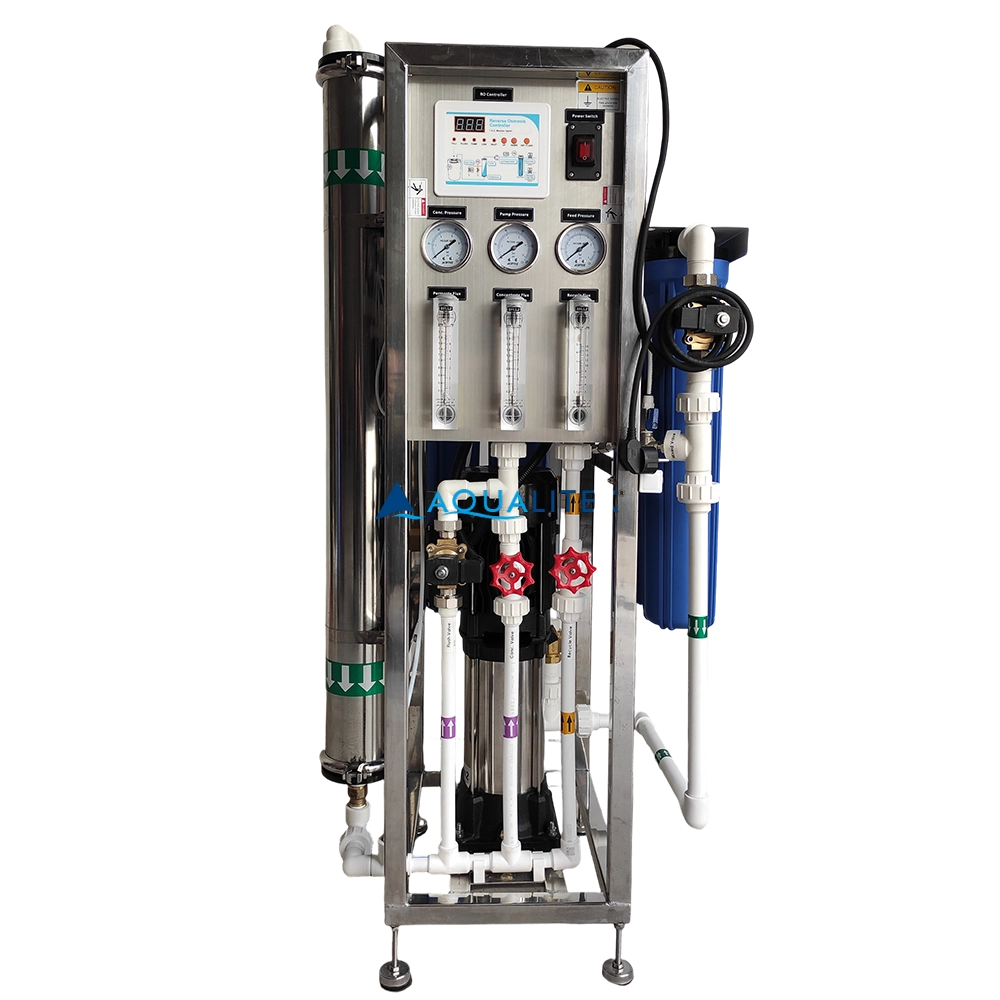
Our 500 LPH Reverse Osmosis (RO) System is engineered to provide high-quality purified water for commercial applications. Designed with advanced RO technology, durable components, and a user-friendly interface, this system ensures consistent performance, low maintenance, and long-term reliability.
With its compact design and robust skid-mounted frame, it’s an excellent choice for businesses that demand efficiency and quality in water purification.
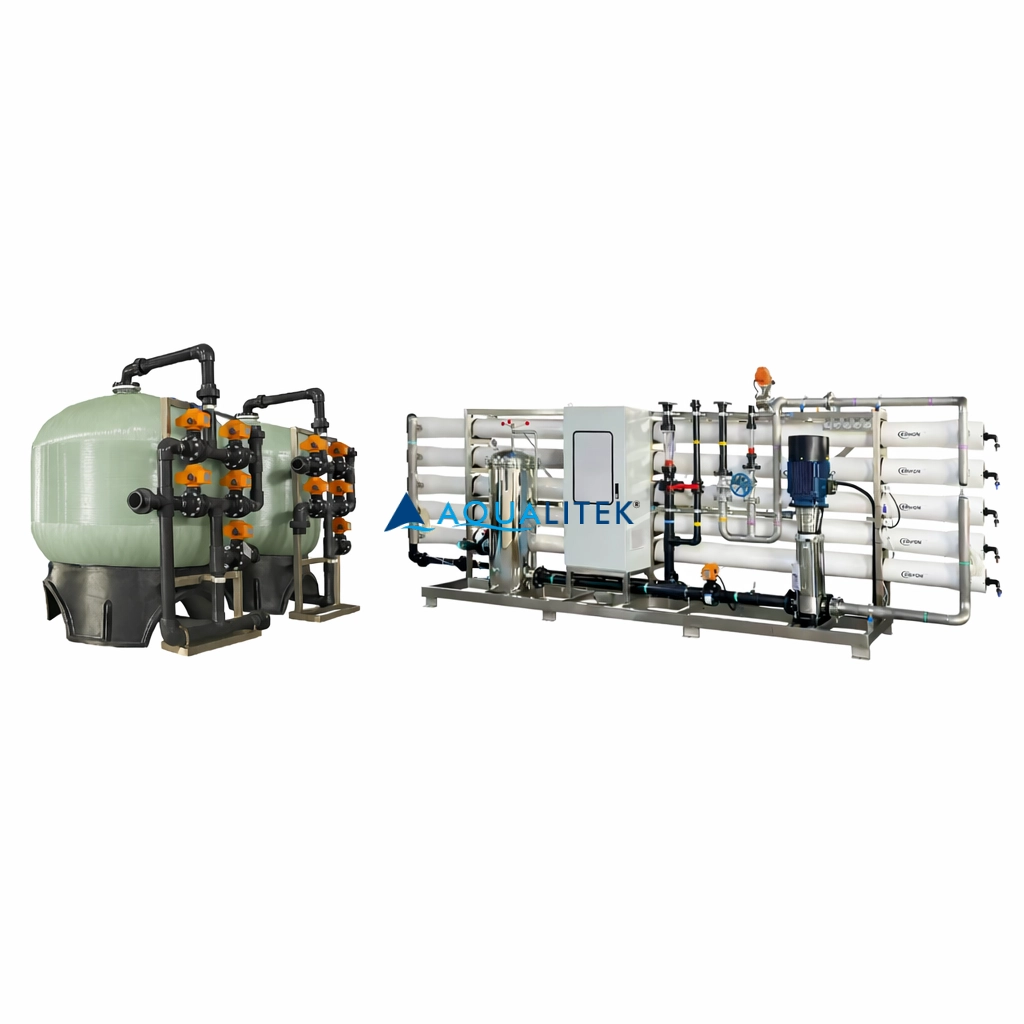
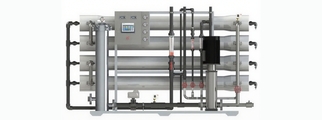
30TPH Industrial Reverse Osmosis (RO) System designed for industrial and municipal water treatment. High salt rejection, energy-efficient design, PLC control, and customizable configuration.
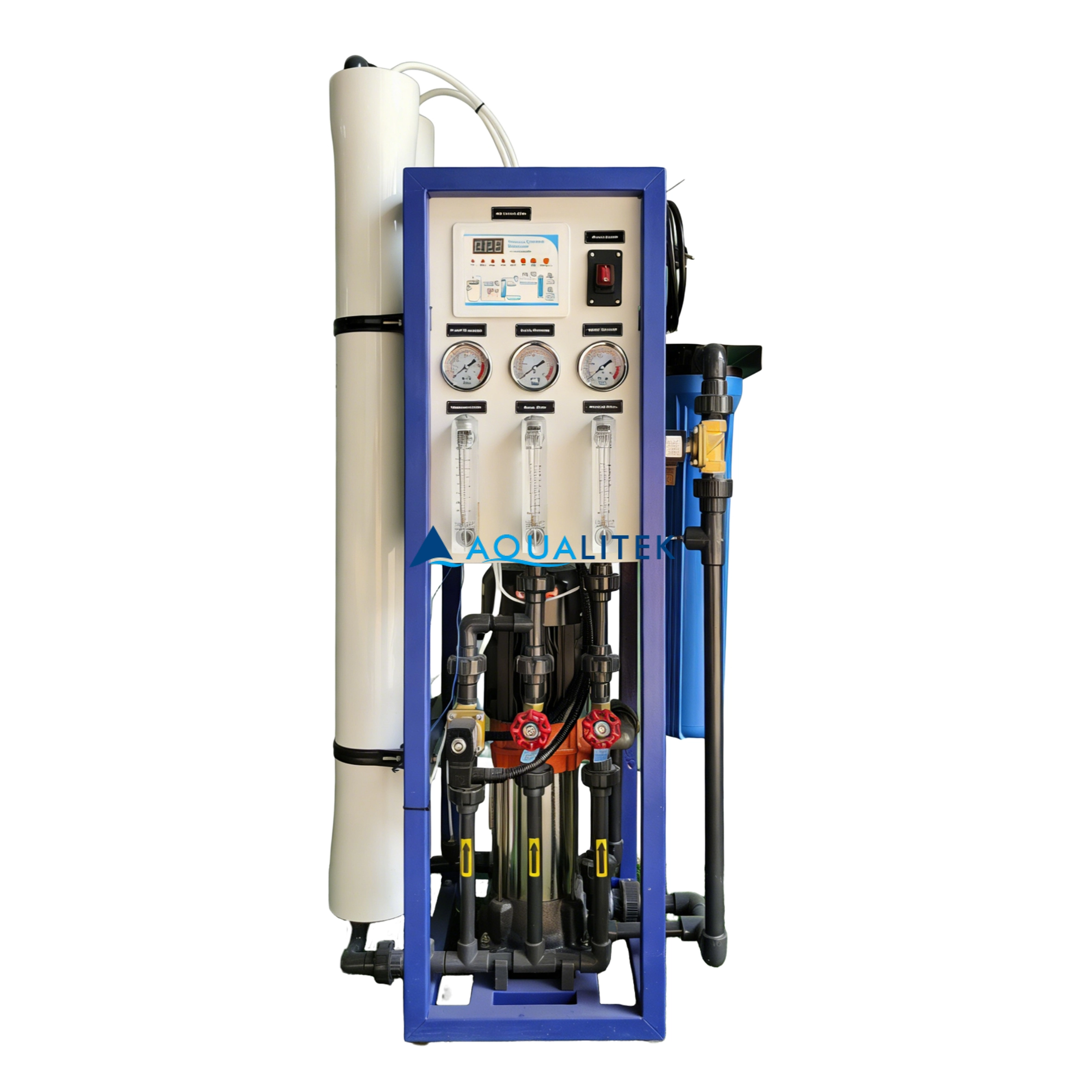
AQUALITEK's 500LPH Panel Mounted Reverse Osmosis Water Purification System delivers reliable 500 LPH RO water production. This compact industrial reverse osmosis unit is ideal for small scale industrial RO needs, ensuring efficient and high-quality purified water in a space-saving design.
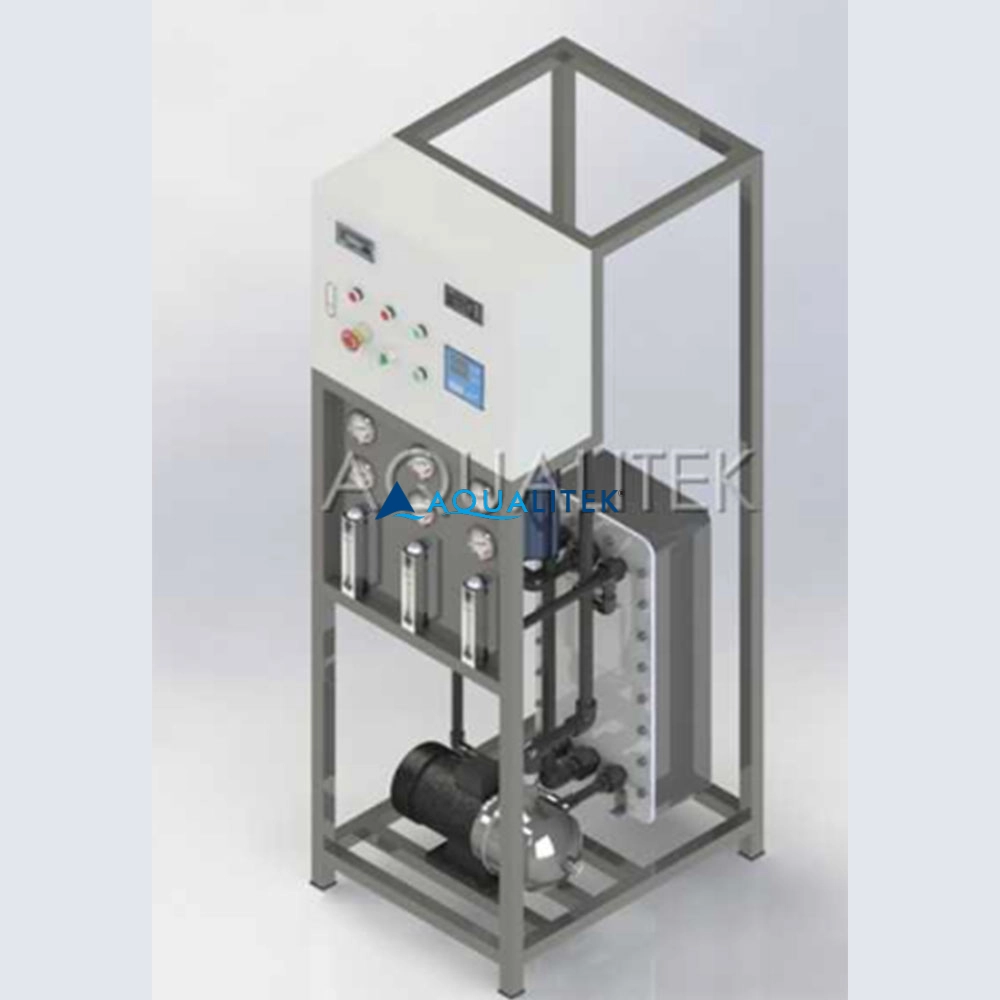
Electrodeionization (EDI) system is an advanced water purification technology that combines ion exchange and electrochemical processes to produce ultra-pure water. Unlike traditional deionization methods, which rely on chemical regeneration, EDI utilizes electric fields to drive the movement of ions through ion-exchange membranes, effectively removing dissolved salts and other ionic contaminants.
This process is continuous and does not require the use of chemicals for regeneration, making it an environmentally friendly and cost-effective solution for producing high-quality deionized water. EDI systems are widely used in applications requiring ultrapure water, such as in the pharmaceutical, semiconductor, power generation, and biotechnology industries, as well as for laboratory use.
By offering high-purity water without the need for chemical regeneration, EDI systems provide a sustainable, efficient, and reliable alternative to traditional deionization methods, making them an ideal choice for industries where water quality and process control are critical.
© 2026 AQUALITEK. All rights reserved.
AQUALITEK- Aimee Hoo
AQUALITEK - Aimee Hoo