




Where Are Scale Inhibitor and Reducing Agent Dosing Points Located in RO Systems?| Insights by AQUALITEK
Correct chemical dosing location is critical to the safe and efficient operation of an RO system. Scale inhibitors and reducing agents are two essential chemicals commonly used to protect RO membranes, but they must be injected at the correct points in the process. This article explains where these dosing points are typically located and why their placement matters.
- Overview of Chemical Dosing in RO Systems
- Typical Dosing Point for Scale Inhibitors
- Why This Location Is Ideal
- 1. Clean and Stable Water Quality
- 2. Sufficient Mixing and Contact Time
- 3. Maximum Protection at the Membrane Surface
- 4. Avoidance of Pretreatment Interference
- Typical Dosing Point for Reducing Agents (Dechlorination Chemicals)
- Why Reducing Agents Are Dosed Here
- 1. Final Protection Against Residual Oxidants
- 2. Preventing Irreversible Oxidative Damage
- 3. Avoiding Chemical Consumption by Pretreatment Media
- Recommended Injection Position
- Key Differences Between the Two Dosing Points
- Best Practices for Chemical Dosing Layout
- Common Mistakes to Avoid
- Conclusion
Overview of Chemical Dosing in RO Systems
In industrial RO systems, chemical dosing is used to:
•Prevent membrane scaling
•Remove residual oxidants
•Protect membrane performance and lifespan
Among all chemicals used, scale inhibitors and reducing agents are the most critical for membrane protection, and incorrect dosing location can lead to membrane fouling, chemical wastage, or irreversible damage.
Typical Dosing Point for Scale Inhibitors
Standard Location
After pretreatment and cartridge filtration, but before the high-pressure pump
More specifically, scale inhibitors are typically dosed:
•After multimedia filters / softeners
•After activated carbon filters (if present)
•After cartridge (security) filters
•Immediately upstream of the RO high-pressure pump
Why This Location Is Ideal
1. Clean and Stable Water Quality
After pretreatment:
•Suspended solids are minimized
•Turbidity is stable
•Chemical consumption is predictable
This ensures the inhibitor works effectively on dissolved salts rather than being wasted on particulates.
2. Sufficient Mixing and Contact Time
Injecting before the high-pressure pump allows:
•Thorough mixing due to pump turbulence
•Uniform distribution across all membrane elements
3. Maximum Protection at the Membrane Surface
Scale formation occurs:
•On the membrane surface
•Inside the concentrate channels
Dosing upstream ensures protection before concentration polarization occurs.
4. Avoidance of Pretreatment Interference
Dosing scale inhibitor upstream of filters may:
•Be partially adsorbed by filter media
•Reduce chemical effectiveness
Typical Dosing Point for Reducing Agents (Dechlorination Chemicals)
Standard Location
After activated carbon filtration and before the RO membrane
Common reducing agents include:
•Sodium metabisulfite (SMBS)
•Sodium bisulfite
•Sodium sulfite
Why Reducing Agents Are Dosed Here
1. Final Protection Against Residual Oxidants
Even after carbon filters:
•Trace free chlorine or chloramine may remain
•Breakthrough events can occur
Reducing agents serve as a chemical safety barrier.
2. Preventing Irreversible Oxidative Damage
RO polyamide membranes are extremely sensitive to:
•Free chlorine
•Chloramines
•Other oxidants
Once oxidized, membrane damage is permanent and non-recoverable.
3. Avoiding Chemical Consumption by Pretreatment Media
If dosed too early:
•Activated carbon will consume the reducing agent
•Chemical cost increases
•Dechlorination control becomes unreliable
Recommended Injection Position
✔ After activated carbon
✔ After cartridge filter (or immediately before)
✔ Before the high-pressure pump
✔ With sufficient mixing length before membranes
Key Differences Between the Two Dosing Points
|
Item |
Scale Inhibitor |
Reducing Agent |
|
Primary purpose |
Prevent scaling |
Remove oxidants |
|
Typical dosing location |
After cartridge filter |
After carbon filter |
|
Sensitivity to adsorption |
Moderate |
High |
|
Risk if overdosed |
Fouling, foaming |
Corrosion, ORP imbalance |
|
Risk if underdosed |
Scaling |
Membrane oxidation |
Best Practices for Chemical Dosing Layout
✔ Use dedicated injection quills
✔ Install non-return (check) valves
✔ Ensure adequate mixing length
✔ Monitor residual chlorine downstream
✔ Calibrate dosing pumps regularly
Common Mistakes to Avoid
❌ Dosing chemicals before multimedia filters
❌ Combining scale inhibitor and reducing agent injection points
❌ Injecting too close to membrane inlet without mixing
❌ Relying solely on carbon filtration for dechlorination
Conclusion
In a properly designed RO system, scale inhibitors are typically dosed after cartridge filtration and before the high-pressure pump, while reducing agents are dosed after activated carbon filtration as a final barrier against oxidants. Correct placement ensures maximum membrane protection, chemical efficiency, and long-term system stability.




Request More Information or Expert Advice
Share a few details, and we’ll provide deeper insights, tailored suggestions, or product support.
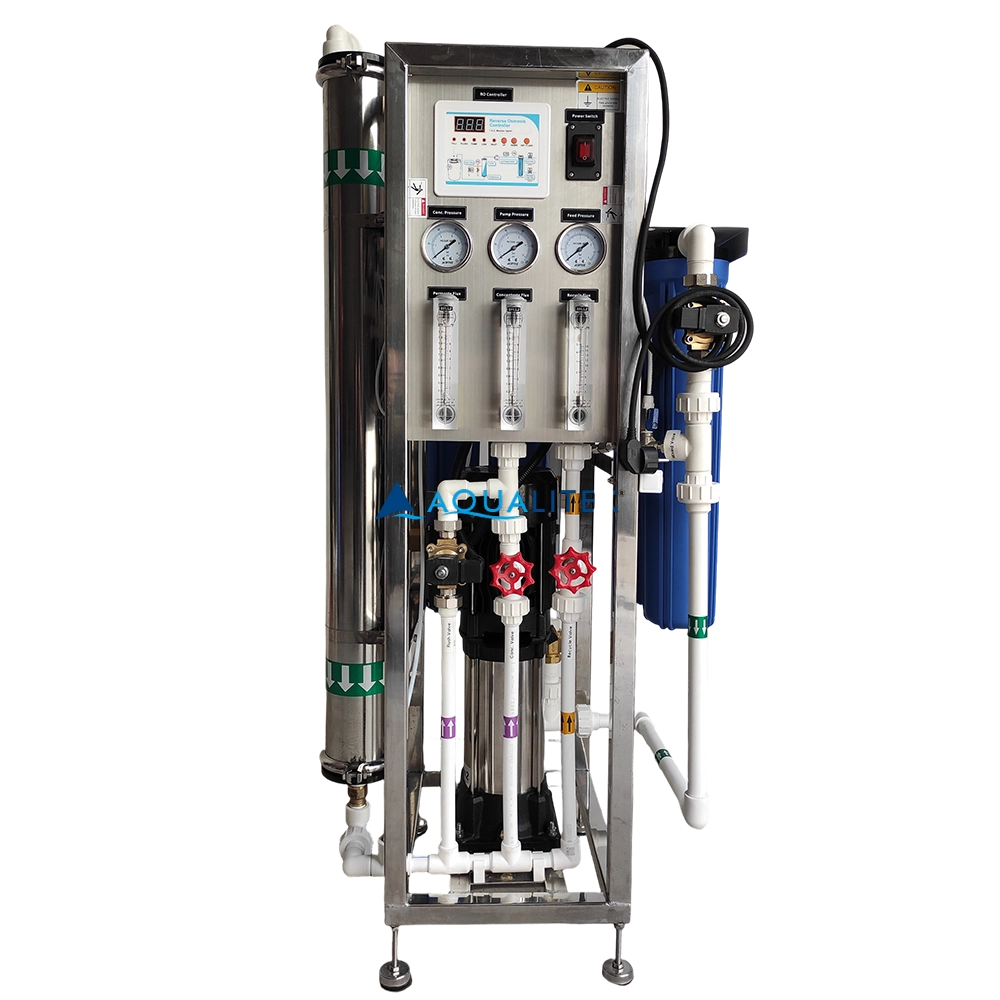
Our 500 LPH Reverse Osmosis (RO) System is engineered to provide high-quality purified water for commercial applications. Designed with advanced RO technology, durable components, and a user-friendly interface, this system ensures consistent performance, low maintenance, and long-term reliability.
With its compact design and robust skid-mounted frame, it’s an excellent choice for businesses that demand efficiency and quality in water purification.
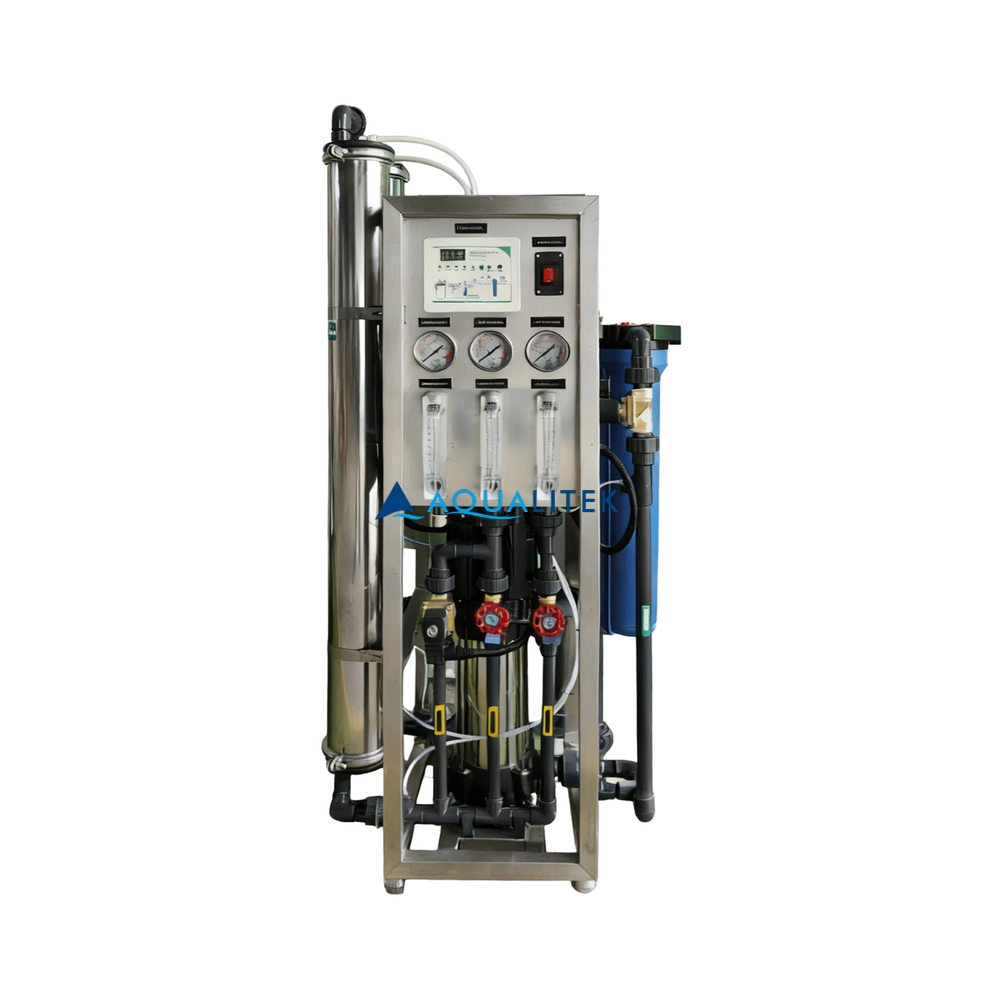
TWV series Reverse Osmosis (RO) systems are pre-engineered and pre-assembled units with 2.5”/4” membrane housings(single element type)for tap water(lower TDS).They are designed for overall superior performance, high recovery rates and offer great savings with low maintenance and operation costs.
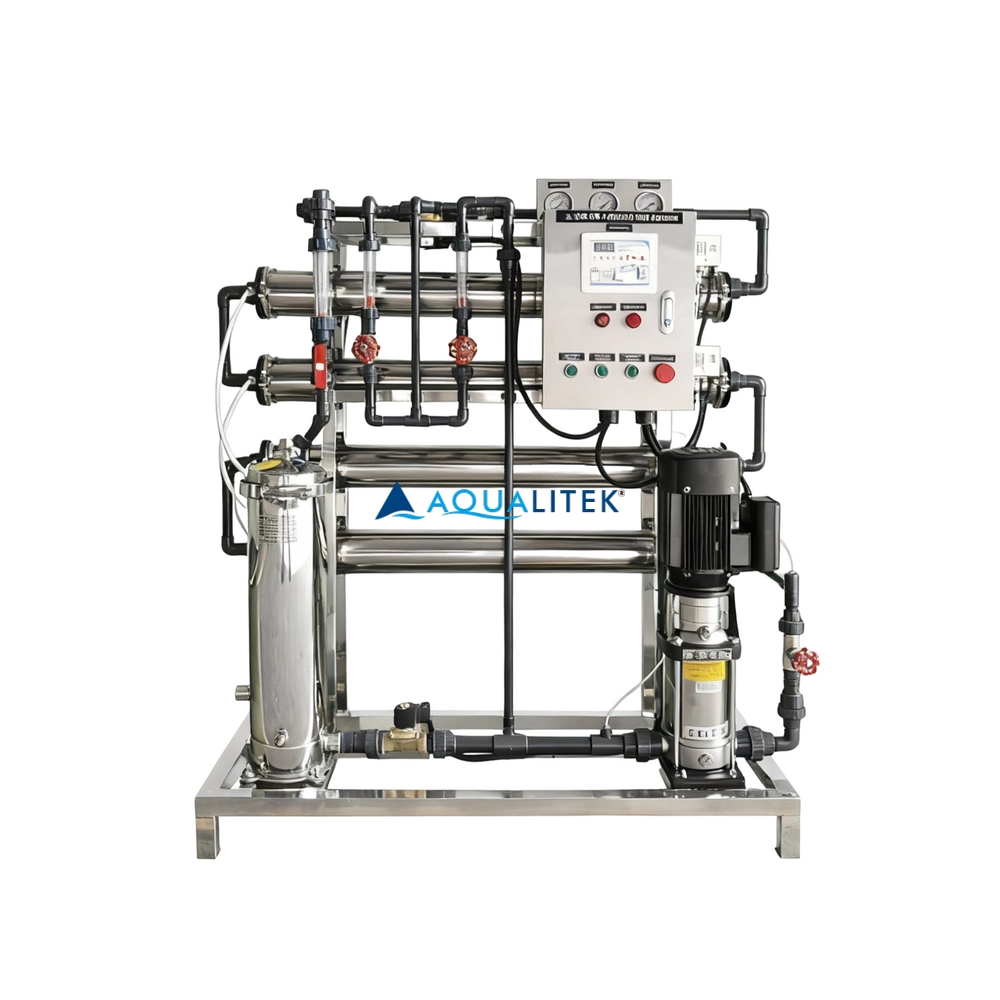
TWF series Reverse Osmosis (RO) systems are pre-engineered and pre-assembled units with 4” membrane housings(multiple elements type) for tap water(lower TDS) .The medium large volumes can help meet your a variety of commercial and industrial applications. They are designed for overall superior performance, high recovery rates and offer great savings with low maintenance and operation costs.

TWE series Reverse Osmosis (RO) systems are pre-engineered and pre-assembled units with 8” membrane housings for tap water (lower TDS). The large volumes can help meet your a variety of industrial applications. They are designed for overall superior performance, high recovery rates and offer great savings with low maintenance and operation costs.
© 2026 AQUALITEK. All rights reserved.
AQUALITEK- Aimee Hoo
AQUALITEK - Aimee Hoo