




What Types of Scaling Are Most Common in Seawater Desalination Systems and How to Prevent Them? | Insights by AQUALITEK
What scaling types are most common in seawater desalination systems? Learn the main inorganic scales in SWRO, their causes, risks, and proven prevention strategies to protect membranes.
- What Types of Scaling Are Most Common in Seawater Desalination Systems and How to Prevent Them?
- 1. Calcium Carbonate (CaCO₃) Scaling
- 2. Calcium Sulfate (CaSO₄) Scaling
- 3. Barium Sulfate (BaSO₄) Scaling
- 4. Strontium Sulfate (SrSO₄) Scaling
- 5. Silica Scaling
- 6. Magnesium Hydroxide Scaling
- Key Factors Influencing Scaling in Seawater Desalination
- 1. Recovery Rate
- 2. Feed Water Temperature
- 3. pH Control
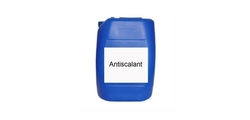
- 4. Antiscalant Selection & Dosing
- Best Practices to Prevent Scaling in SWRO Systems
- 1. Accurate Water Chemistry Analysis
- 2. Use Advanced Scaling Prediction Software
- 3. Optimize Antiscalant Program
- 4. Maintain Proper pH Control
- 5. Control Operating Recovery
- 6. Routine Monitoring
- Economic Impact of Scaling
- Conclusion
What Types of Scaling Are Most Common in Seawater Desalination Systems and How to Prevent Them?
In seawater reverse osmosis (SWRO) desalination systems, scaling is one of the most critical operational threats to membrane performance.
Unlike fouling caused by suspended solids or biofilms, scaling is the result of inorganic salt precipitation when ion concentrations exceed solubility limits under high recovery and pressure conditions.
If not properly controlled, scaling can cause:
•Rapid flux decline
•Increased differential pressure
•Higher energy consumption
•Frequent chemical cleaning
•Irreversible membrane damage
This article explains the most common scaling types in seawater desalination systems, their formation mechanisms, and proven prevention strategies.
1. Calcium Carbonate (CaCO₃) Scaling
Why It Occurs
Calcium carbonate scaling forms when:
•High calcium concentration
•Elevated bicarbonate levels
•pH increases
•Recovery rate concentrates ions
SWRO systems often operate at high pressure and moderate recovery, which increases localized supersaturation.
Key Risk Factors
•Poor pH control
•Inadequate antiscalant dosing
•High alkalinity feed water
Prevention Methods
•Acid dosing to control pH
•Accurate Langelier Saturation Index (LSI) calculation
•Proper antiscalant selection
•Maintain recommended recovery limits
2. Calcium Sulfate (CaSO₄) Scaling
Why It Occurs
Unlike carbonate scaling, calcium sulfate scaling:
•Is not pH-sensitive
•Becomes critical at high recovery
As water concentrates along the membrane, calcium and sulfate ions exceed solubility.
Characteristics
•Hard crystalline deposits
•Difficult to remove once formed
•Often irreversible if severe
Prevention Methods
•Accurate scaling projection software
•Maintain recovery below solubility limits
•Use sulfate-specific antiscalants
3. Barium Sulfate (BaSO₄) Scaling
Why It Occurs
Even trace levels of barium in seawater can cause scaling because:
•Barium sulfate has extremely low solubility
•Precipitates quickly under concentration
Why It’s Dangerous
•Extremely hard scale
•Very difficult to remove
•Often requires membrane replacement if severe
Prevention Methods
•Trace element monitoring
•High-performance antiscalants
•Conservative recovery design
4. Strontium Sulfate (SrSO₄) Scaling
Strontium behaves similarly to barium.
Though less common, it becomes significant in:
•Certain geographic regions
•High recovery plants
Prevention strategy is similar to barium sulfate control.
5. Silica Scaling
Silica scaling is more common in brackish systems but may appear in certain seawater blends.
Why It’s Problematic
•Forms polymerized deposits
•Difficult to chemically remove
•Not effectively controlled by standard acid cleaning
Prevention
•Maintain silica concentration below solubility threshold
•Use silica-specific inhibitors
6. Magnesium Hydroxide Scaling
Occurs when:
•pH increases excessively
•Magnesium concentration is high
More likely in systems with improper pH adjustment.
Why Scaling Is More Severe in SWRO Systems
SWRO operates under:
•High pressure (55–70 bar)
•High salinity feed
•Moderate to high recovery
These conditions increase:
•Ion concentration
•Supersaturation potential
•Localized precipitation risk
Key Factors Influencing Scaling in Seawater Desalination
1. Recovery Rate
Higher recovery increases concentration factor.
Typical SWRO recovery:
40–45% (single pass)
Exceeding this range increases scaling risk significantly.
2. Feed Water Temperature
Higher temperature reduces gas solubility and affects salt equilibrium.
3. pH Control
Improper pH adjustment directly influences carbonate scaling risk.
4. Antiscalant Selection & Dosing
Incorrect dosing leads to:
•Under-protection
•Crystal growth
•Membrane surface deposition
Best Practices to Prevent Scaling in SWRO Systems
1. Accurate Water Chemistry Analysis
Test for:
•Calcium
•Magnesium
•Sulfate
•Barium
•Strontium
•Alkalinity
•Silica
2. Use Advanced Scaling Prediction Software
Modern plants use modeling tools to:
•Simulate ion concentration
•Predict scaling thresholds
•Optimize recovery design
3. Optimize Antiscalant Program
Key considerations:
•Match chemical type to scaling species
•Maintain proper dosing range
•Ensure uniform mixing
4. Maintain Proper pH Control
Especially important for:
•Calcium carbonate control
5. Control Operating Recovery
Avoid aggressive recovery settings beyond design limits.
6. Routine Monitoring
Track:
•Differential pressure
•Normalized flux
•Salt rejection
•Concentrate chemistry
Early detection prevents irreversible scaling.
Economic Impact of Scaling
Uncontrolled scaling can:
•Reduce membrane life by 30–60%
•Increase cleaning frequency
•Raise energy consumption
•Cause unplanned downtime
Effective scale prevention often delivers one of the highest returns on investment in desalination plants.
Conclusion
The most common scaling types in seawater desalination systems include:
•Calcium carbonate
•Calcium sulfate
•Barium sulfate
•Strontium sulfate
•Silica (in specific cases)
Among these, calcium carbonate and sulfate scales are the most frequent, while barium sulfate is the most difficult to remove.
Preventing scaling requires:
•Accurate water chemistry analysis
•Optimized recovery design
•Proper antiscalant selection
•Continuous monitoring
A well-designed anti-scaling strategy protects membranes, reduces operating costs, and ensures long-term desalination stability.



Request More Information or Expert Advice
Share a few details, and we’ll provide deeper insights, tailored suggestions, or product support.
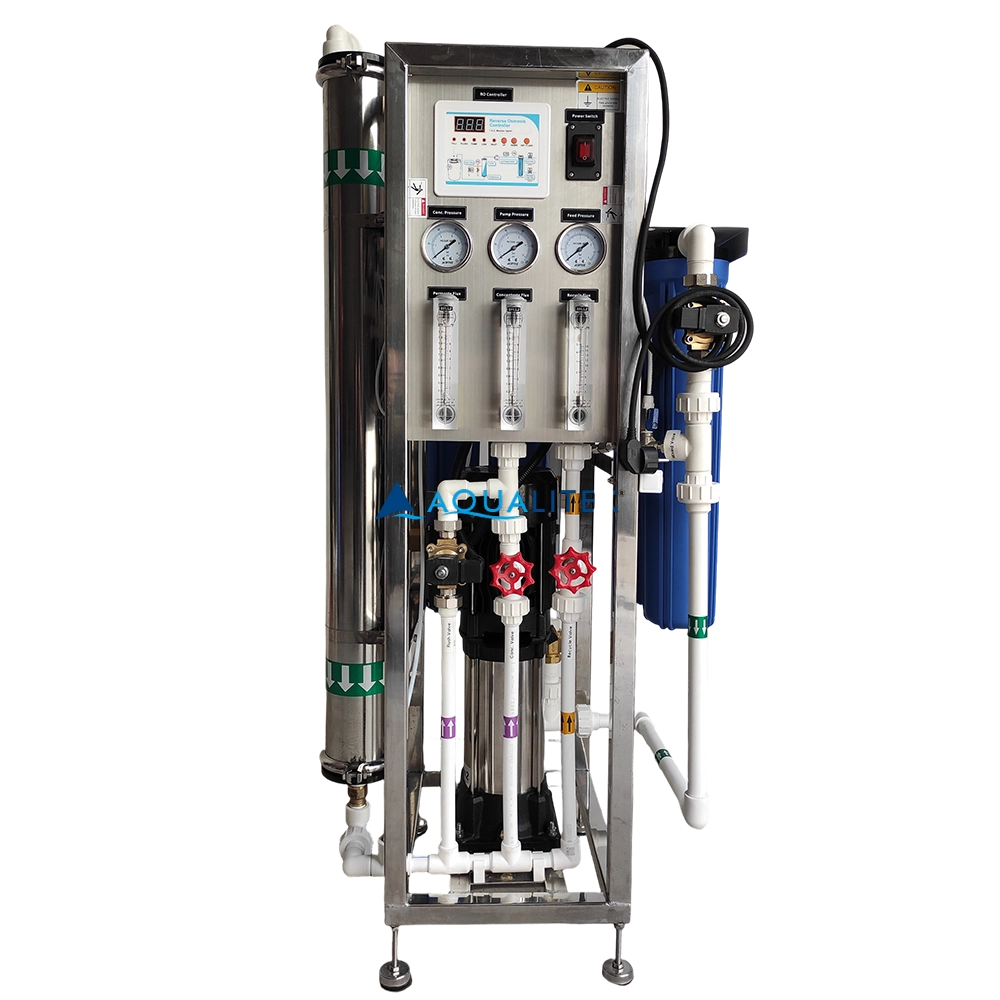
Our 500 LPH Reverse Osmosis (RO) System is engineered to provide high-quality purified water for commercial applications. Designed with advanced RO technology, durable components, and a user-friendly interface, this system ensures consistent performance, low maintenance, and long-term reliability.
With its compact design and robust skid-mounted frame, it’s an excellent choice for businesses that demand efficiency and quality in water purification.
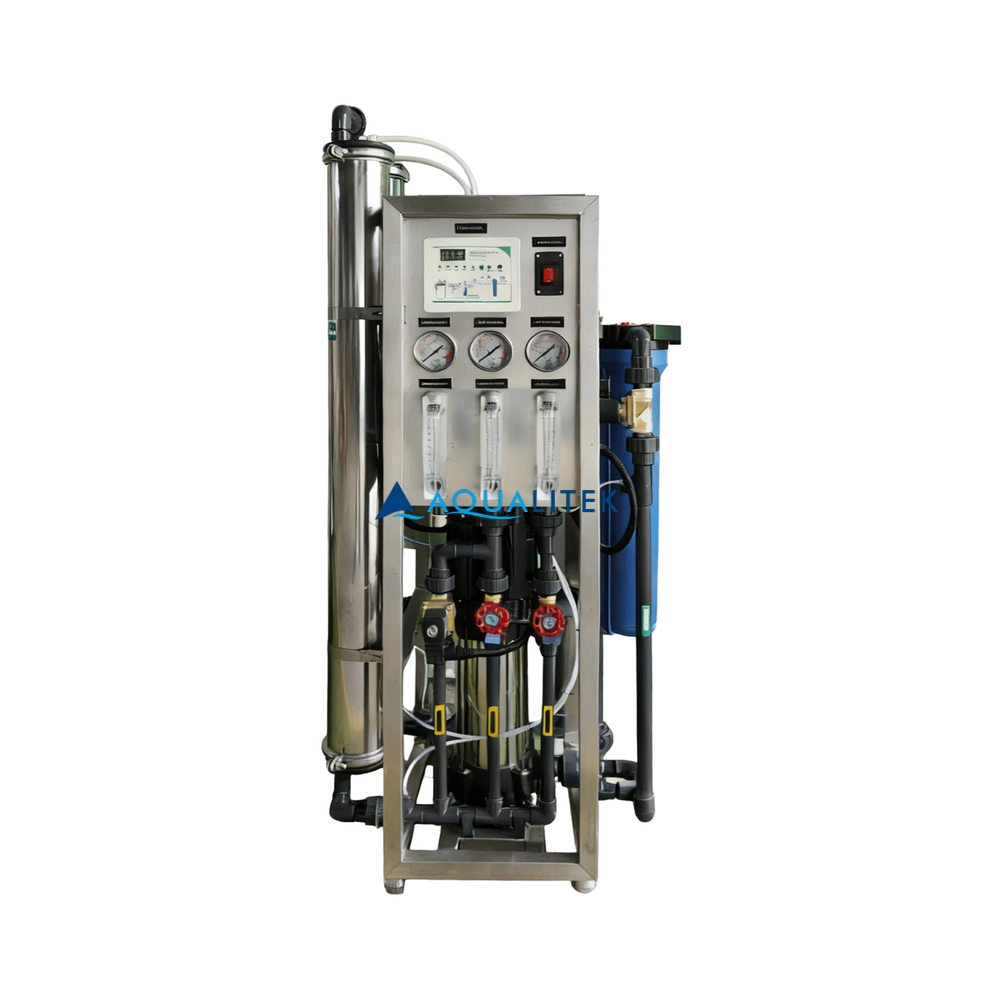
TWV series Reverse Osmosis (RO) systems are pre-engineered and pre-assembled units with 2.5”/4” membrane housings(single element type)for tap water(lower TDS).They are designed for overall superior performance, high recovery rates and offer great savings with low maintenance and operation costs.
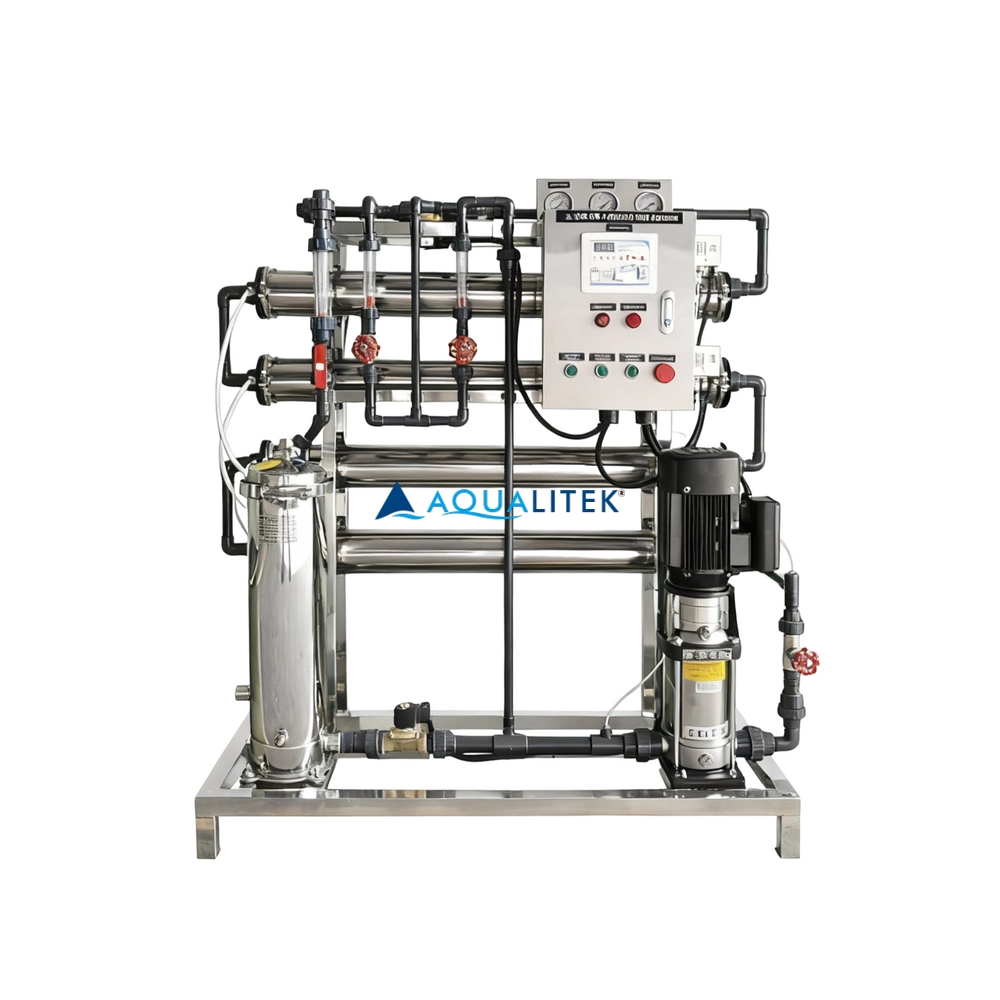
TWF series Reverse Osmosis (RO) systems are pre-engineered and pre-assembled units with 4” membrane housings(multiple elements type) for tap water(lower TDS) .The medium large volumes can help meet your a variety of commercial and industrial applications. They are designed for overall superior performance, high recovery rates and offer great savings with low maintenance and operation costs.

TWE series Reverse Osmosis (RO) systems are pre-engineered and pre-assembled units with 8” membrane housings for tap water (lower TDS). The large volumes can help meet your a variety of industrial applications. They are designed for overall superior performance, high recovery rates and offer great savings with low maintenance and operation costs.
© 2026 AQUALITEK. All rights reserved.
AQUALITEK- Aimee Hoo
AQUALITEK - Aimee Hoo