



Can Only the Poor-Performing RO Membrane Be Replaced? Risks, Consequences, and Best Practices| Insights by AQUALITEK
Can you replace only the poor-performing RO membrane in a system? Learn the risks, operational consequences, and best practices for partial membrane replacement in reverse osmosis systems.
- Introduction
- Why Do Some RO Membranes Perform Worse Than Others?
- 1. Feed Water Fouling Distribution
- 2. Scaling Accumulation
- 3. Localized Chemical Damage
- 4. Mechanical Damage
- Can Only the Poor-Performing Membrane Be Replaced?
- Risks of Replacing Only Some Membrane Elements
- 1. Hydraulic Imbalance
- 2. Increased Fouling on New Membranes
- 3. Reduced System Efficiency
- 4. Shortened Lifespan of New Membranes
- When Partial Membrane Replacement May Be Acceptable
- 1. Isolated Membrane Damage
- 2. Small Systems
- 3. Short-Term Operational Needs
- Best Practices for Partial Membrane Replacement
- 1. Install New Membranes at the Lead Position
- 2. Avoid Mixing Different Membrane Types
- 3. Monitor System Performance Closely
- 4. Plan Full Replacement in Advance
- When Full Membrane Replacement Is Recommended
- Conclusion
Introduction
In reverse osmosis (RO) water treatment systems, membrane elements gradually lose performance due to fouling, scaling, chemical degradation, or natural aging. During system maintenance, operators often notice that only a few membrane elements show poor performance, while the rest still operate relatively well.
This raises a common operational question:
Can only the poor-performing RO membranes be replaced instead of replacing all membrane elements?
Technically, partial membrane replacement is possible, but it involves several operational risks and system performance implications. Understanding these risks is essential before deciding whether to replace individual membranes or the entire set.
This article explores the feasibility, risks, and best practices for replacing only poorly performing RO membranes.
Why Do Some RO Membranes Perform Worse Than Others?
In multi-element pressure vessels, membrane elements do not age uniformly. The following factors can cause uneven performance:
1. Feed Water Fouling Distribution
The first membranes in a pressure vessel receive the highest contaminant load. As a result:
•The lead elements foul faster
•Later elements remain relatively cleaner
2. Scaling Accumulation
Scaling tends to occur near the concentrate end of the vessel, where salt concentration is highest.
3. Localized Chemical Damage
Improper cleaning or exposure to oxidants may damage only certain membranes.
4. Mechanical Damage
Membranes may suffer damage due to:
•O-ring failure
•Telescoping
•Improper installation
Because of these factors, some membranes may degrade faster than others.
Can Only the Poor-Performing Membrane Be Replaced?
Yes, partial membrane replacement is technically possible, especially when:
•The system is relatively new
•Only one or two elements are damaged
•The rest of the membranes still maintain acceptable performance
However, replacing only the weakest membranes often introduces performance imbalance within the pressure vessel.
Risks of Replacing Only Some Membrane Elements
1. Hydraulic Imbalance
New membranes typically have:
•Higher permeability
•Higher flux
Older membranes usually have reduced permeability.
When installed together:
•More water flows through new membranes
•Old membranes receive less flow
This imbalance can accelerate aging of both membrane groups.
2. Increased Fouling on New Membranes
Because new membranes produce more permeate, they may operate at higher localized flux, which increases the risk of:
•Fouling
•Scaling
•Compaction
As a result, the new membranes may deteriorate faster than expected.
3. Reduced System Efficiency
A mixed membrane configuration can lead to:
•Uneven pressure distribution
•Lower overall salt rejection
•Reduced energy efficiency
In some cases, the system cannot reach its original design performance.
4. Shortened Lifespan of New Membranes
Installing new membranes together with aged membranes can reduce the lifespan of the new elements due to:
•Higher operational load
•Uneven flow distribution
This may result in earlier replacement than expected.
When Partial Membrane Replacement May Be Acceptable
Partial replacement may be considered in the following situations:
1. Isolated Membrane Damage
Examples include:
•Mechanical damage
•Membrane rupture
•O-ring failure
If the rest of the system is in good condition, replacing only the damaged element may be reasonable.
2. Small Systems
In small RO systems with only a few membranes, partial replacement may not significantly impact performance.
3. Short-Term Operational Needs
Some facilities perform partial replacement as a temporary measure until a full membrane replacement is scheduled.
Best Practices for Partial Membrane Replacement
If partial replacement is necessary, the following best practices should be followed.
1. Install New Membranes at the Lead Position
New membranes are usually placed at the front (feed end) of the pressure vessel because:
•They experience higher fouling loads
•They can better utilize their higher permeability
2. Avoid Mixing Different Membrane Types
Do not mix membranes with significantly different characteristics, such as:
•Different brands
•Different permeability ratings
•Different salt rejection levels
Uniform membrane properties help maintain stable operation.
3. Monitor System Performance Closely
After partial replacement, operators should carefully monitor:
•Permeate flow
•Salt rejection
•Differential pressure
•System recovery
Early detection of imbalance helps prevent further damage.
4. Plan Full Replacement in Advance
Even when partial replacement is used, operators should still plan for complete membrane replacement within a reasonable time frame.
This ensures long-term system stability.
When Full Membrane Replacement Is Recommended
Complete membrane replacement is usually the best option when:
•Membrane life exceeds 4–6 years
•Multiple elements show severe fouling
•Salt rejection declines significantly
•Energy consumption increases
Replacing the entire membrane set restores balanced hydraulic performance and improves operational efficiency.
Conclusion
Replacing only the poor-performing RO membrane is technically possible but should be approached cautiously.
While partial replacement may reduce short-term maintenance costs, it can lead to:
•Hydraulic imbalance
•Faster fouling of new membranes
•Reduced system efficiency
For long-term reliability, the best practice is often replacing all membranes in the same pressure vessel or system simultaneously.
A careful evaluation of membrane age, system performance, and operational goals is essential before making the final decision.


Request More Information or Expert Advice
Share a few details, and we’ll provide deeper insights, tailored suggestions, or product support.
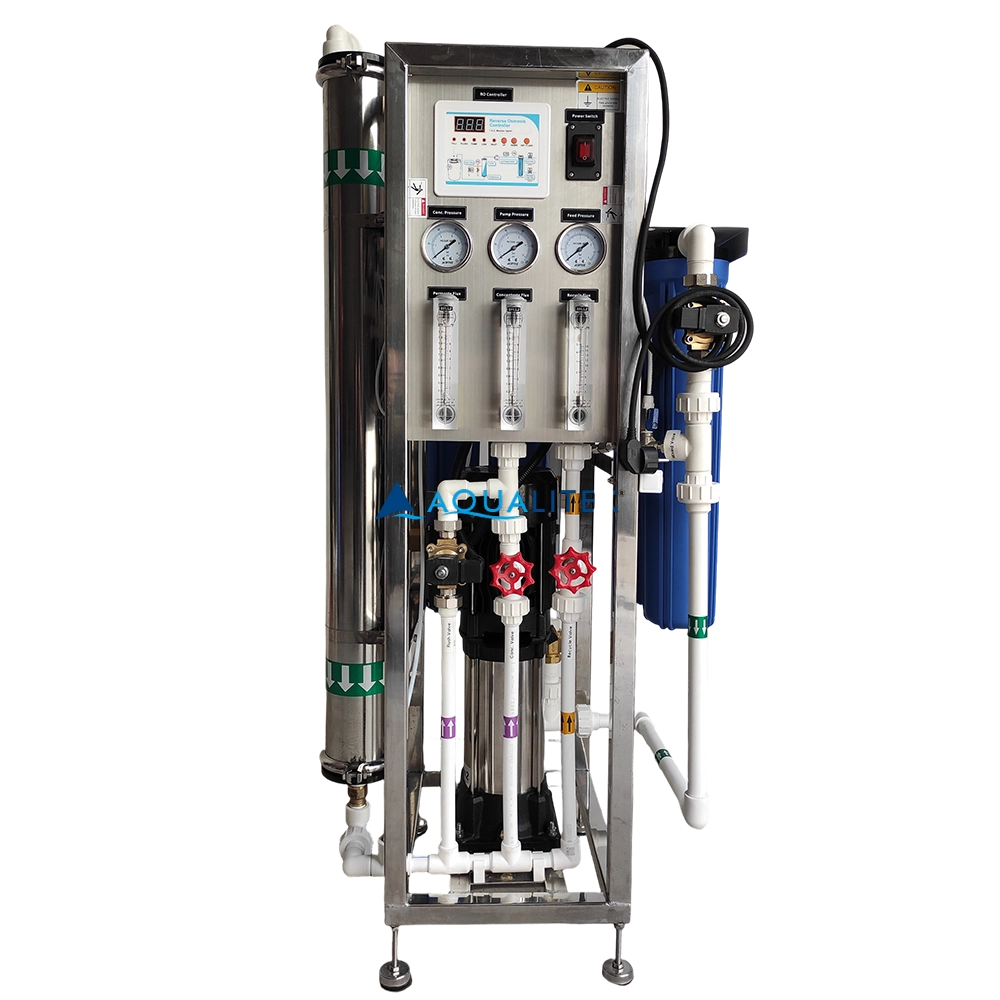
Our 500 LPH Reverse Osmosis (RO) System is engineered to provide high-quality purified water for commercial applications. Designed with advanced RO technology, durable components, and a user-friendly interface, this system ensures consistent performance, low maintenance, and long-term reliability.
With its compact design and robust skid-mounted frame, it’s an excellent choice for businesses that demand efficiency and quality in water purification.
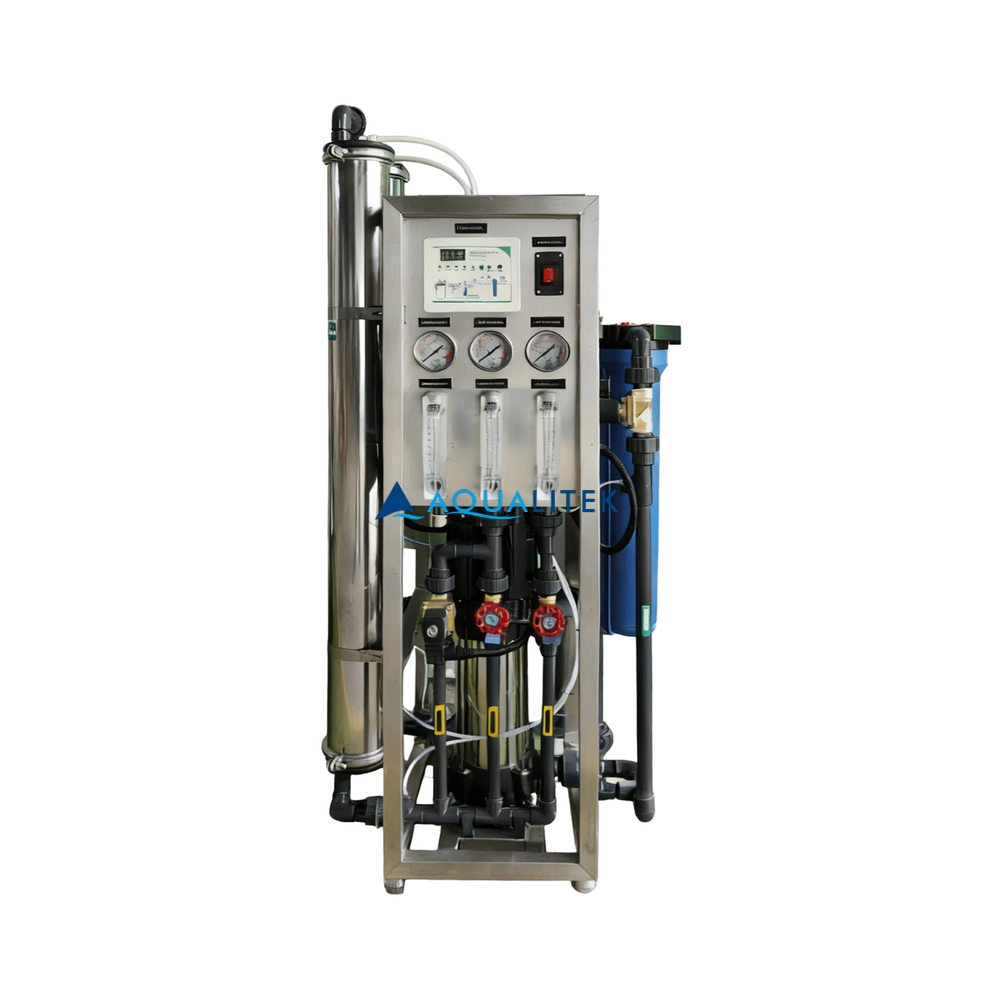
TWV series Reverse Osmosis (RO) systems are pre-engineered and pre-assembled units with 2.5”/4” membrane housings(single element type)for tap water(lower TDS).They are designed for overall superior performance, high recovery rates and offer great savings with low maintenance and operation costs.
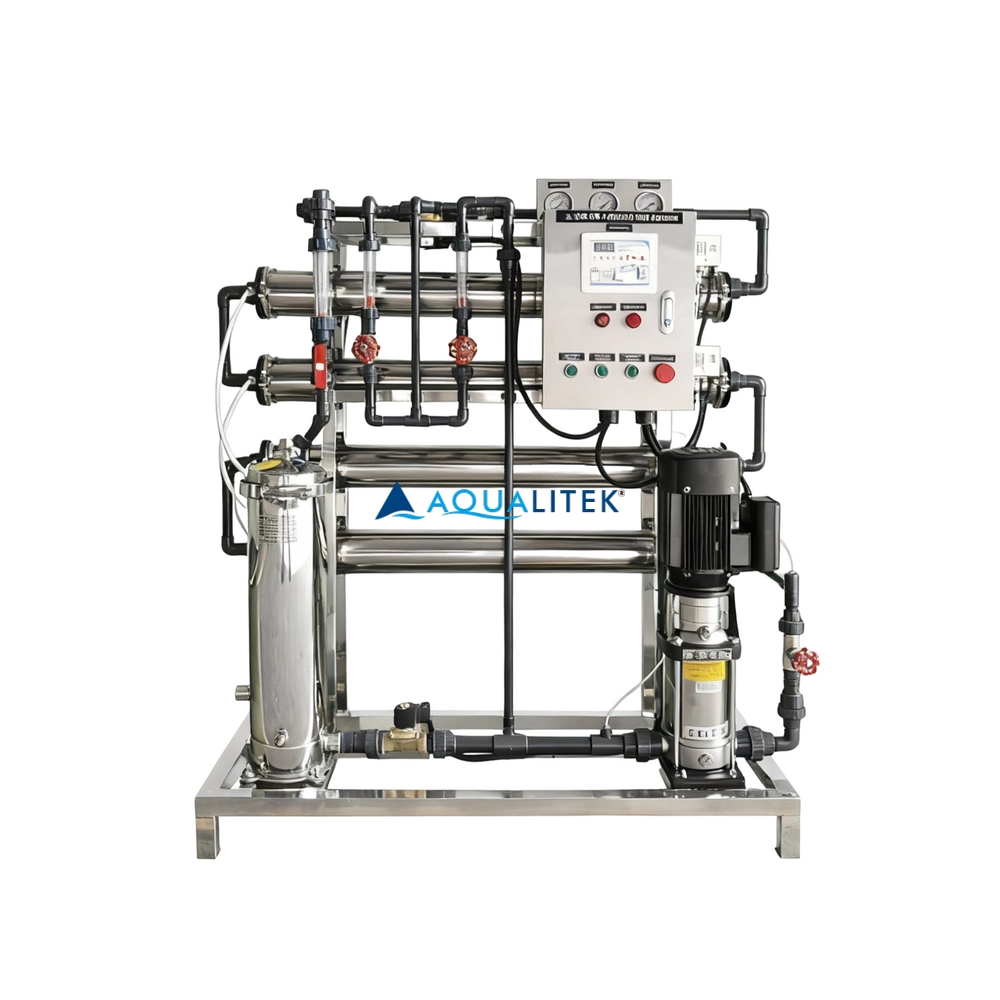
TWF series Reverse Osmosis (RO) systems are pre-engineered and pre-assembled units with 4” membrane housings(multiple elements type) for tap water(lower TDS) .The medium large volumes can help meet your a variety of commercial and industrial applications. They are designed for overall superior performance, high recovery rates and offer great savings with low maintenance and operation costs.

TWE series Reverse Osmosis (RO) systems are pre-engineered and pre-assembled units with 8” membrane housings for tap water (lower TDS). The large volumes can help meet your a variety of industrial applications. They are designed for overall superior performance, high recovery rates and offer great savings with low maintenance and operation costs.
© 2026 AQUALITEK. All rights reserved.
AQUALITEK- Aimee Hoo
AQUALITEK - Aimee Hoo