




Best Immediate Actions to Take When a Sudden Increase in Influent Hardness Is Detected| Insights by AQUALITEK
A sudden spike in influent water hardness is a serious operational risk for RO systems and can cause rapid, irreversible membrane scaling. This Best-practice guide explains the immediate steps operators must take to protect RO membranes, stabilize system operation, and prevent costly downtime.
- Why a Sudden Hardness Increase Is Dangerous
- 1. Immediately Reduce System Recovery or Stop the RO System
- 2. Verify Pretreatment Performance Immediately
- 3. Perform a Low-Pressure Flush to Remove Concentrated Ions
- 4. Confirm Hardness Measurement Accuracy
- 5. Inspect Differential Pressure (ΔP) Across RO Stages
- 6. Restore Pretreatment Before Resuming Normal Operation
- Conclusion
Why a Sudden Hardness Increase Is Dangerous
Influent hardness—mainly calcium (Ca²⁺) and magnesium (Mg²⁺)—is one of the primary causes of inorganic scaling in RO systems.
A sudden hardness increase can:
•Rapidly exceed membrane solubility limits
•Cause calcium carbonate or sulfate scaling
•Block membrane pores
•Increase differential pressure
•Permanently reduce membrane flux
Immediate action is critical.
1. Immediately Reduce System Recovery or Stop the RO System
Best Option: Emergency Shutdown
If hardness increases sharply beyond design limits:
•Stop the high-pressure pump
•Switch to low-pressure flushing if possible
Alternative (If Shutdown Is Not Possible)
•Immediately reduce recovery rate
•Increase concentrate flow
•Lower salt concentration inside the membrane
⚠️ Continuing normal operation risks irreversible scaling within hours.
2. Verify Pretreatment Performance Immediately
Check Softener or Antiscalant System
•Is the water softener exhausted or bypassed?
•Has resin regeneration failed?
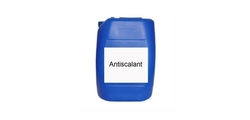
•Is antiscalant dosing interrupted?
•Is chemical tank empty or dosing pump malfunctioning?
Pretreatment failure is the most common cause of hardness spikes.
3. Perform a Low-Pressure Flush to Remove Concentrated Ions
Before restarting or stabilizing:
•Flush membranes with low-TDS water
•Remove high-hardness concentrate
•Prevent ion precipitation during idle time
This step significantly reduces scaling risk.
4. Confirm Hardness Measurement Accuracy
Double-Check the Data
•Retest hardness manually (EDTA titration or lab test)
•Compare with online analyzer readings
•Check for sensor calibration drift
Do not rely on a single data point.
5. Inspect Differential Pressure (ΔP) Across RO Stages
Early warning signs of scaling include:
•Rising ΔP
•Reduced permeate flow at constant pressure
•Increasing required operating pressure
If ΔP has already increased:
•Do not restart at high recovery
•Consider early cleaning intervention
6. Restore Pretreatment Before Resuming Normal Operation
Only resume standard operation when:
•Softener performance is verified
•Antiscalant dosing is stable
•Hardness is back within design limits
If hardness remains elevated, operate temporarily at:
•Lower recovery
•Higher concentrate flow
•Reduced flux
What NOT to Do
❌ Do not ignore the spike
❌ Do not increase pressure to maintain flow
❌ Do not continue operation assuming “it will stabilize”
❌ Do not delay intervention until scaling is visible
Scaling damage is often irreversible.
Follow-Up Actions After Stabilization
•Review historical hardness trends
•Investigate upstream water source changes
•Improve alarm thresholds
•Add redundancy or interlocks for softener/antiscalant systems
•Update emergency response SOPs
Conclusion
A sudden increase in influent hardness is an RO emergency. The best immediate response is to reduce recovery or shut down the system, verify pretreatment performance, flush the membranes, and confirm hardness readings before resuming operation.
Fast, decisive action can mean the difference between normal operation and permanent membrane damage.


Request More Information or Expert Advice
Share a few details, and we’ll provide deeper insights, tailored suggestions, or product support.
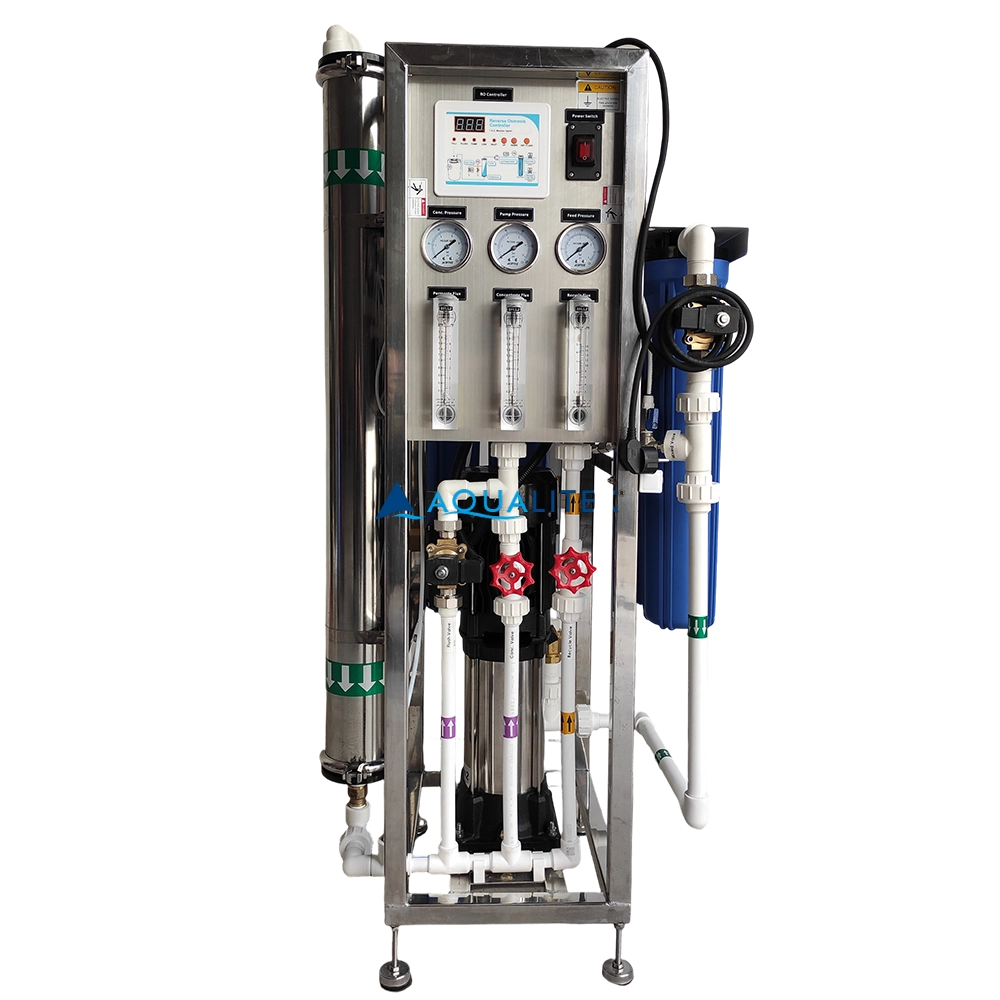
Our 500 LPH Reverse Osmosis (RO) System is engineered to provide high-quality purified water for commercial applications. Designed with advanced RO technology, durable components, and a user-friendly interface, this system ensures consistent performance, low maintenance, and long-term reliability.
With its compact design and robust skid-mounted frame, it’s an excellent choice for businesses that demand efficiency and quality in water purification.
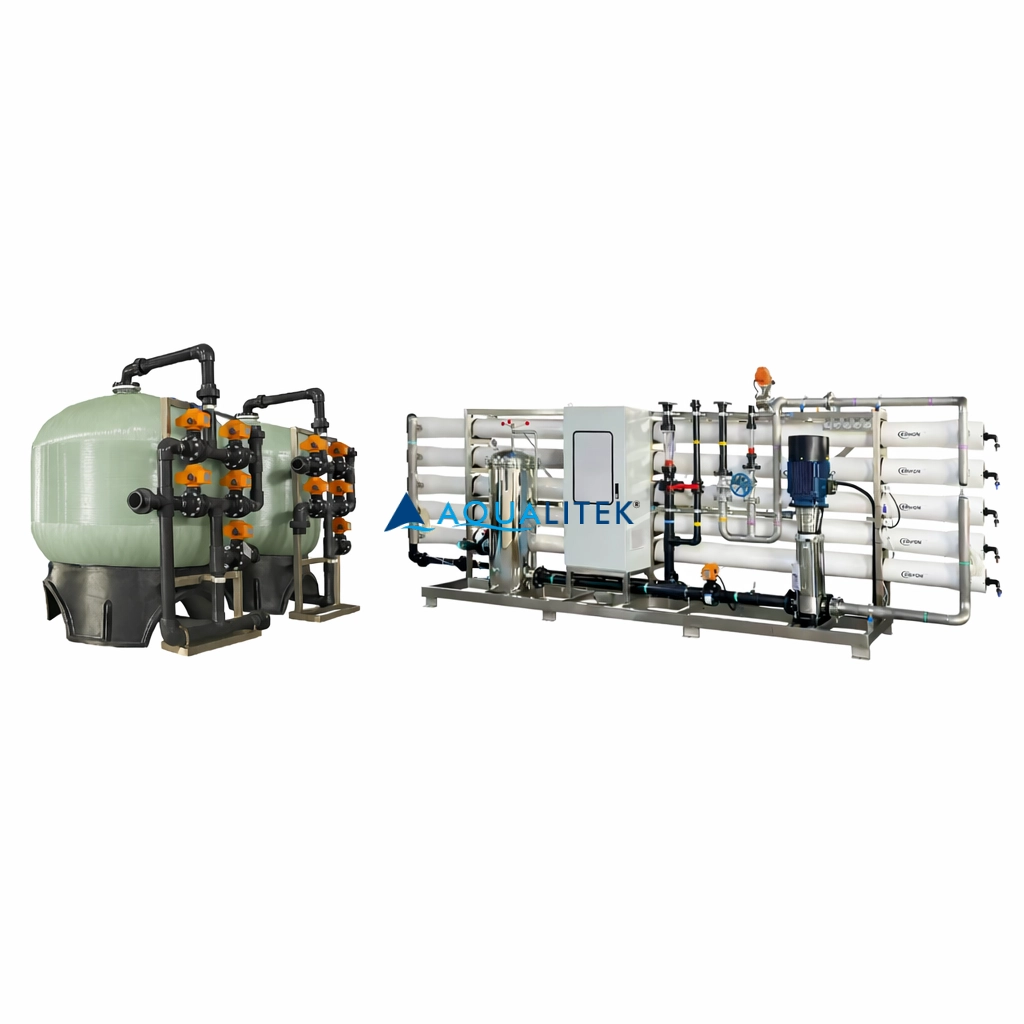
30TPH Industrial Reverse Osmosis (RO) System designed for industrial and municipal water treatment. High salt rejection, energy-efficient design, PLC control, and customizable configuration.
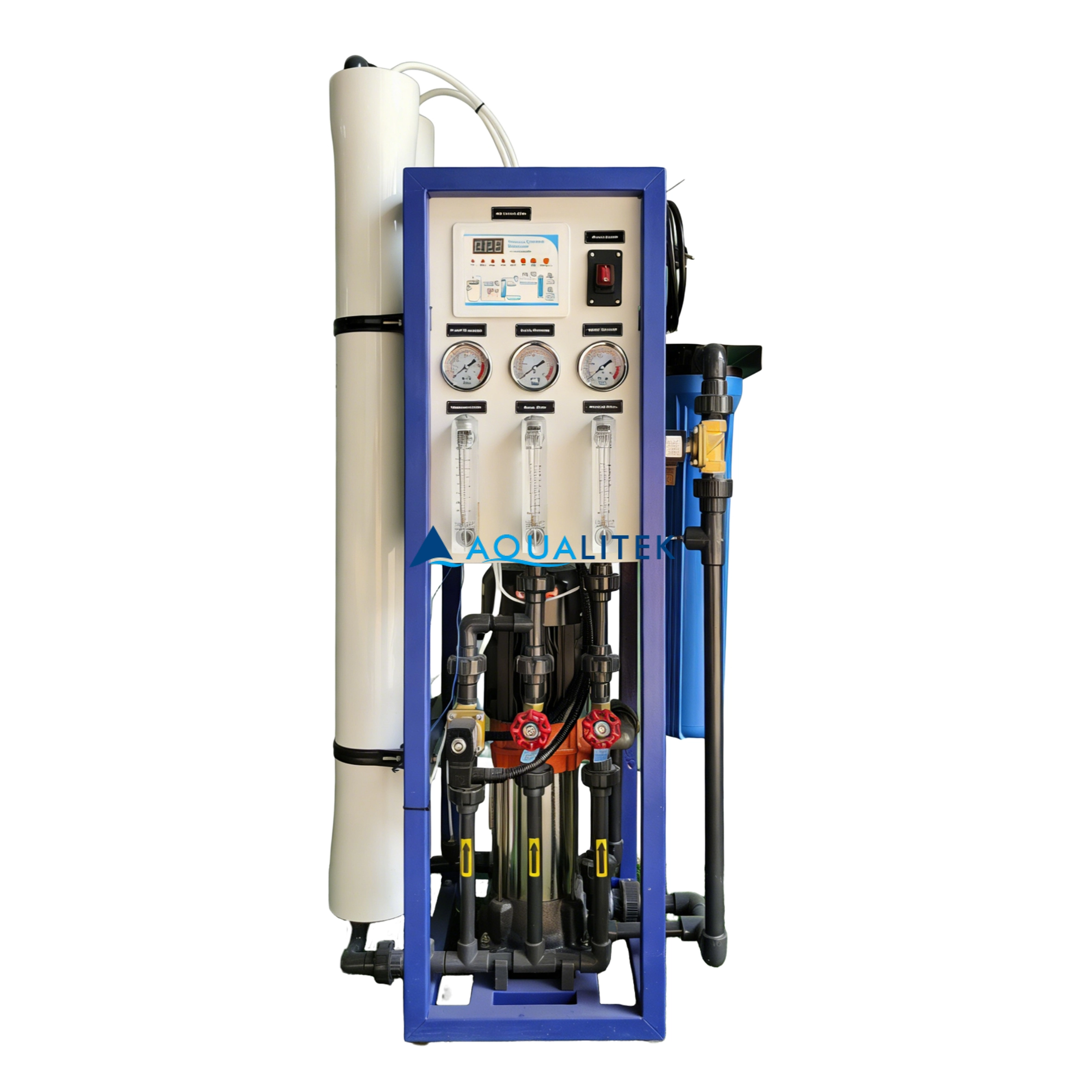
AQUALITEK's 500LPH Panel Mounted Reverse Osmosis Water Purification System delivers reliable 500 LPH RO water production. This compact industrial reverse osmosis unit is ideal for small scale industrial RO needs, ensuring efficient and high-quality purified water in a space-saving design.
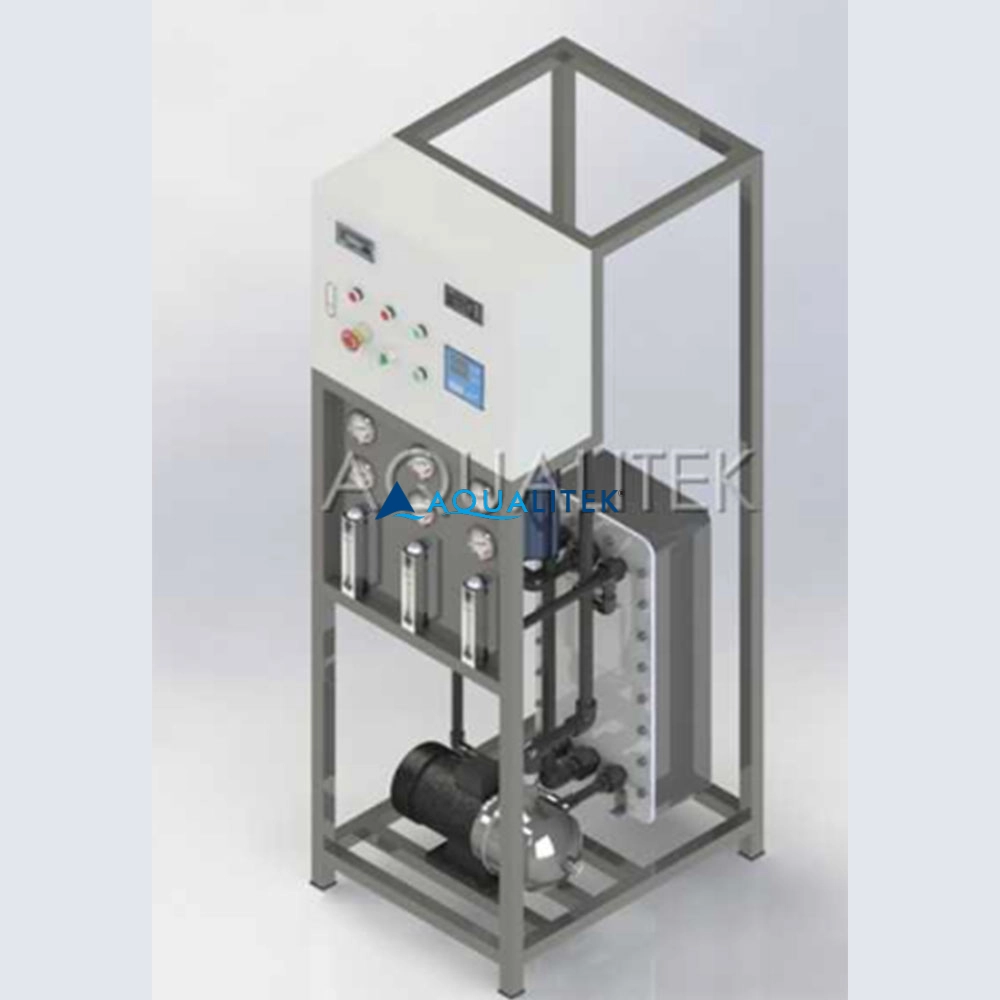
Electrodeionization (EDI) system is an advanced water purification technology that combines ion exchange and electrochemical processes to produce ultra-pure water. Unlike traditional deionization methods, which rely on chemical regeneration, EDI utilizes electric fields to drive the movement of ions through ion-exchange membranes, effectively removing dissolved salts and other ionic contaminants.
This process is continuous and does not require the use of chemicals for regeneration, making it an environmentally friendly and cost-effective solution for producing high-quality deionized water. EDI systems are widely used in applications requiring ultrapure water, such as in the pharmaceutical, semiconductor, power generation, and biotechnology industries, as well as for laboratory use.
By offering high-purity water without the need for chemical regeneration, EDI systems provide a sustainable, efficient, and reliable alternative to traditional deionization methods, making them an ideal choice for industries where water quality and process control are critical.
© 2026 AQUALITEK. All rights reserved.
AQUALITEK- Aimee Hoo
AQUALITEK - Aimee Hoo