




How to choose between single-pass and double-pass RO?
- Understanding Reverse Osmosis Systems: Key Considerations for Water Treatment Professionals
- 1. What Are Reverse Osmosis Systems?
- 2. What Is the Difference Between Single-Pass and Double-Pass Reverse Osmosis Systems?
- 3. What Are the Advantages of Double-Pass RO Systems?
- 4. How Do Single-Pass and Double-Pass RO Systems Compare to Other Purification Methods?
- 5. What Are the Cost Implications of Single-Pass vs. Double-Pass RO Systems?
- 6. How Do Single-Pass and Double-Pass RO Systems Impact Water Recovery Rates?
- 7. What Are the Maintenance Considerations for Single-Pass and Double-Pass RO Systems?
- 8. How Do Single-Pass and Double-Pass RO Systems Compare in Terms of Energy Consumption?
- Conclusion: Why Choose AQUALITEK for Your Reverse Osmosis Needs?
Understanding Reverse Osmosis Systems: Key Considerations for Water Treatment Professionals
Reverse osmosis (RO) systems are integral to modern water treatment, offering efficient solutions for purifying water across various industries. This article delves into critical considerations for water treatment professionals when selecting RO systems, focusing on the differences between single-pass and double-pass configurations.
1. What Are Reverse Osmosis Systems?
Reverse osmosis is a water purification process that removes contaminants by forcing water through a semi-permeable membrane under pressure. This process effectively eliminates dissolved solids, bacteria, and other impurities, producing clean, potable water suitable for various applications.
2. What Is the Difference Between Single-Pass and Double-Pass Reverse Osmosis Systems?
Single-Pass RO Systems:
Process: Water passes through the RO membrane once, producing permeate (treated water) and concentrate (wastewater) streams.
Recovery Rate: Typically achieves a recovery rate of 75-85%, meaning 15-25% of the feed water is discarded as waste.
Applications: Suitable for applications where high purity is not critical, such as general industrial processes.
Double-Pass RO Systems:
Process: The permeate from the first RO pass serves as the feed for a second RO pass, resulting in higher purity water.
Recovery Rate: Achieves a higher recovery rate of 85-95%, reducing wastewater generation.
Applications: Essential for industries requiring ultrapure water, such as pharmaceuticals, electronics manufacturing, and power generation.
3. What Are the Advantages of Double-Pass RO Systems?
Superior Water Quality: Double-pass systems can achieve over 99.9% removal of dissolved solids, ensuring high-quality water suitable for sensitive applications.
Reduced Water Waste: By recycling permeate through a second pass, these systems minimize wastewater, which is particularly beneficial in water-scarce regions.
Enhanced Contaminant Removal: The two-stage filtration process effectively removes a broader range of contaminants, including dissolved gases like CO₂, which is crucial for specific industrial processes.
4. How Do Single-Pass and Double-Pass RO Systems Compare to Other Purification Methods?
Distillation: While distillation can remove a wide range of contaminants, it is energy-intensive and may not effectively eliminate certain volatile organic compounds. In contrast, RO systems, especially double-pass configurations, are more energy-efficient and effective in large-scale applications.
Ion Exchange: This method is effective for removing specific ions but may not address a broad spectrum of contaminants. RO systems offer a more comprehensive solution for water purification.
5. What Are the Cost Implications of Single-Pass vs. Double-Pass RO Systems?
Initial Investment: Double-pass systems require a higher upfront investment due to the additional RO unit and associated infrastructure.
Operational Costs: While double-pass systems may have higher energy consumption due to the second pass, the increased water recovery and reduced wastewater disposal costs can offset these expenses over time.
Long-Term Benefits: Industries requiring high-purity water may find the investment in double-pass systems justified by the quality and efficiency benefits they provide.
6. How Do Single-Pass and Double-Pass RO Systems Impact Water Recovery Rates?
Single-Pass Systems: Achieve recovery rates of 75-85%, resulting in 15-25% of feed water being discarded as waste.
Double-Pass Systems: Achieve higher recovery rates of 85-95%, significantly reducing wastewater generation and improving overall water efficiency.
7. What Are the Maintenance Considerations for Single-Pass and Double-Pass RO Systems?
Single-Pass Systems: Generally have simpler maintenance requirements due to fewer components and a single filtration stage.
Double-Pass Systems: Require more complex maintenance schedules to ensure optimal performance of both RO stages, including monitoring and servicing additional components.
8. How Do Single-Pass and Double-Pass RO Systems Compare in Terms of Energy Consumption?
Single-Pass Systems: Typically consume less energy due to the absence of a second RO pass.
Double-Pass Systems: Have higher energy consumption due to the additional RO unit; however, the increased water recovery and reduced wastewater disposal costs can offset these expenses over time.
Conclusion: Why Choose AQUALITEK for Your Reverse Osmosis Needs?
AQUALITEK offers advanced reverse osmosis solutions tailored to meet the specific needs of various industries. With a focus on efficiency, water quality, and sustainability, AQUALITEK's systems provide:
High Recovery Rates: Maximizing water utilization and minimizing waste.
Superior Water Quality: Ensuring compliance with stringent industry standards.
Cost-Effectiveness: Offering solutions that balance initial investment with long-term operational savings.
By choosing AQUALITEK, you invest in reliable, high-performance RO systems that support your operational goals and environmental responsibilities.
Sources:
(https://www.netsolwater.com/single-pass-vs-double-pass-reverse-osmosis-systems.php?blog=2934)
(https://stark-water.com/blog/double-pass-reverse-osmosis-system/)
(https://www.industrialwaterequipment.co.uk/reverse-osmosis-single-double-pass-systems/)
(https://www.moruiwater.com/knowledge/what-benefits-does-double-pass-ro-offer)
(https://ask.pharmaguideline.com/t/difference-between-water-types/3084)




Request More Information or Expert Advice
Share a few details, and we’ll provide deeper insights, tailored suggestions, or product support.
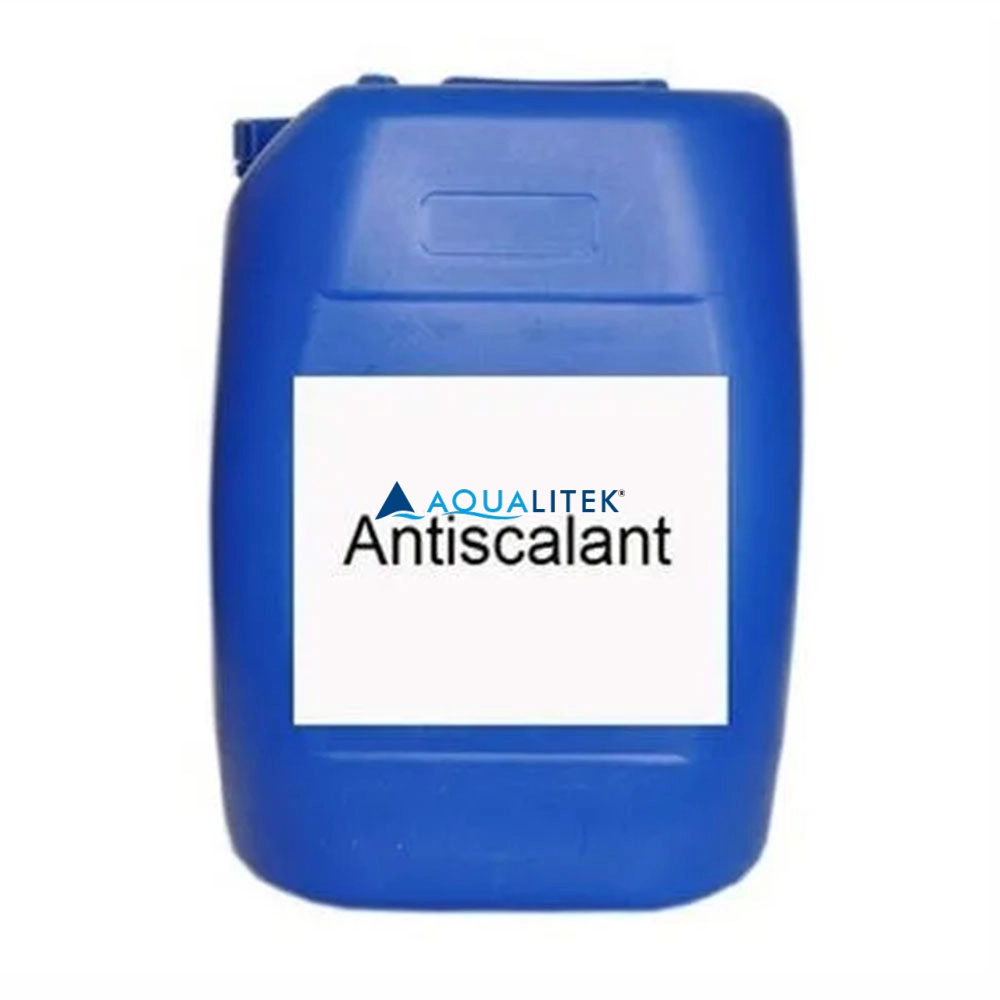
Anti-Scalant is a specialized water treatment chemical designed to prevent the formation of scale in reverse osmosis (RO) systems. Scaling is a common issue in RO systems, where minerals like calcium, magnesium, and silica precipitate and form hard deposits on the membrane surface. These deposits can clog the membranes, reduce water production efficiency, and increase operational costs.
RO chemical anti-scalants work by inhibiting the crystallization of scale-forming minerals, effectively keeping them in solution and preventing them from adhering to the membrane. This ensures the longevity and optimal performance of the RO system.
Anti-scalants are essential in applications with hard water or high mineral content, such as in industrial, municipal, and desalination plants.
These chemicals are highly effective in preventing scaling caused by common minerals such as calcium carbonate, calcium sulfate, barium sulfate, and silica, helping to extend the lifespan of the membranes, reduce cleaning cycles, and enhance system efficiency.
By incorporating an RO chemical anti-scalant into your water treatment process, you can improve the reliability and overall performance of your reverse osmosis system, ensuring consistent, high-quality water output while minimizing maintenance costs.
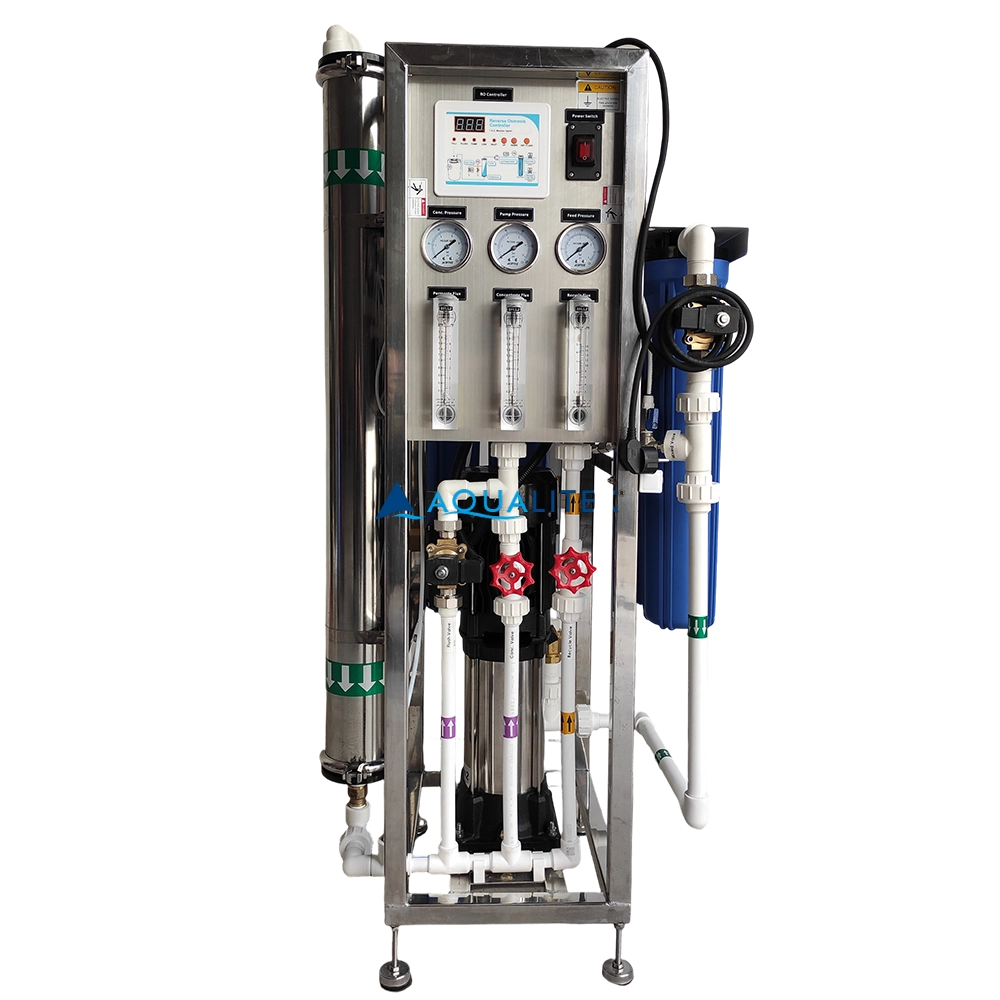
Our 500 LPH Reverse Osmosis (RO) System is engineered to provide high-quality purified water for commercial applications. Designed with advanced RO technology, durable components, and a user-friendly interface, this system ensures consistent performance, low maintenance, and long-term reliability.
With its compact design and robust skid-mounted frame, it’s an excellent choice for businesses that demand efficiency and quality in water purification.
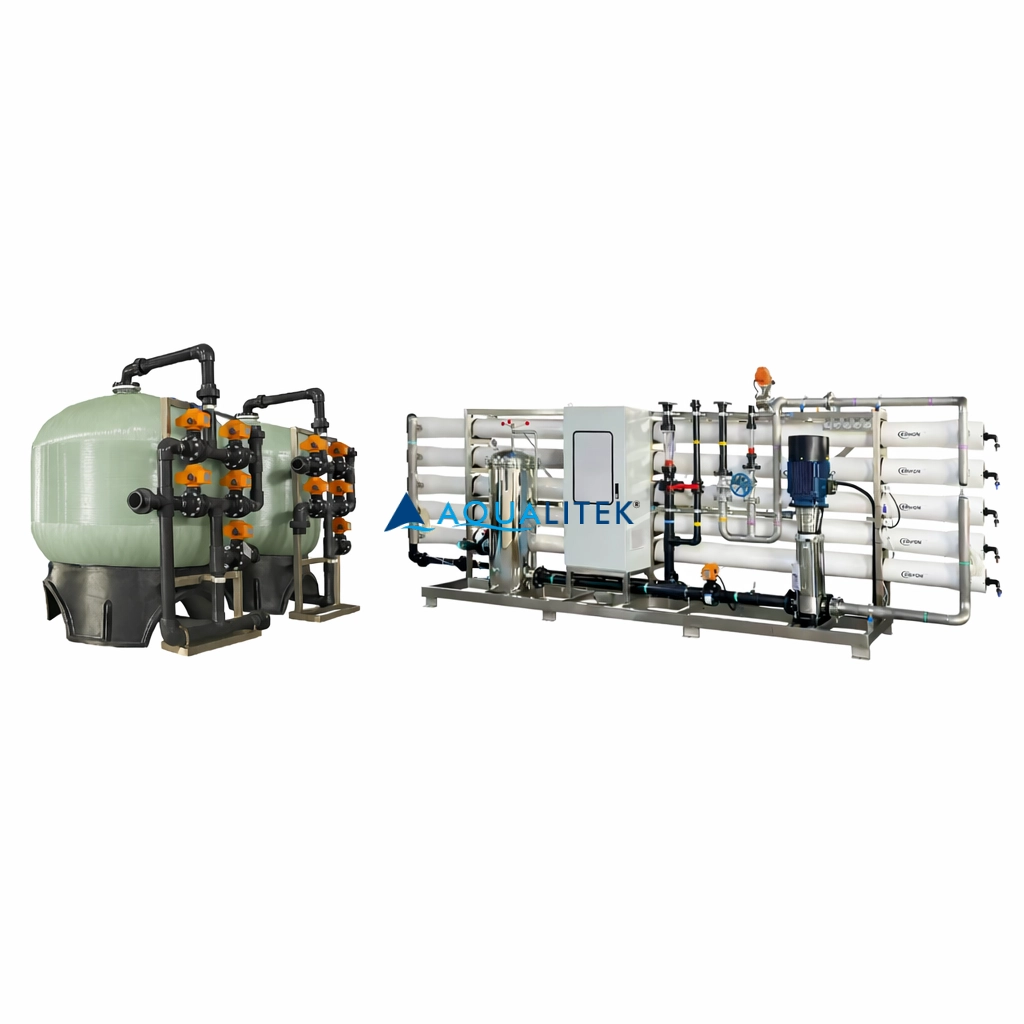
30TPH Industrial Reverse Osmosis (RO) System designed for industrial and municipal water treatment. High salt rejection, energy-efficient design, PLC control, and customizable configuration.
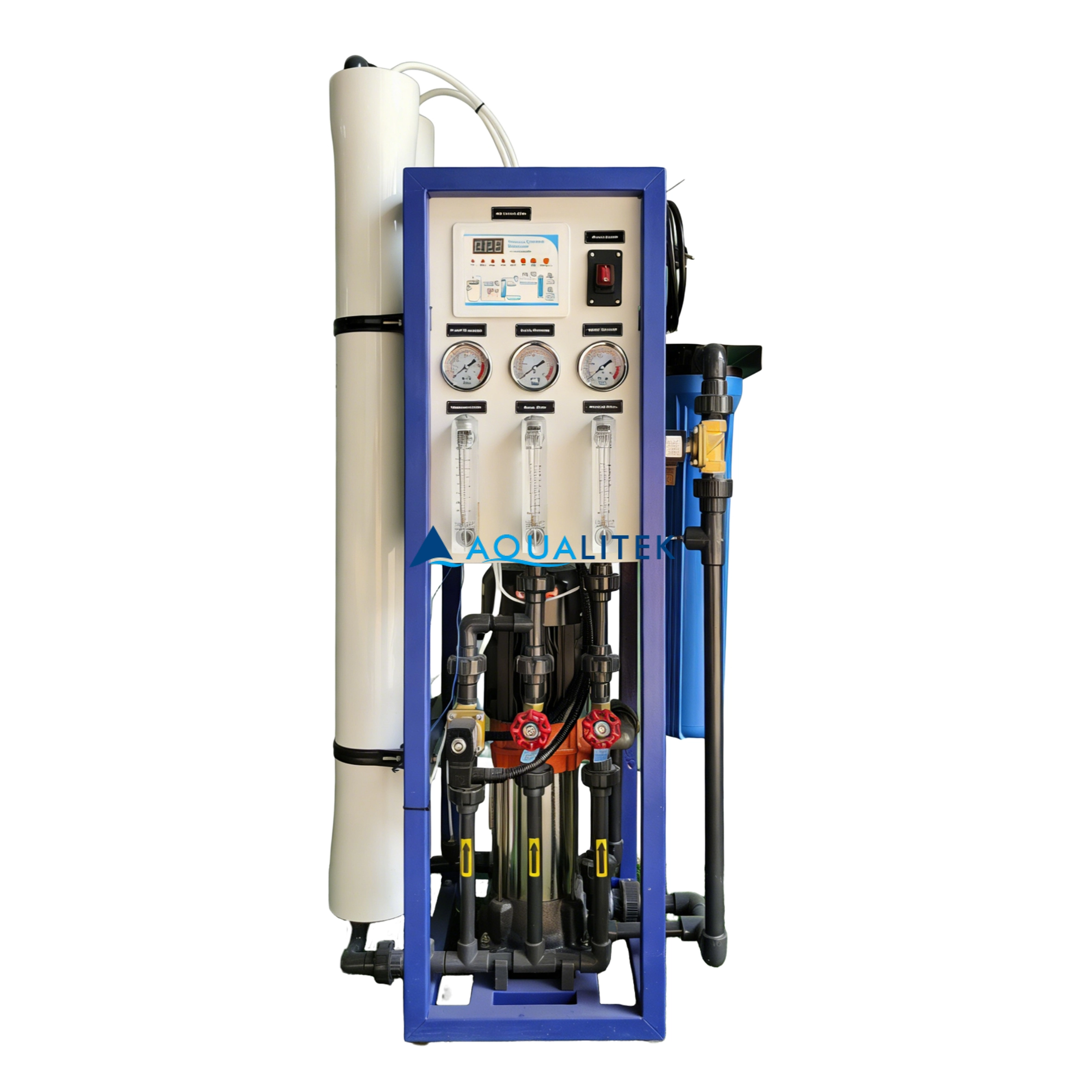
AQUALITEK's 500LPH Panel Mounted Reverse Osmosis Water Purification System delivers reliable 500 LPH RO water production. This compact industrial reverse osmosis unit is ideal for small scale industrial RO needs, ensuring efficient and high-quality purified water in a space-saving design.
© 2026 AQUALITEK. All rights reserved.
AQUALITEK- Aimee Hoo
AQUALITEK - Aimee Hoo