




Main Categories of RO System Malfunctions | Insights by AQUALITEK
This Best-style guide explains the major categories of malfunctions in industrial RO (reverse osmosis) systems. It covers mechanical, hydraulic, electrical, chemical, membrane-related, and operational issues, helping engineers diagnose problems quickly and optimize system performance.
- Introduction
- 1. Mechanical Malfunctions
- 2. Hydraulic (Flow & Pressure) Malfunctions
- 3. Electrical & Instrumentation Malfunctions
- 4. Chemical & Water Quality-Related Malfunctions
- 5. Membrane-Related Malfunctions
- 6. Operational & Human-Error Malfunctions
- 7. Pretreatment System Malfunctions
- 8. Environmental & Structural Malfunctions
- Conclusion
Introduction
Industrial reverse osmosis (RO) systems are widely used in industries such as electronics, pharmaceuticals, power generation, food processing, and municipal water treatment. While RO systems are reliable when properly designed and maintained, they are also complex—integrating pumps, piping, membranes, instruments, chemical dosing, and automation controls.
Understanding the main categories of RO system malfunctions allows operators, maintenance teams, and engineers to diagnose issues efficiently before they escalate into costly failures.
1. Mechanical Malfunctions
Mechanical issues typically occur in the physical components of the RO system. These failures can disrupt water flow, reduce system efficiency, or cause catastrophic damage if left untreated.
Common Mechanical Faults
•High-pressure pump failures
•Bearing wear, vibration, abnormal noise
•Mechanical seal leakage
•Loose or damaged piping and fittings
•Valve malfunction or blockage
•Housing O-ring damage or leakage
Why These Occur
•Long-term wear
•Poor lubrication
•Improper alignment
•Pump cavitation due to inadequate feed flow
•Excessive on/off cycling
Impact
•Reduced pressure
•Reduced permeate flow
•Sudden system shutdown
2. Hydraulic (Flow & Pressure) Malfunctions
Hydraulic issues directly influence production capacity and membrane performance. They relate to water flow, pressure distribution, and recovery balance.
Typical Hydraulic Problems
•Insufficient feed pressure
•Abnormally high differential pressure across membrane vessels
•Uneven pressure distribution between stages
•Excessive recovery rate leading to scaling risk
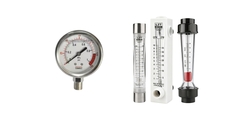
•Flow meter inaccuracy or blockage
Causes
•Fouled pretreatment filters
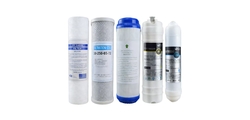
•Blocked cartridge filters
•Pump underperformance
•Air ingress in feed lines
•Incorrect valve position
Results
•Reduced permeate production
•High reject flow
•Accelerated membrane scaling or fouling
3. Electrical & Instrumentation Malfunctions
RO systems rely heavily on automation, sensors, and control circuits. Electrical or instrumentation issues often cause sudden shutdowns or incorrect system behavior.
Common Electrical/Instrumentation Issues
•Faulty conductivity meters
•Flow sensor failure
•Pressure transmitter drift
•Level switch malfunction
•PLC or control panel failure
•Power supply instability or outage
Root Causes
•Sensor aging
•Wiring corrosion
•Electromagnetic interference
•Poor calibration
•Voltage spikes
Consequences
•False alarms
•Unstable operation
•Inaccurate water quality data
•Inappropriate pump or valve actions
4. Chemical & Water Quality-Related Malfunctions
Chemical dosing and water quality parameters have a major influence on RO membrane life. Incorrect chemical conditions can quickly degrade system performance.
Typical Chemical Issues
•Incorrect antiscalant dosage
•Wrong pH adjustment
•Improper sodium bisulfite dosing (for dechlorination)
•Residual chlorine damage
•Low alkalinity causing pH fluctuations
Water Quality Causes
•High turbidity
•High suspended solids
•Unstable feed water quality
•Temperature fluctuations
Impact
•Accelerated membrane fouling
•Irreversible oxidation damage
•Scaling and silica deposition
•Increased cleaning frequency
5. Membrane-Related Malfunctions
Membranes are the core of the RO system, and most performance problems originate here.
Key Membrane Malfunction Types
•Fouling
Organics, colloids, clay, iron, manganese
•Scaling
CaCO₃, CaSO₄, BaSO₄, SrSO₄, SiO₂
•Biofouling
Bacterial growth, biofilm formation
•Chemical Degradation
Oxidant exposure (chlorine, ozone)
•Mechanical Damage
Telescoping
Glue-line failure
Broken permeate tubes
Symptoms
•Elevated differential pressure
•Reduced permeate flow
•Increased permeate conductivity
•Need for frequent chemical cleaning
6. Operational & Human-Error Malfunctions
Operational mistakes are more common than equipment failures and often lead to system downtime.
Typical Operational Faults
•Incorrect startup/shutdown sequence
•Frequent pump on/off cycling
•Improper flushing procedures
•Running system without pretreatment
•Failure to maintain logs and trending data
•Wrong valve position during operation
Consequences
•Shock-loading the membranes
•Cavitation damage
•Scaling due to overshooting recovery
•Misdiagnosis of system problems
7. Pretreatment System Malfunctions
Since RO relies on stable feedwater quality, pretreatment failures quickly impact the membranes.
Common Pretreatment Issues
•Sand filter breakthrough
•Carbon filter exhaustion
•Softener regeneration failure
•Cartridge filter clogging
•UF/MF system underperformance
Effect on the RO System
•High turbidity feed
•Residual chlorine breakthrough
•Hardness leaks leading to scaling
•Increased fouling and differential pressure
8. Environmental & Structural Malfunctions
External factors can also cause RO systems to malfunction.
Environmental Fault Conditions
•Low temperature causing water freezing
•High ambient heat affecting electronics
•Vibrations from nearby equipment
•Poor ventilation in the RO room
Structural Issues
•Corroded supports and frames
•Leaky housings or vessels
•Pipe deformation due to thermal expansion
Impact
•System shutdown
•Sensor failure
•Mechanical damage
Conclusion
RO system malfunctions fall into several major categories: mechanical, hydraulic, electrical, chemical, membrane-related, operational, pretreatment-related, and environmental problems. Understanding these categories helps maintenance teams respond quickly, reduce downtime, and extend membrane lifespan.
By categorizing failures, operators can diagnose issues systematically rather than relying on guesswork—saving time, chemicals, and maintenance costs.


Request More Information or Expert Advice
Share a few details, and we’ll provide deeper insights, tailored suggestions, or product support.
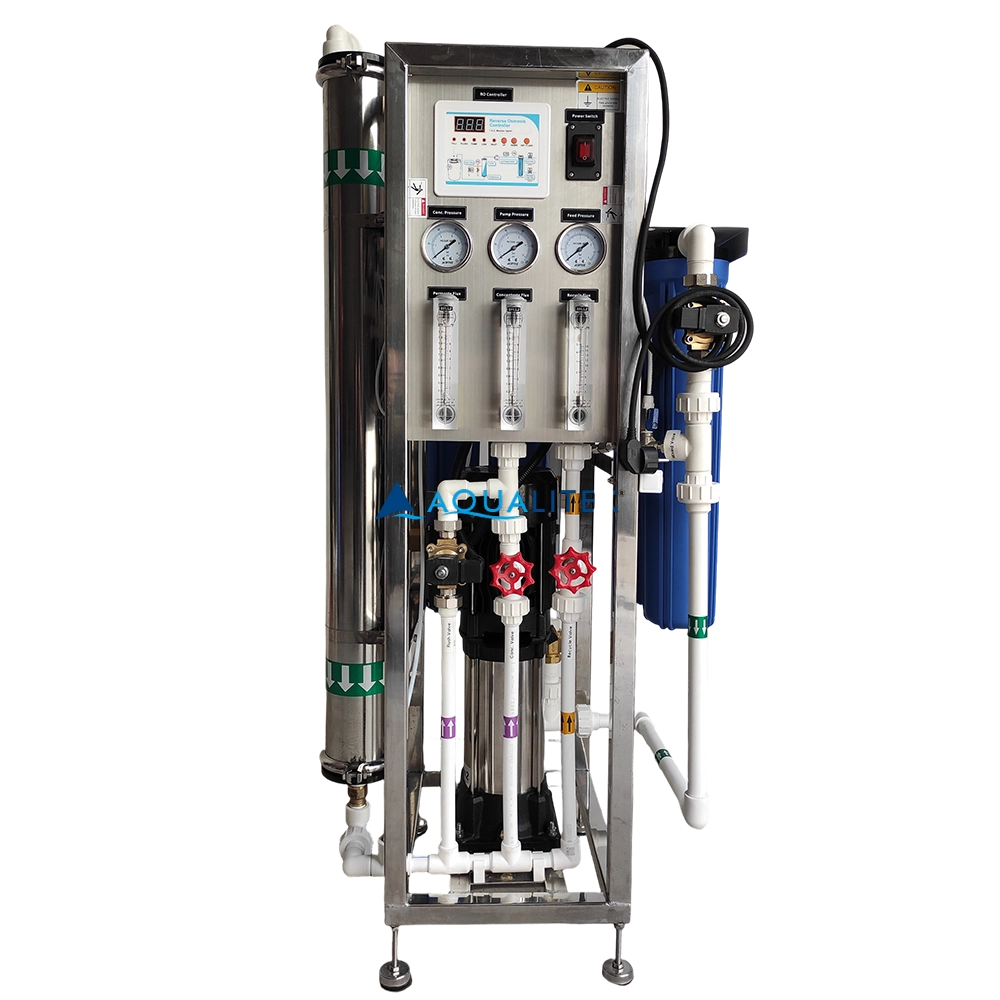
Our 500 LPH Reverse Osmosis (RO) System is engineered to provide high-quality purified water for commercial applications. Designed with advanced RO technology, durable components, and a user-friendly interface, this system ensures consistent performance, low maintenance, and long-term reliability.
With its compact design and robust skid-mounted frame, it’s an excellent choice for businesses that demand efficiency and quality in water purification.
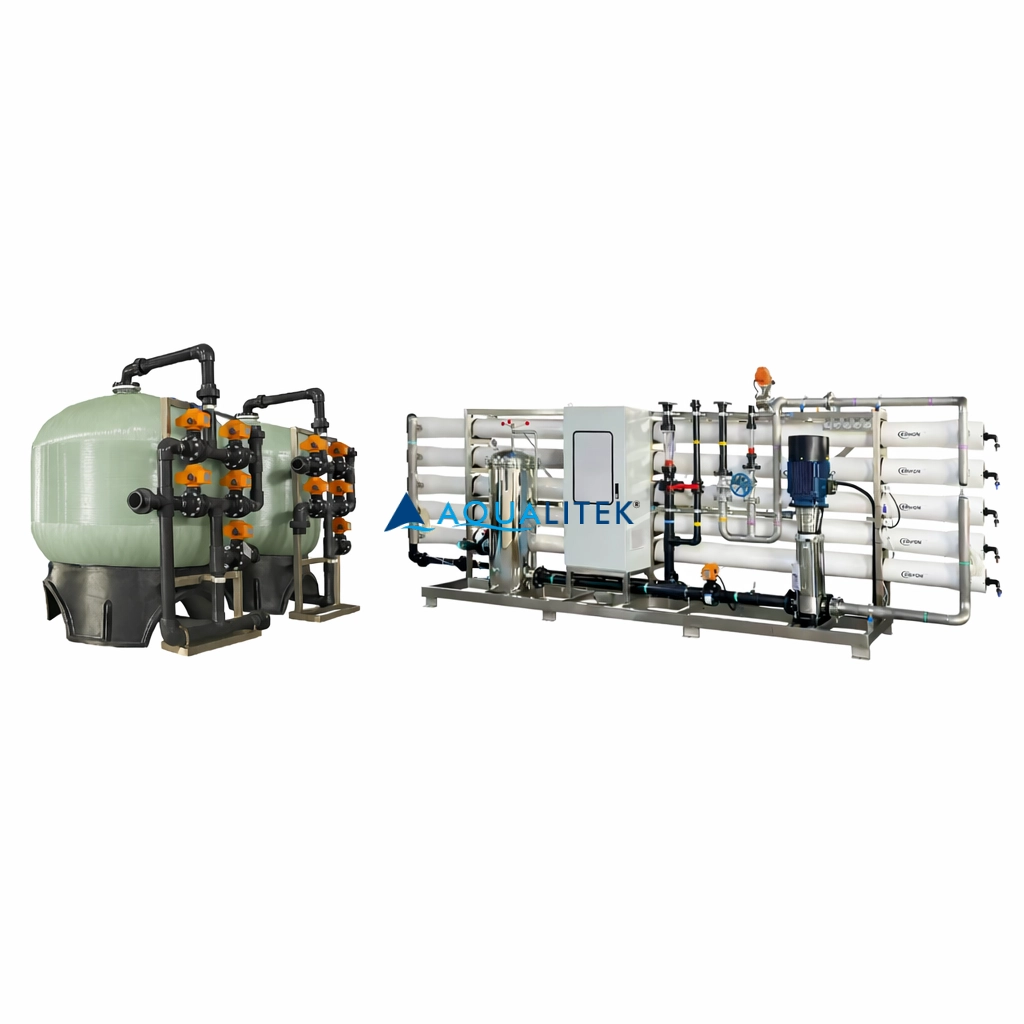
30TPH Industrial Reverse Osmosis (RO) System designed for industrial and municipal water treatment. High salt rejection, energy-efficient design, PLC control, and customizable configuration.
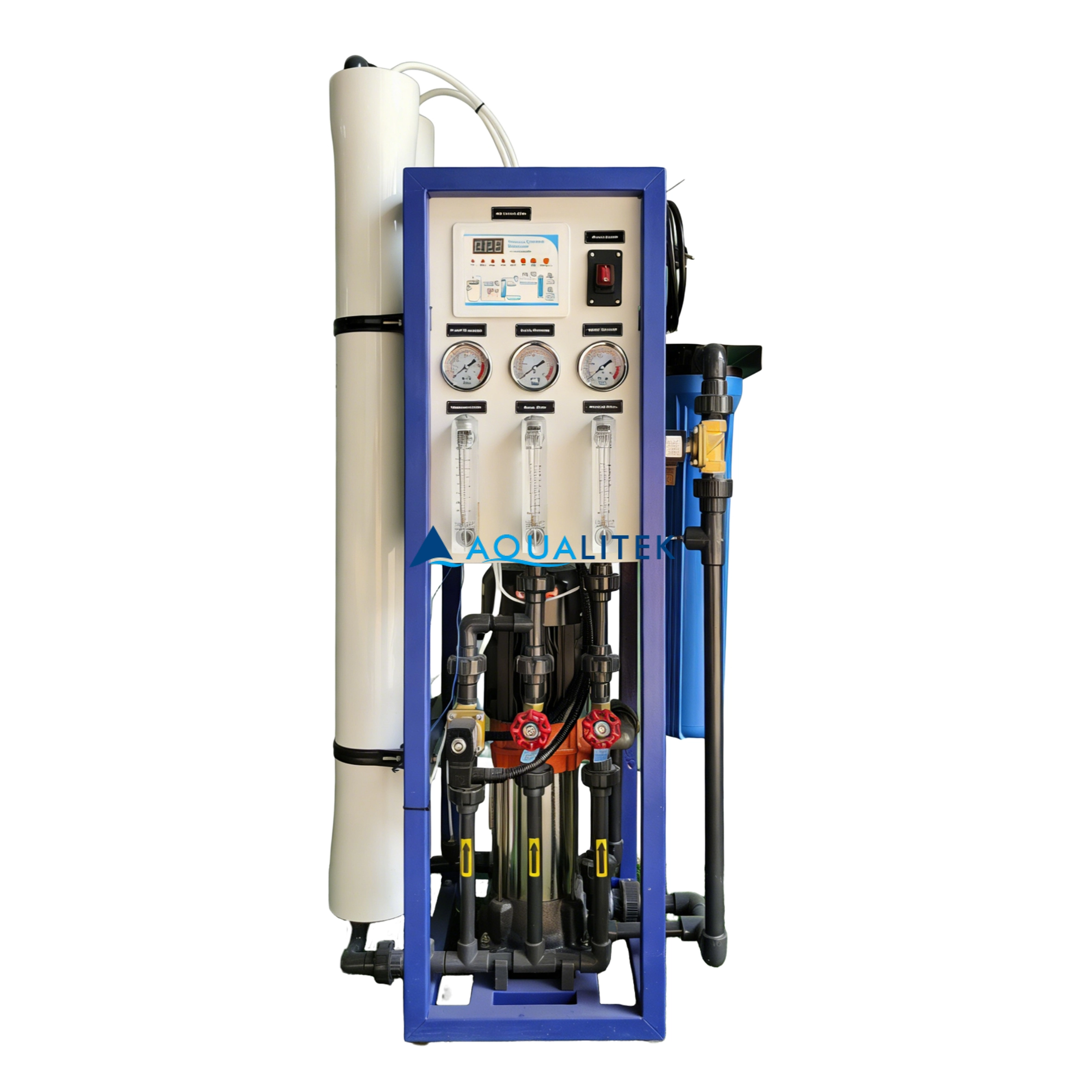
AQUALITEK's 500LPH Panel Mounted Reverse Osmosis Water Purification System delivers reliable 500 LPH RO water production. This compact industrial reverse osmosis unit is ideal for small scale industrial RO needs, ensuring efficient and high-quality purified water in a space-saving design.
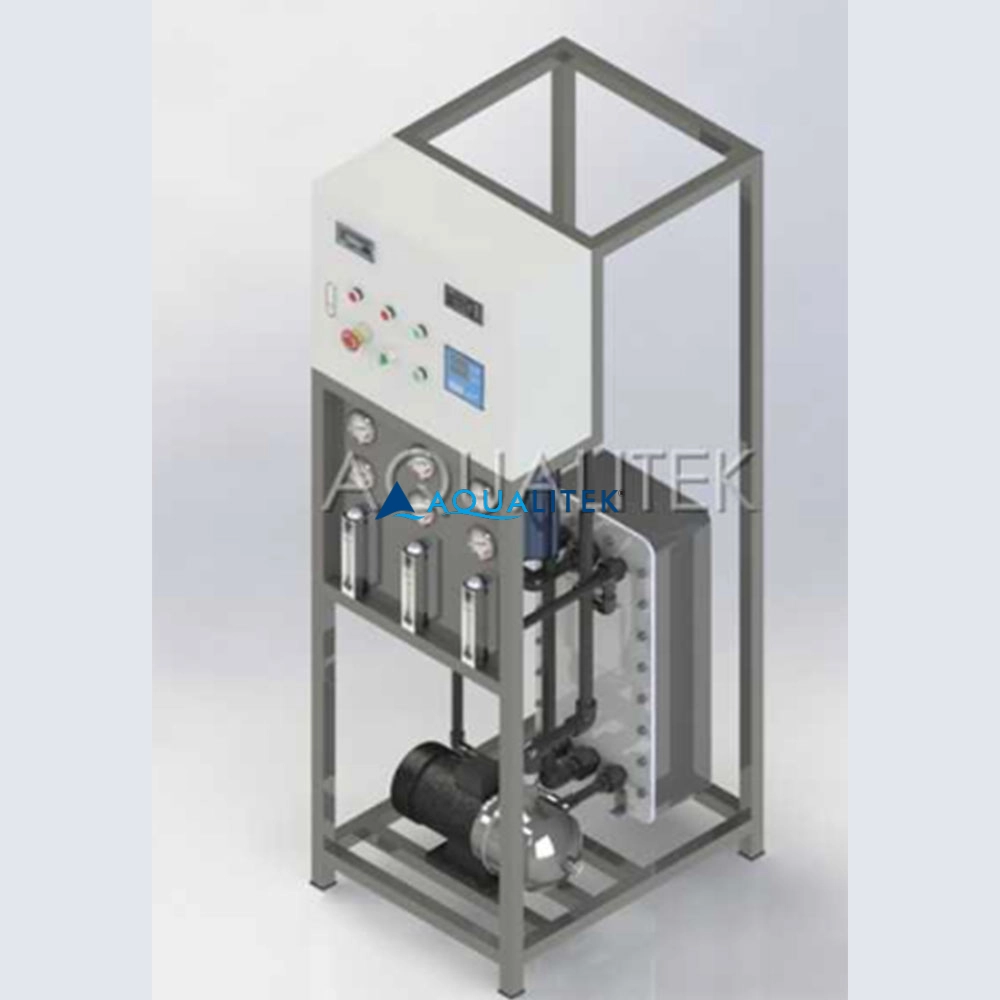
Electrodeionization (EDI) system is an advanced water purification technology that combines ion exchange and electrochemical processes to produce ultra-pure water. Unlike traditional deionization methods, which rely on chemical regeneration, EDI utilizes electric fields to drive the movement of ions through ion-exchange membranes, effectively removing dissolved salts and other ionic contaminants.
This process is continuous and does not require the use of chemicals for regeneration, making it an environmentally friendly and cost-effective solution for producing high-quality deionized water. EDI systems are widely used in applications requiring ultrapure water, such as in the pharmaceutical, semiconductor, power generation, and biotechnology industries, as well as for laboratory use.
By offering high-purity water without the need for chemical regeneration, EDI systems provide a sustainable, efficient, and reliable alternative to traditional deionization methods, making them an ideal choice for industries where water quality and process control are critical.
© 2026 AQUALITEK. All rights reserved.
AQUALITEK- Aimee Hoo
AQUALITEK - Aimee Hoo