



Maintenance and Lifecycle Costs of Stainless Cartridge Housings
- Maintenance and Lifecycle Costs of Stainless Cartridge Housings
- What is a cartridge filter housing and why stainless steel matters
- Key maintenance activities for cartridge filter housing
- Routine inspections and simple maintenance steps
- Common failure modes and troubleshooting for stainless cartridge filter housings
- Typical problems and how to address them
- Factors that drive lifecycle costs of cartridge filter housing
- What contributes to total cost of ownership (TCO)
- Comparison table: illustrative lifecycle cost drivers
- How to estimate lifecycle cost: a simple example
- Sample calculation for a stainless multi-cartridge housing
- Best practices to extend service life and reduce costs for cartridge filter housing
- Design, operation and maintenance strategies
- Regulatory, sanitary and pressure-vessel considerations
- Codes and standards to factor into lifecycle planning
- Maintenance schedule template for a multi-cartridge stainless housing
- Practical frequencies and actions
- Brand advantages: Why choose our Multi-cartridge Filter Housing stainless steel micron filter for water purification
- Features that reduce lifecycle costs and simplify maintenance
- FAQ — Maintenance and lifecycle of stainless cartridge filter housings
- 1. How often should I replace cartridges in a stainless cartridge filter housing?
- 2. Can stainless housings be repaired if damaged?
- 3. Are stainless housings always worth the higher initial cost?
- 4. What gasket materials work best with stainless cartridge housings?
- 5. Is passivation necessary and how often?
- Contact us / View product
- References and authoritative sources
Maintenance and Lifecycle Costs of Stainless Cartridge Housings
What is a cartridge filter housing and why stainless steel matters
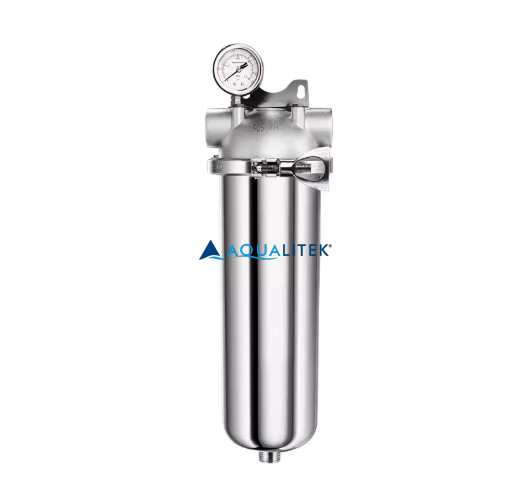
Cartridge filter housing is a critical component in liquid filtration systems, designed to securely hold and protect filter cartridges while allowing liquids to flow through the filter media. For applications such as water treatment, pharmaceuticals, food & beverage and industrial process water, stainless steel multi-cartridge housings — like the Multi-cartridge Filter Housing stainless steel micron filter for water purification — provide superior mechanical strength, chemical resistance and long-term reliability compared with many polymer alternatives. This article focuses on maintenance best practices and the lifecycle costs you should plan for when specifying and operating stainless cartridge filter housings.
Key maintenance activities for cartridge filter housing
Routine inspections and simple maintenance steps
Regular maintenance prevents unexpected downtime and preserves filter performance. Core activities include:
- Visual inspection of the vessel and flange seals for corrosion, cracks or deformation.
- Checking and replacing cartridge elements according to differential pressure (ΔP) targets or scheduled intervals.
- Inspecting O-rings and gaskets for hardening, swelling or cuts — replace as needed.
- Cleaning housings during cartridge replacement: remove solids, biofilm or scale using recommended cleaning agents and techniques.
- Verifying closure mechanisms (quick-release clamps, bolted closures) and torque values to ensure leak-free operation.
- Recording operating pressures, temperatures, throughput and maintenance actions in a log for lifecycle tracking.
These steps are simple but essential to maintain performance and reduce long-term costs associated with failure or premature replacement.
Common failure modes and troubleshooting for stainless cartridge filter housings
Typical problems and how to address them
Understanding common modes of failure lets you design maintenance plans that extend life and lower costs:
- Seal leakage — often caused by worn O-rings, improper seating or over-torquing. Inspect and replace seals, confirm correct gasket material for the fluid, and follow recommended torque procedures.
- Corrosion or pitting — despite stainless steel’s corrosion resistance, aggressive chemistries, chloride stress or poor passivation can cause localized attack. Address with proper material selection (e.g., 316L vs 304), ensure passivation after fabrication and avoid dissimilar-metal contact.
- Mechanical damage — dents or deformation from mishandling reduce sealing integrity. Train staff on safe handling and provide suitable lifting equipment for large multi-cartridge housings.
- Cavitation/erosion at high velocities — design piping to limit inlet velocities and use appropriate cartridge configurations to reduce shear-related damage.
- Biofouling and scaling — implement chemical cleaning cycles, CIP (clean-in-place) procedures or pre-treatment to reduce fouling load.
Factors that drive lifecycle costs of cartridge filter housing
What contributes to total cost of ownership (TCO)
Lifecycle cost is not just purchase price. Consider:
- Initial capital cost (housing, cartridges, fittings, instrumentation)
- Consumables (replacement cartridges, gaskets, clamps, cleaning chemicals)
- Maintenance labor and downtime
- Energy costs (pumping losses due to pressure drop)
- Inspection, testing and compliance costs
- Replacement or refurbishment frequency
Comparison table: illustrative lifecycle cost drivers
The table below compares common housing materials for an example small-to-medium multi-cartridge installation. Values are illustrative ranges to show relative differences; actual values depend on size, specification and operating conditions.
| Attribute | Stainless Steel (e.g., 316L) | Polypropylene (PP) | Fiberglass Reinforced Plastic (FRP) |
|---|---|---|---|
| Typical Initial Cost (housing only) | $2,500–$10,000 | $500–$3,000 | $1,000–$6,000 |
| Expected Service Life (typical conditions) | 15–30+ years | 5–10 years | 8–20 years |
| Annual Maintenance/Consumables | 1–4% of capital + cartridges | 3–8% of capital + cartridges | 2–6% of capital + cartridges |
| Susceptibility to corrosion | Low (with correct alloy) | High (chemical compatibility limits) | Moderate |
| Repairability | High (weld/replace parts) | Low (often replaced) | Moderate |
Note: The higher initial cost of stainless steel is often offset over time by lower maintenance, longer service life and greater suitability for high-temperature or sanitary applications.
How to estimate lifecycle cost: a simple example
Sample calculation for a stainless multi-cartridge housing
Use this step-by-step method to estimate lifecycle costs for budgeting:
- Determine initial capital cost (housing + necessary instrumentation). Example: housing $6,000.
- Estimate annual consumables and maintenance. Example: cartridges and gaskets $1,200/year; scheduled labor $800/year → $2,000/year.
- Estimate expected service life. Example: 20 years.
- Compute simple lifecycle cost (no discounting): initial + (annual × years) = $6,000 + ($2,000 × 20) = $46,000 → annualized ≈ $2,300/year.
Comparatively, a polymer housing might cost $2,000 initially, but with $2,500/year in maintenance and a 10-year life: $2,000 + ($2,500 × 10) = $27,000 → annualized ≈ $2,700/year. This demonstrates how higher upfront cost can yield lower annualized cost for stainless options in many scenarios.
Best practices to extend service life and reduce costs for cartridge filter housing
Design, operation and maintenance strategies
- Specify the correct stainless grade (316L for chloride-rich or sanitary water, 304 for less aggressive conditions).
- Design with appropriate pressure rating and factor of safety per ASME or local codes.
- Use passivation post-fabrication and after welding to restore corrosion resistance.
- Match gasket and O-ring materials (EPDM, Viton, PTFE) to chemical and temperature profile.
- Implement differential pressure monitoring (ΔP) to trigger cartridge changes before irreversible fouling occurs.
- Adopt scheduled CIP and sanitation protocols for biological control in potable or process water applications.
- Train staff on safe handling and provide documented maintenance procedures.
Regulatory, sanitary and pressure-vessel considerations
Codes and standards to factor into lifecycle planning
For installations involving potable water, food, beverage or pharmaceutical flows, compliance drives both design choices and maintenance routines. Key considerations:
- Pressure vessel and piping codes (e.g., ASME codes) for pressure-rated housings.
- Sanitary surface finish requirements (Ra values, polished interiors), particularly in high-purity or food applications.
- Material food-contact approvals where applicable (NSF/ANSI standards for potable water components).
- Documentation and traceability for materials, welds and passivation to support audits and inspections.
Maintenance schedule template for a multi-cartridge stainless housing
Practical frequencies and actions
| Interval | Action | Responsible |
|---|---|---|
| Daily/Per Shift | Record inlet/outlet pressures, flow, ΔP; visual leak check | Operator |
| Weekly | Inspect closure, clamps, visible fittings; check drain valves | Operator/Technician |
| Monthly | Inspect gaskets and O-rings; torque closure hardware; verify instrumentation | Technician |
| Quarterly | Perform partial cartridge change (rotate elements), clean housing interior | Maintenance Team |
| Annually | Full inspection, passivation if required, pressure test if specified, review lifecycle data | Maintenance/Quality |
Brand advantages: Why choose our Multi-cartridge Filter Housing stainless steel micron filter for water purification
Features that reduce lifecycle costs and simplify maintenance
Our Multi-cartridge Filter Housing stainless steel micron filter for water purification is engineered with long lifecycle and maintainability in mind:
- Precision-fabricated 316L stainless construction to resist corrosion in common water-treatment chemistries.
- Modular multi-cartridge layout that enables staged cartridge changes and reduces downtime.
- Sanitary interior finish options and gasket materials certified for potable and process water use.
- Standardized clamp and closure systems for quick access; documented torque values and spare-parts lists included.
- Compatibility with automated differential pressure monitoring and CIP integration to minimize manual maintenance.
- Full material traceability, fabrication records and support for passivation to simplify compliance and audits.
These design choices translate to lower service interruptions, lower annual maintenance costs, and predictable lifecycle budgeting.
FAQ — Maintenance and lifecycle of stainless cartridge filter housings
1. How often should I replace cartridges in a stainless cartridge filter housing?
Replace cartridges based on differential pressure rise, scheduled throughput, or a combination. Typical intervals range from weeks to months depending on feed water quality. Use ΔP triggers to avoid unnecessary early changes or permanent fouling.
2. Can stainless housings be repaired if damaged?
Yes — stainless housings are often repairable (weld repair, replace flanges or nozzles). Repairs should be performed by qualified fabricators and followed by passivation to restore corrosion resistance.
3. Are stainless housings always worth the higher initial cost?
For many industrial, sanitary or chloride-containing applications, the lower lifetime maintenance, longer service life and higher reliability of stainless units make them more cost-effective on an annualized basis. Perform a TCO analysis for your specific conditions.
4. What gasket materials work best with stainless cartridge housings?
Common choices: EPDM for hot water and many potable systems, Viton for higher temperatures and aggressive organics, and PTFE for harsh chemical compatibility. Select based on temperature, chemical exposure and regulatory needs.
5. Is passivation necessary and how often?
Passivation after fabrication and after significant repairs is recommended to remove free iron and restore the chromium oxide layer. Frequency depends on service conditions — typically after fabrication, after welding/repair, and periodically for critical applications.
Contact us / View product
If you would like a lifecycle cost estimate, service plan or product specification for the Multi-cartridge Filter Housing stainless steel micron filter for water purification, contact our sales team or request a datasheet. Our specialists can provide a site-specific analysis and maintenance package tailored to your process.
References and authoritative sources
For further reading and standards referenced in lifecycle planning:
- Cartridge filter — Wikipedia
- Stainless steel — Wikipedia
- ASME Codes and Standards — ASME
- Water Research — U.S. EPA
- Water Quality Association (WQA)
- NSF International — Standards for Drinking Water Components
Authority notes: lifecycle ranges and cost examples in this article are illustrative and intended for planning guidance. For precise budgeting, request a site-specific quotation and lifecycle analysis from an experienced filtration systems provider.
How Water Purification Systems Remove Common Contaminants
Best Industrial Reverse Osmosis Systems 2026
How Commercial Reverse Osmosis Systems Improve Water Quality
Why Choose a 4TPH Industrial Reverse Osmosis System?
FAQ-aqualitek
What industries does AQT serve?
We provide water treatment solutions for a wide range of industries, including:
Industrial Manufacturing – Process water treatment, cooling water, and boiler feed.
Hospitality & Commercial – Hotels, restaurants, and office buildings.
Residential Applications – Drinking water purification and softening.
Healthcare & Pharmaceuticals – Ultra-pure water for laboratories and hospitals.
Municipal & Public Utilities – Water supply and wastewater treatment.
Food & Beverage Processing – Filtration for beverage production and food safety.
Can AQT provide custom water treatment solutions?
Yes! We specialize in OEM/ODM water treatment solutions and can design custom filtration systems tailored to your business, industry, or brand requirements. Our team can assist with system design, branding, private labeling, and technical support.
Water Filters
Are your filters suitable for seawater or chemical-heavy applications?
Yes, we offer FRP and stainless steel housings resistant to corrosion and suitable for marine or aggressive chemical environments.
Blog
How long does a water softener system last?
Most systems last 10–15 years with proper maintenance. Resin beads may need replacement after 8–10 years.
Solutions
What types of water treatment systems does AQT offer?
AQT provides a wide range of water purification solutions, including reverse osmosis (RO) systems, ultrafiltration (UF) systems, nanofiltration (NF) systems, deionization (DI) systems, electro-deionization (EDI) systems, chemical dosing systems, and water softeners. We also supply spare parts and components for water treatment systems.
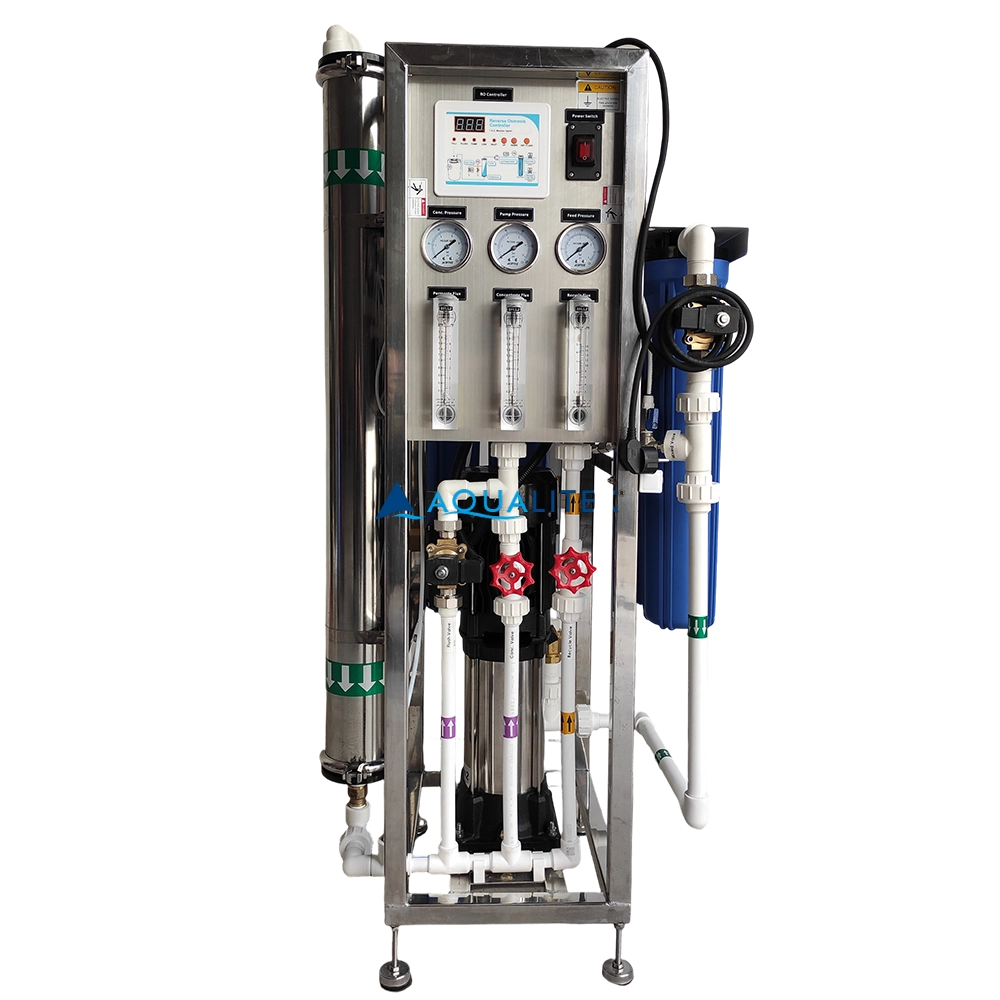
500 LPH Reverse Osmosis (RO) Water Purification Machine TWV - 412
Our 500 LPH Reverse Osmosis (RO) System is engineered to provide high-quality purified water for commercial applications. Designed with advanced RO technology, durable components, and a user-friendly interface, this system ensures consistent performance, low maintenance, and long-term reliability.
With its compact design and robust skid-mounted frame, it’s an excellent choice for businesses that demand efficiency and quality in water purification.
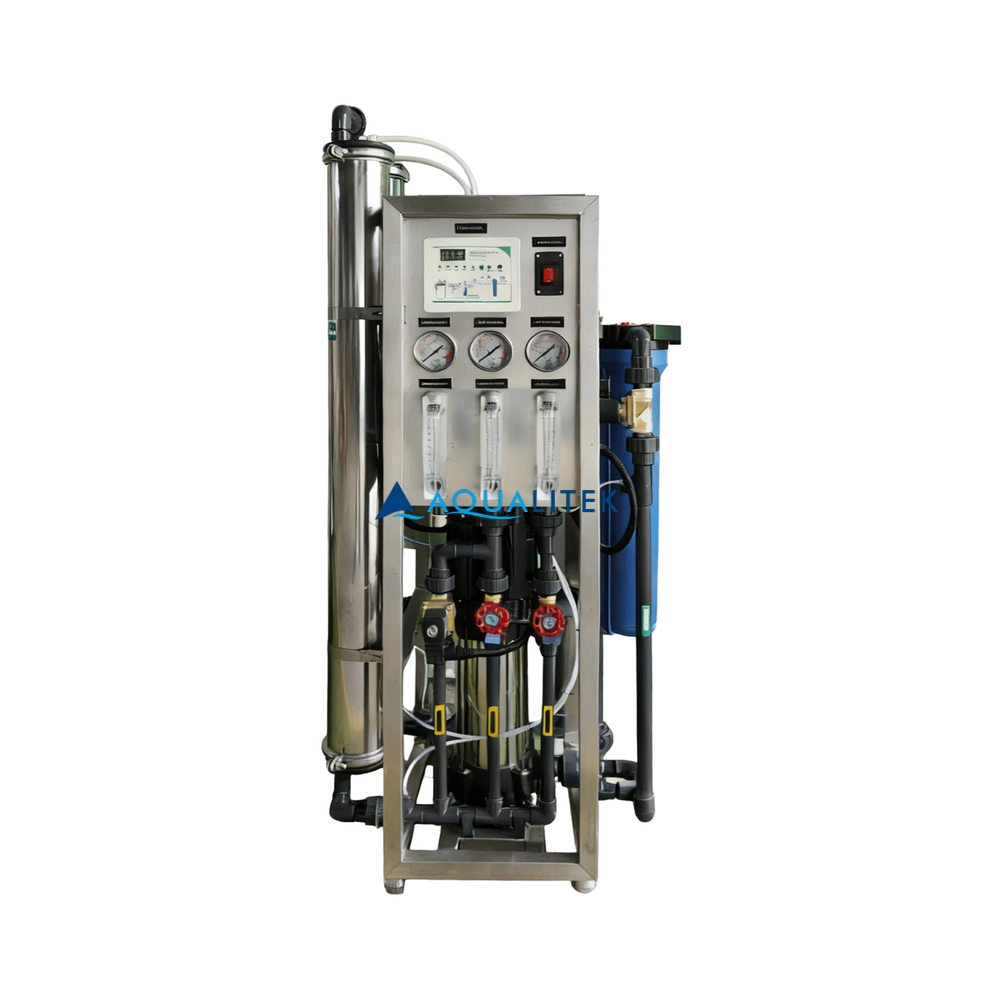
Tap Water Reverse Osmosis (TWRO) Systems TWV Series
TWV series Reverse Osmosis (RO) systems are pre-engineered and pre-assembled units with 2.5”/4” membrane housings(single element type)for tap water(lower TDS).They are designed for overall superior performance, high recovery rates and offer great savings with low maintenance and operation costs.
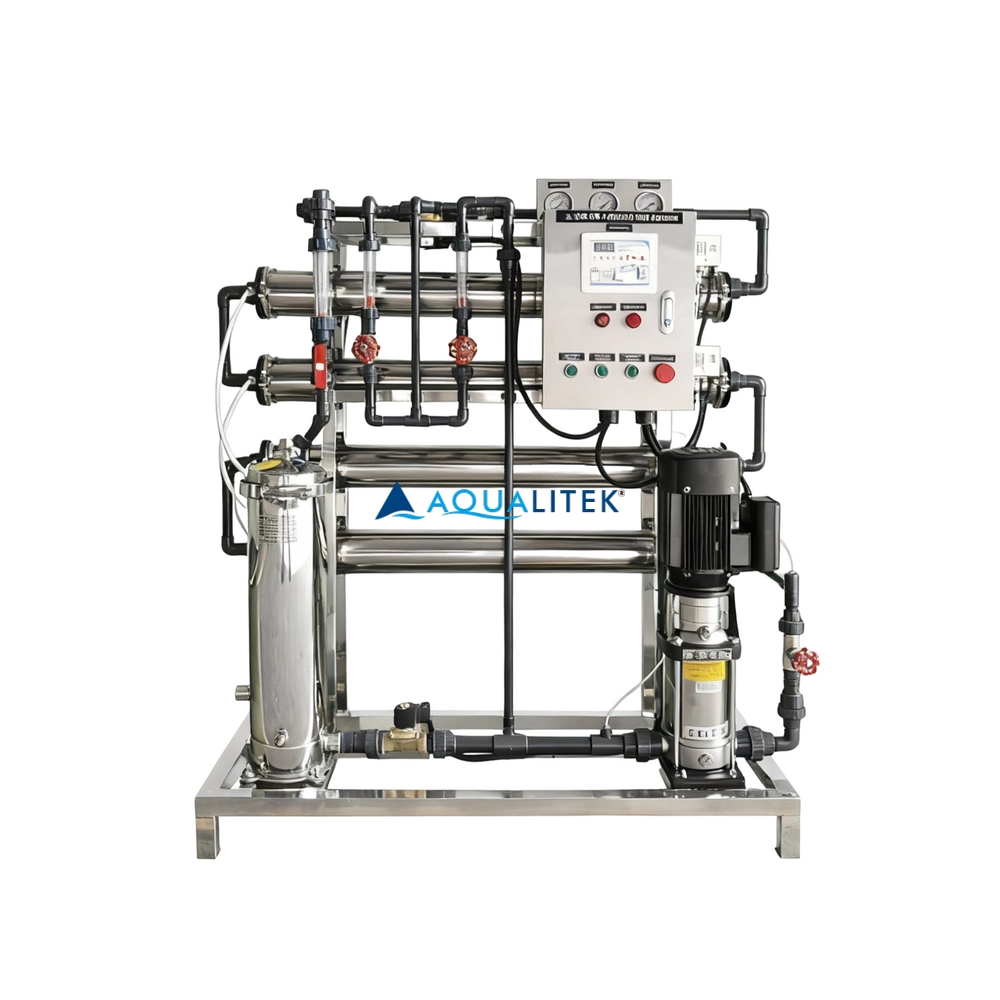
Tap Water Reverse Osmosis (TWRO) Systems TWF Series
TWF series Reverse Osmosis (RO) systems are pre-engineered and pre-assembled units with 4” membrane housings(multiple elements type) for tap water(lower TDS) .The medium large volumes can help meet your a variety of commercial and industrial applications. They are designed for overall superior performance, high recovery rates and offer great savings with low maintenance and operation costs.

Tap Water Reverse Osmosis (TWRO) Systems TWE Series
TWE series Reverse Osmosis (RO) systems are pre-engineered and pre-assembled units with 8” membrane housings for tap water (lower TDS). The large volumes can help meet your a variety of industrial applications. They are designed for overall superior performance, high recovery rates and offer great savings with low maintenance and operation costs.
Request More Information
Contact us today for product catalogs, customization options, and a free quotation designed for your business needs.
Rest assured that your privacy is important to us, and all information provided will be handled with the utmost confidentiality.
© 2026 AQUALITEK. All rights reserved.
AQUALITEK- Aimee Hoo
AQUALITEK - Aimee Hoo