
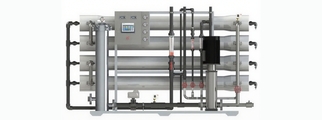




Skid-Mounted RO Systems: Benefits and Design Tips
- Why Skid-Mounted RO Is Ideal for Industrial Processes
- Compact, modular footprint
- Rapid deployment and factory testing
- Repeatability and quality control
- Design Considerations for Skid-Mounted RO Systems
- Feedwater quality and pretreatment
- Membrane selection and recovery rates
- Hydraulic design, staging and instrumentation
- Operational Benefits and Maintenance Best Practices
- Energy efficiency and recovery optimization
- CIP procedures and membrane life extension
- Monitoring, controls and remote diagnostics
- Selecting the Right 4TPH Industrial Reverse Osmosis System
- Why AQUALITEK 4TPH fits electronic component cleaning needs
- Typical technical specifications and sizing
- Cost of ownership and ROI
- Comparing Skid-Mounted RO to Other System Types
- Standards, Safety and Regulatory Considerations
- FAQ — Frequently Asked Questions
- Q: What is the difference between skid-mounted and containerized RO?
- Q: How often should membranes be cleaned or replaced?
- Q: Can a 4TPH RO system meet semiconductor or high-purity rinse requirements?
- Q: What ongoing chemical consumables are required?
- Q: How do I choose the correct recovery rate?
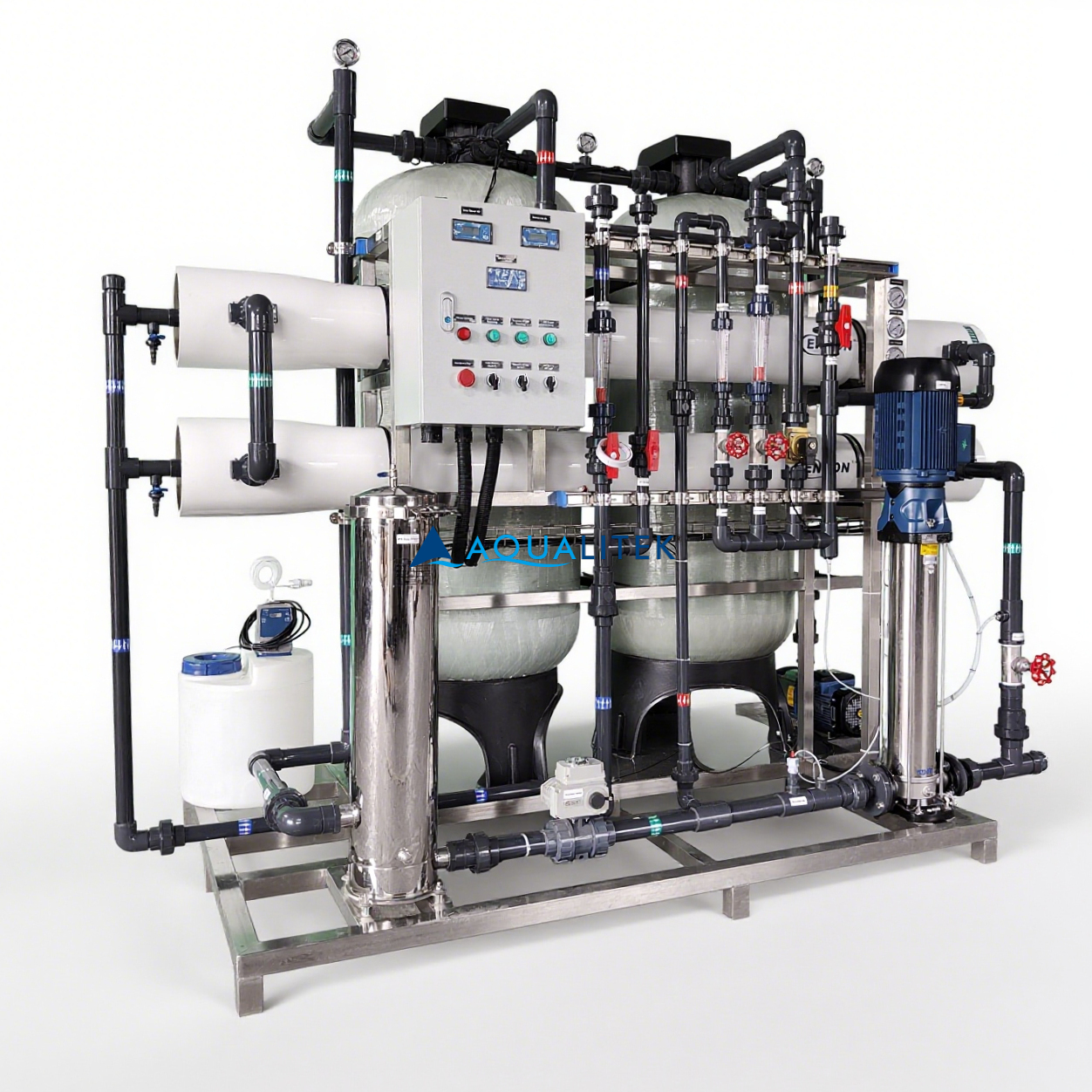
Skid-mounted reverse osmosis systems combine modular factory assembly with process-grade components to deliver reliable industrial reverse osmosis performance for manufacturing, processing and critical cleaning applications. For plants that need rapid deployment, reduced civil works, repeatable performance, and easy maintenance, a skid-mounted RO offers an optimal balance of quality, footprint, and lifecycle cost—especially where stable permeate quality for electronic component cleaning or precision processing is required.
Why Skid-Mounted RO Is Ideal for Industrial Processes
Compact, modular footprint
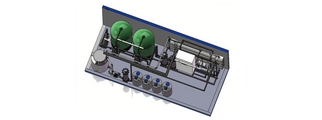
Skid-mounted RO systems are preassembled on a structural skid, which significantly reduces on-site installation time and civil works. The compact design minimizes factory floor footprint while allowing straightforward connections for feed water, concentrate (brine) discharge and permeate. For facilities managing plant layout and utilities, this reduces downtime and the need for bespoke piping and structural support.
Rapid deployment and factory testing
Because skid-mounted systems are factory assembled and factory tested, commissioning time at the plant is much shorter than for field-built systems. Factory acceptance tests (FAT) validate hydraulic balance, pump performance and control logic—reducing startup risk. This is particularly valuable where process schedules are tight, or phased plant rollouts are required.
Repeatability and quality control
Standardized skid designs enable consistent performance across multiple units and sites. For industrial reverse osmosis applications, reproducible membrane staging, instrumentation, and interconnection practices help achieve predictable permeate quality and rejection rates, which is critical for sensitive uses like electronic component cleaning water or semiconductor rinse processes.
Design Considerations for Skid-Mounted RO Systems
Feedwater quality and pretreatment
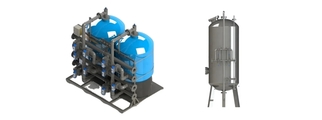
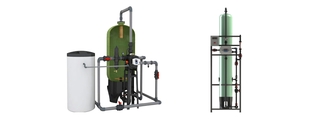
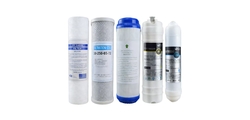
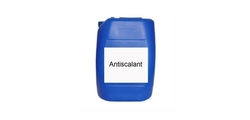
Feedwater characterization is the first and most important step in designing an industrial reverse osmosis system. Key parameters include total dissolved solids (TDS), silica, hardness, iron, manganese, organics and microbiological load. Appropriate pretreatment—typically multimedia filtration, antiscalant dosing, water softening or ion exchange, and cartridge filtration—protects membranes from fouling and scaling and optimizes recovery.
Refer to membrane manufacturer limits and consider seasonal variations in feedwater. The principles of reverse osmosis and membrane fouling mechanisms are well-documented and should guide pretreatment selection.
Membrane selection and recovery rates
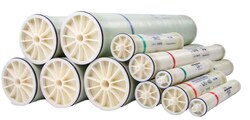
Select membranes based on required permeate quality, salt rejection, and tolerance to cleaning chemicals and feedwater conditions. High-rejection polyamide thin-film composite (TFC) membranes are common in industrial RO for low-TDS permeate suitable for electronic cleaning. Recovery rate design balances water recovery against scaling risk; typical industrial recoveries range from 50% to 85% depending on feed composition and antiscalant performance.
Hydraulic design, staging and instrumentation
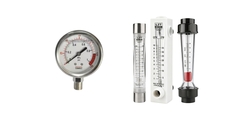
Optimized hydraulic design ensures even flux distribution across membrane elements and manageable pressure drops. Multi-stage arrangements (e.g., 2- or 3-stage trains) allow higher overall recovery while controlling feed pressure and brine concentrations. Instrumentation should include flow meters, pressure gauges, conductivity/ TDS sensors on feed, permeate and concentrate streams, and differential pressure measurement across filters and membrane trains to indicate fouling.
Operational Benefits and Maintenance Best Practices
Energy efficiency and recovery optimization
Energy consumption is a major operational cost for industrial reverse osmosis. Optimize feed pressure, pump selection (variable frequency drives when possible), and recovery to minimize specific energy consumption (kWh/m3). For larger systems, energy recovery devices may be applicable; for small-to-medium skids, selection of high-efficiency pumps and good hydraulic design provides the best ROI.
CIP procedures and membrane life extension
Regular cleaning-in-place (CIP) prevents irreversible fouling and extends membrane life. A standard CIP program includes scheduled rinsing, alkaline cleaning for organics, acidic cleaning for scale removal, and biocide or disinfectant steps where biofouling is an issue. Track cumulative flux decline and recovery after cleaning to adjust frequency. A well-executed pretreatment and CIP regimen can extend membrane life to 3–7 years depending on feedwater and operating conditions.
Monitoring, controls and remote diagnostics
Modern skid-mounted RO systems include PLC-based controls with HMI and remote monitoring capabilities for alarms and performance trending. Real-time alerts for conductivity rise, flow anomalies, high differential pressure or abnormal motor loads enable rapid corrective action. Remote diagnostics reduce service response time and support predictive maintenance strategies.
Selecting the Right 4TPH Industrial Reverse Osmosis System
Why AQUALITEK 4TPH fits electronic component cleaning needs
Product overview:
AQUALITEK 4TPH Industrial Reverse Osmosis Water Purification RO System, high-efficiency industrial-grade RO water treatment plant for manufacturing & processing, commercial reverse osmosis filtration system ideal for electronic component cleaning water use.
The AQUALITEK 4TPH is designed for precision cleaning and rinsing processes where consistent low-conductivity water and low particulates are required. Its skid-mounted configuration supports quick installation in cleanrooms and production lines, with membrane staging and pretreatment tailored to produce stable permeate suitable for electronic manufacturing.
Typical technical specifications and sizing
Below is a baseline specification table for a 4TPH (tonnes per hour) industrial RO system and comparative design parameters to consider when specifying the unit for electronics cleaning or similar process use.
| Parameter | Typical Value (AQUALITEK 4TPH) | Notes |
|---|---|---|
| Permeate Capacity | ~4 TPH (~96 m3/day) | Nominal continuous output at design conditions |
| Recovery | 60% (typical) | Adjustable based on feed TDS and antiscalant dosing |
| Typical Salt Rejection | >98% | With polyamide TFC membranes |
| Feed Pressure | 8–16 bar (depending on feed) | High-pressure pump with VFD recommended |
| Power Consumption | ~2.5–4.0 kWh/m3 | Depends on recovery and feedwater TDS |
| Typical Footprint | Skid ~3–6 m length | Site-ready with lifting points and integral base |
| Pretreatment | Cartridge filtration + antiscalant + softening (optional) | Customized to feedwater quality |
Cost of ownership and ROI
When selecting an industrial reverse osmosis solution, evaluate total cost of ownership (TCO): capital expenditure, installation, energy, membrane replacement, chemical costs (antiscalants, cleaning chemicals), and downtime risk. Skid-mounted systems reduce installation and commissioning costs and lower civil works, improving short-term ROI. For precision industries, improved product yield and reduced rework from higher-quality rinse water often justify High Quality system selection.
Comparing Skid-Mounted RO to Other System Types
The table below compares common options: skid-mounted, containerized, and field-built RO systems. This helps decision-makers match deployment constraints, budget and performance requirements.
| Attribute | Skid-Mounted RO | Containerized RO | Field-Built / Civil Works |
|---|---|---|---|
| Deployment Speed | Fast (factory tested) | Fast to moderate | Slow (on-site build & test) |
| Customization | Moderate (standardized modules) | High (space & HVAC integrated) | Very high (fully bespoke) |
| Transportability | Good (lift & set) | Excellent (road transport) | Poor (fixed) |
| Cost | Moderate CAPEX, low install cost | Moderate-high | High CAPEX and install |
| Ideal Use | Plants needing quick add-on capacity | Remote sites or turnkey plant rooms | Large centralized plants requiring unique designs |
Standards, Safety and Regulatory Considerations
When specifying industrial reverse osmosis equipment for manufacturing processes, reference industry standards and guidance. Technical background on reverse osmosis is summarized in authoritative sources such as the Reverse Osmosis article on Wikipedia. For membrane technology and research-oriented guidance, the U.S. Environmental Protection Agency maintains resources on membrane technology applications (EPA Membrane Technology).
For systems that produce potable or process water used in sensitive applications, consider international water quality guidance such as the WHO Guidelines for Drinking-water Quality and testing/ certification standards from independent bodies (e.g., NSF International) where applicable. These references help ensure that design and monitoring practices meet regulatory and customer expectations.
FAQ — Frequently Asked Questions
Q: What is the difference between skid-mounted and containerized RO?
A: Skid-mounted systems are built on a structural base for quick in-plant installation and are ideal for indoor or plant-room locations. Containerized systems are housed in ISO shipping containers and include integrated HVAC and easier outdoor placement. Both approaches offer factory testing and modular deployment, but containerized units are more self-contained for remote sites.
Q: How often should membranes be cleaned or replaced?
A: Cleaning-in-place schedules depend on feedwater and operating conditions; a conservative starting point is quarterly inspections and CIP as needed based on differential pressure and permeate flux decline. Membrane replacement typically ranges from 3–7 years but can be longer with good pretreatment and controlled operation.
Q: Can a 4TPH RO system meet semiconductor or high-purity rinse requirements?
A: A 4TPH industrial RO can produce low-conductivity permeate suitable for many electronic cleaning applications when paired with proper pretreatment and post-treatment (e.g., deionization, electrodeionization or UV/disinfection). For ultra-high-purity semiconductor-grade needs, further polishing and point-of-use controls are usually required.
Q: What ongoing chemical consumables are required?
A: Typical consumables include antiscalants, cleaning chemicals for CIP (alkaline and acidic cleaners), filter cartridges and periodic membrane replacement. Chemical usage depends on feedwater composition and CIP frequency.
Q: How do I choose the correct recovery rate?
A: Choose recovery to maximize water reuse without creating scaling or high osmotic pressure that reduces membrane flux. Use feedwater analysis and membrane manufacturer scaling curves. If in doubt, start conservative (e.g., 50–65%) and increase recovery with antiscalant optimization and staged design.
If you have specific feedwater data or process water quality targets, we can run a detailed sizing and pretreatment recommendation. To view product specifications or request a quote for the AQUALITEK 4TPH Industrial Reverse Osmosis Water Purification RO System, contact our sales team or request a datasheet below.
View product details: AQUALITEK 4TPH Industrial Reverse Osmosis
Contact sales: sales@example.com | Call: +1-800-XXX-XXXX
For more on membrane fundamentals, see the EPA membrane technology resources (EPA Membrane Technology) and WHO water quality guidance (WHO Guidelines).
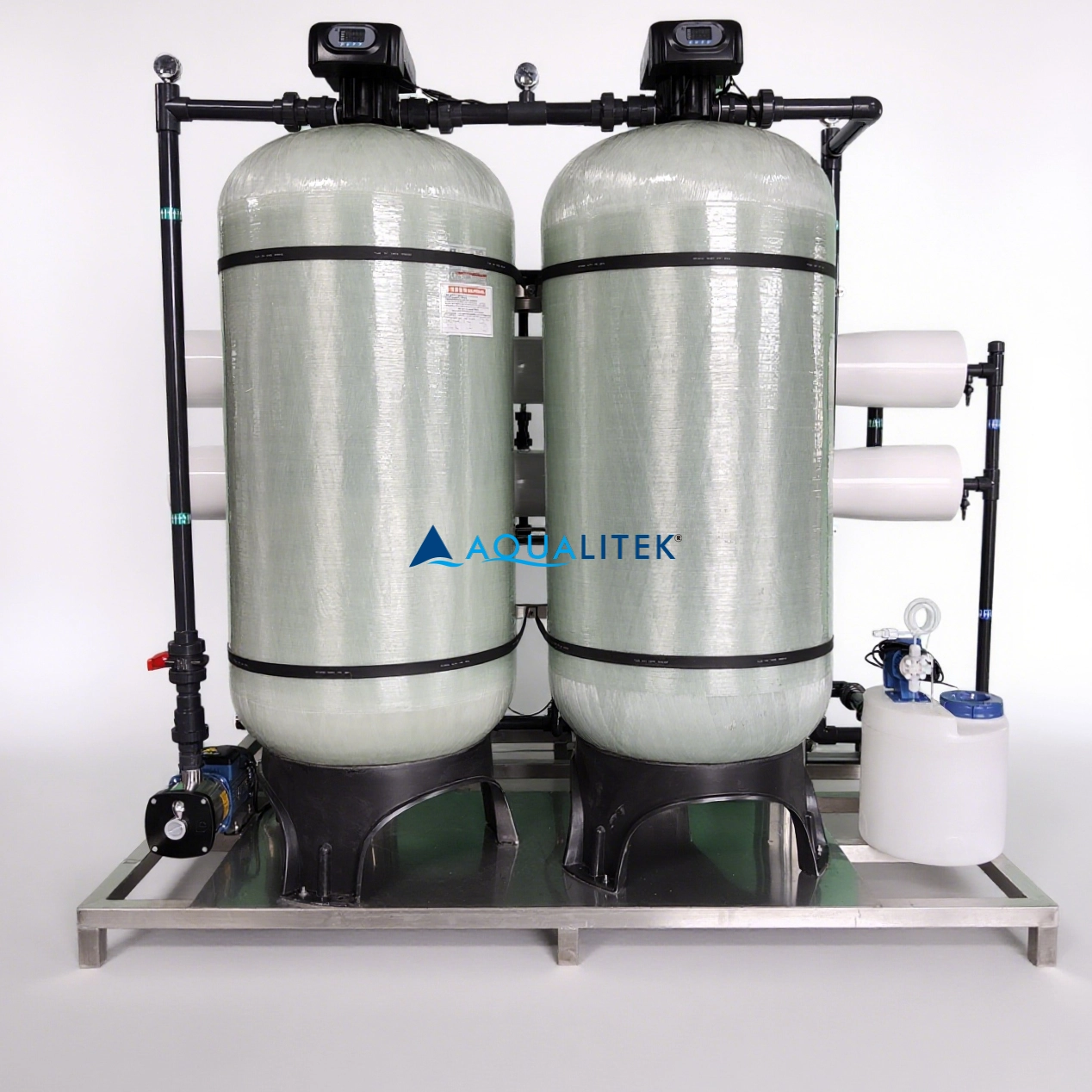
Ensuring Compliance with Industrial Water Standards
Smart Water Purification Systems: Features and Benefits
Top 10 Ultra filtration water system Manufacturers and Supplier Brands
Top 10 water filter softener system Manufacturers and Supplier Brands
Ion Exchange Water Treatment Systems
Which chemicals are required for regeneration?
Softening uses NaCl. Demineralization uses HCl or H₂SO₄ for cation resin and NaOH for anion resin.
Solutions
Can I use AQT’s water treatment systems for seawater desalination?
Yes! We provide seawater desalination systems using advanced reverse osmosis (RO) technology, specifically designed to convert seawater into fresh, drinkable water. These systems are ideal for coastal communities, marine applications, and industrial desalination projects.
Can AQT provide custom water treatment solutions?
Yes! We specialize in OEM/ODM water treatment solutions and can design custom filtration systems tailored to your business, industry, or brand requirements. Our team can assist with system design, branding, private labeling, and technical support.
Blog
Is softened water safe to drink?
Yes, but those on low-sodium diets should consider potassium-based softeners or install a separate drinking water filter.
Water Filters
Are your filters suitable for seawater or chemical-heavy applications?
Yes, we offer FRP and stainless steel housings resistant to corrosion and suitable for marine or aggressive chemical environments.
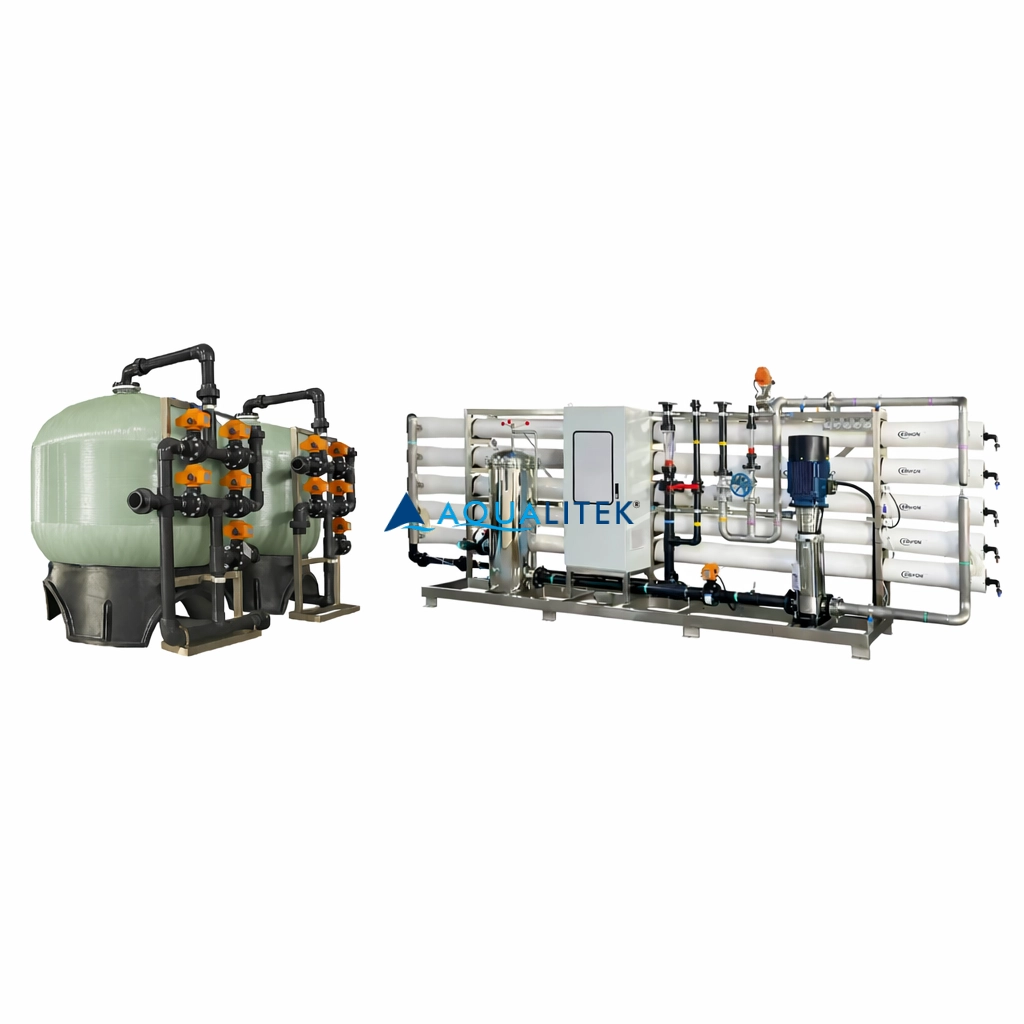
30TPH Industrial Reverse Osmosis (RO) System
30TPH Industrial Reverse Osmosis (RO) System designed for industrial and municipal water treatment. High salt rejection, energy-efficient design, PLC control, and customizable configuration.
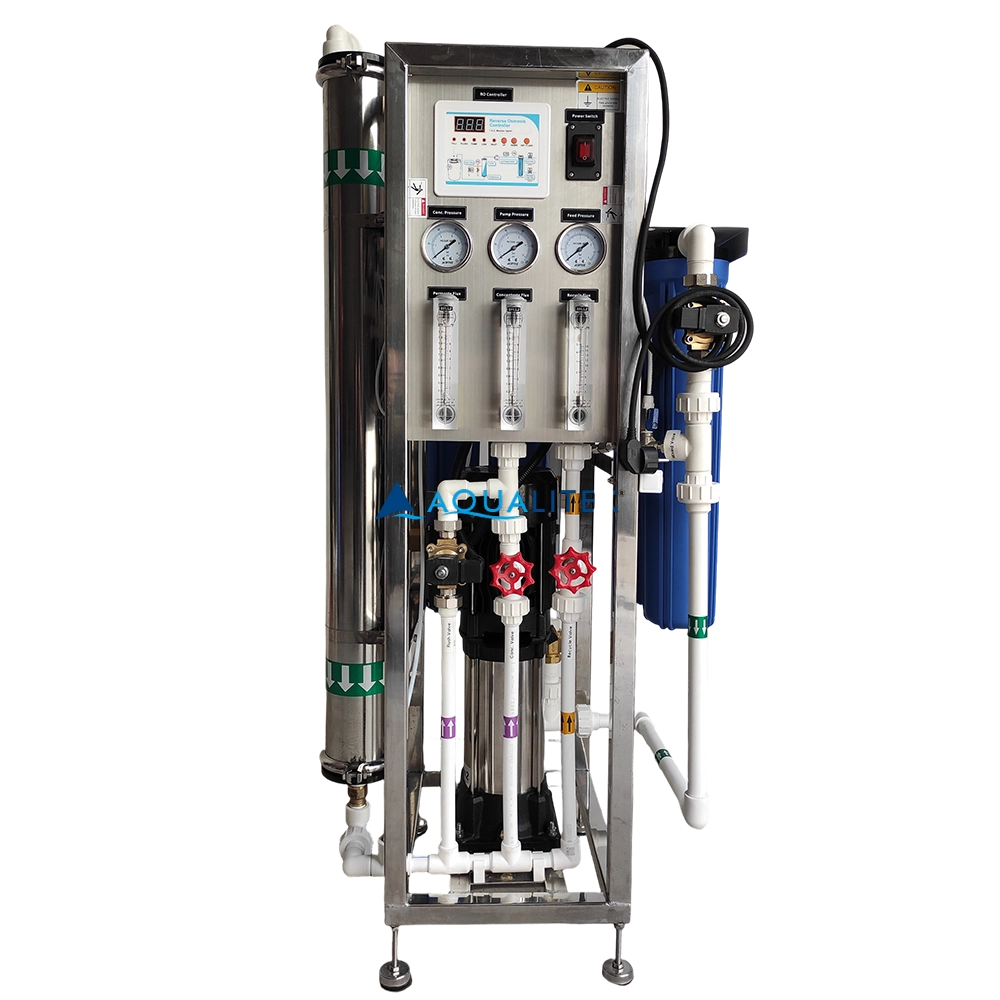
500 LPH Reverse Osmosis (RO) Water Purification Machine TWV - 412
Our 500 LPH Reverse Osmosis (RO) System is engineered to provide high-quality purified water for commercial applications. Designed with advanced RO technology, durable components, and a user-friendly interface, this system ensures consistent performance, low maintenance, and long-term reliability.
With its compact design and robust skid-mounted frame, it’s an excellent choice for businesses that demand efficiency and quality in water purification.
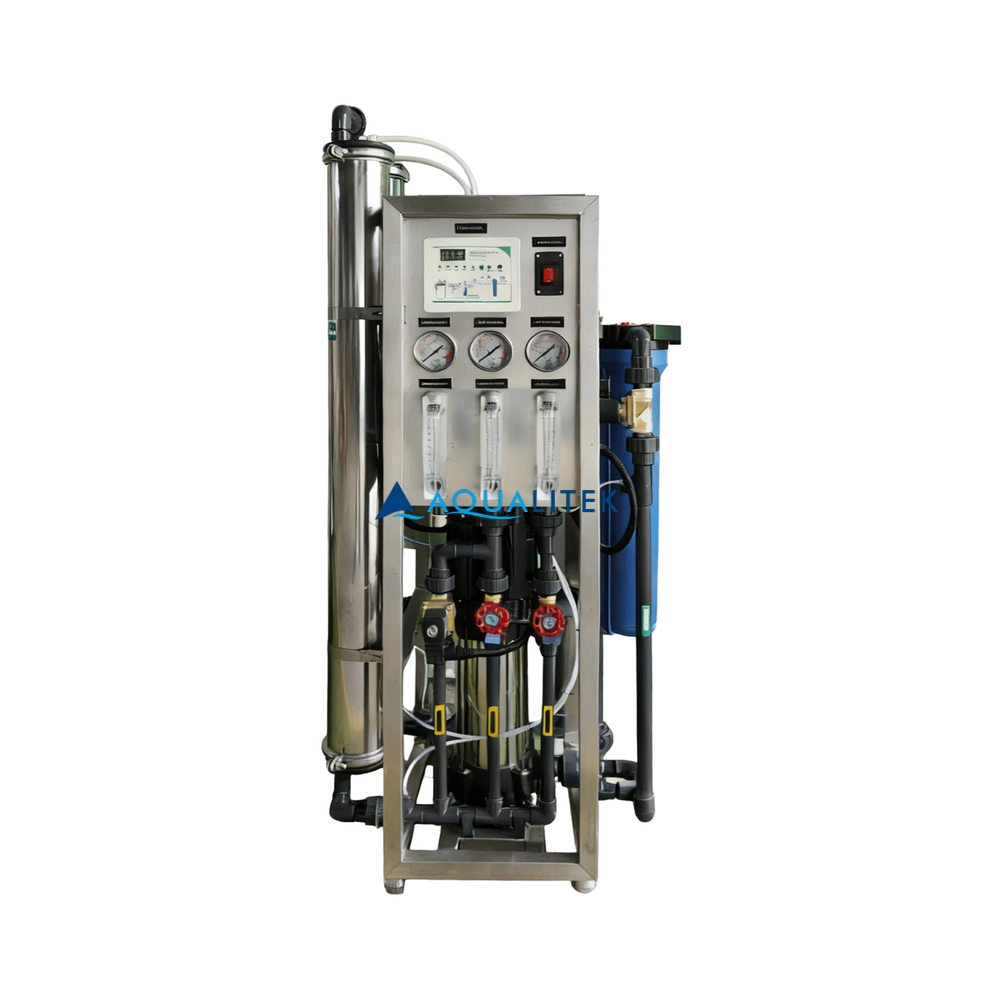
Tap Water Reverse Osmosis (TWRO) Systems TWV Series
TWV series Reverse Osmosis (RO) systems are pre-engineered and pre-assembled units with 2.5”/4” membrane housings(single element type)for tap water(lower TDS).They are designed for overall superior performance, high recovery rates and offer great savings with low maintenance and operation costs.
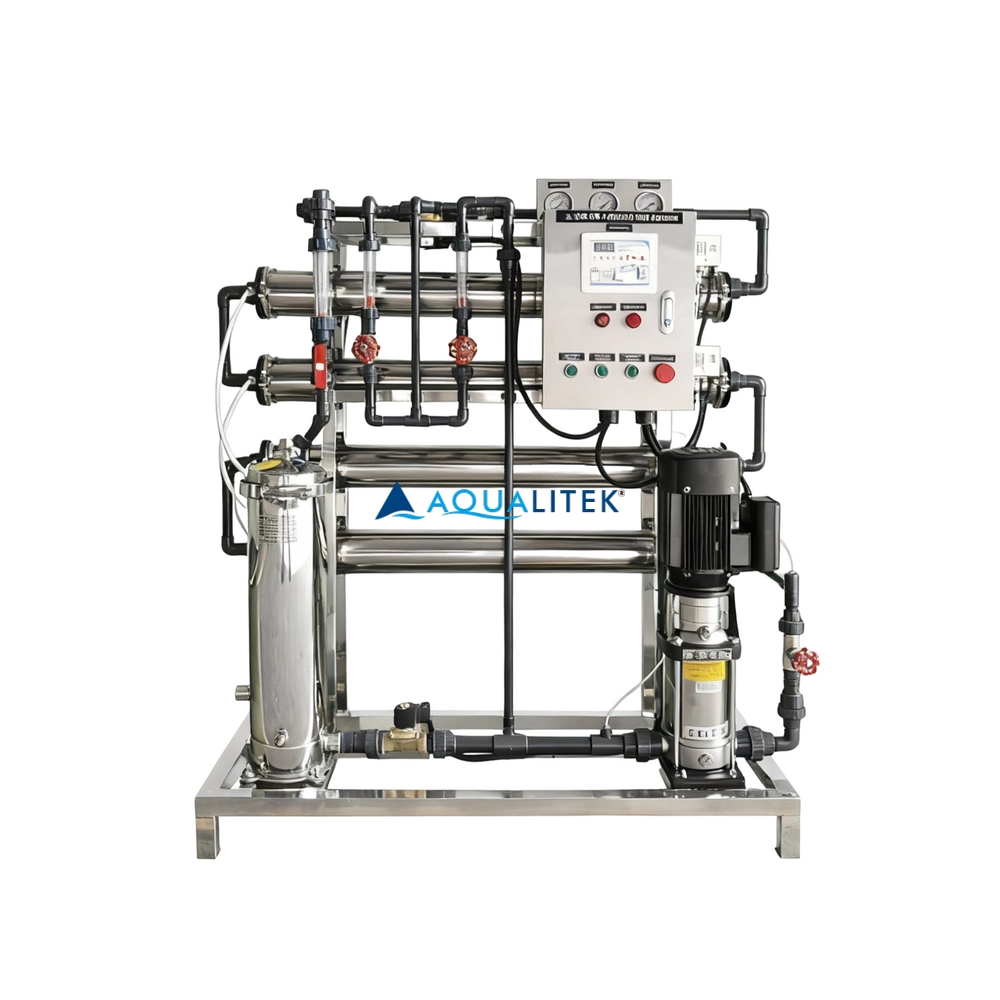
Tap Water Reverse Osmosis (TWRO) Systems TWF Series
TWF series Reverse Osmosis (RO) systems are pre-engineered and pre-assembled units with 4” membrane housings(multiple elements type) for tap water(lower TDS) .The medium large volumes can help meet your a variety of commercial and industrial applications. They are designed for overall superior performance, high recovery rates and offer great savings with low maintenance and operation costs.
Request More Information
Contact us today for product catalogs, customization options, and a free quotation designed for your business needs.
Rest assured that your privacy is important to us, and all information provided will be handled with the utmost confidentiality.
© 2026 AQUALITEK. All rights reserved.
AQUALITEK- Aimee Hoo
AQUALITEK - Aimee Hoo