
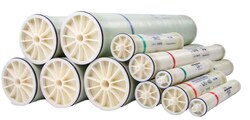




How to select membranes for high-salinity feed water?
- Understanding Reverse Osmosis Membranes for High-Salinity Feed Water
- 1. What Are the Key Factors in Selecting RO Membranes for High-Salinity Water?
- 2. How Do Different Membrane Types Affect Performance?
- 3. What Are the Considerations for Membrane Selection in High-Salinity Applications?
- 4. How Does Membrane Fouling Impact Performance?
- 5. What Are the Cost Implications of Membrane Selection?
- 6. How Do Operating Conditions Affect Membrane Performance?
- 7. What Are the Latest Advances in Membrane Technology?
- 8. How Do Membrane Manufacturers Ensure Quality and Reliability?
- Conclusion: Why Choose AQUALITEK?
Understanding Reverse Osmosis Membranes for High-Salinity Feed Water
When dealing with high-salinity feed water, selecting the appropriate reverse osmosis (RO) membrane is crucial for efficient water treatment. Below are key considerations to guide your selection process:
1. What Are the Key Factors in Selecting RO Membranes for High-Salinity Water?
Desalination Rate Requirements:
The desalination rate indicates the membrane's efficiency in removing salts. For high-salinity feed water:
High-Salinity Groundwater (10,000–50,000 mg/L TDS):
- Conventional RO membranes can achieve desalination rates exceeding 99%, effectively reducing effluent salinity to below 200 mg/L.
Extremely High-Salinity Groundwater (100,000–300,000 mg/L TDS):
- High-pressure RO membranes are more suitable, maintaining desalination rates above 99% and meeting stringent water quality standards.
System Scale Matching:
The membrane's water production capacity should align with the system's scale:
Small-Scale Systems (e.g., 100 cubic meters/day):
- Smaller membrane areas suffice.
Large-Scale Systems (e.g., large coastal seawater desalination plants):
- Larger membrane arrays are necessary to meet high water production demands.
Operating pressure also influences energy consumption. High-pressure membranes, while effective for high-salinity water, consume more energy. Balancing system scale and energy costs is essential.
2. How Do Different Membrane Types Affect Performance?
Brackish Water RO (BWRO) Membranes:
Salt Rejection:
- 98–99.5%.
Design Pressure:
- Medium.
Applications:
- Suitable for feedwater TDS < 10,000 ppm.
Advantages:
- Higher flux leads to more water production at lower costs.
Limitations:
- Not suitable for seawater or high-salinity wastewater.
Seawater RO (SWRO) Membranes:
Salt Rejection:
- 99.5–99.8%.
Design Pressure:
- High.
Applications:
- Designed for TDS > 20,000 ppm.
Advantages:
- Excellent chloride tolerance.
Limitations:
- Higher energy and pressure requirements.
Anti-Fouling RO Membranes:
Fouling Resistance:
- Enhanced surface hydrophilicity.
Design Pressure:
- Medium.
Applications:
- Suitable for surface water and wastewater reuse.
Advantages:
- Lower fouling rates lead to longer cleaning intervals.
Limitations:
- Slightly lower flux and rejection compared to BWRO membranes.
3. What Are the Considerations for Membrane Selection in High-Salinity Applications?
Desalination Rate and Salt Rejection:
Membrane desalination rates are determined during manufacturing and depend on the density of the desalination layer. Higher density results in higher desalination rates but lower yields. For high-valent ions and complex monovalent ions, desalination rates can exceed 99%, while for monovalent ions like sodium and chloride, rates can exceed 98%. Organic substances with molecular weights over 100 also see removal rates exceeding 98%.
Water Production and Permeation Flow Rate:
The permeation flow rate indicates the amount of water that permeates the RO membrane per unit time. A higher permeation flow rate can increase water velocity perpendicular to the membrane surface, potentially aggravating fouling.
Recovery Rate:
The recovery rate refers to the percentage of feedwater converted into product water. It depends on the quality of the pre-treated influent water and the water requirements of the RO system.
4. How Does Membrane Fouling Impact Performance?
Membrane fouling, caused by the accumulation of organic materials, inorganic salts, and microorganisms, can lead to increased resistance and reduced water permeability. Choosing membranes with high fouling resistance is essential for optimizing desalination performance.
5. What Are the Cost Implications of Membrane Selection?
Investing in higher-quality membranes may incur a greater initial expense, but their durability often translates into reduced maintenance and replacement costs over time. Premium membranes can lead to a 30% reduction in operational expenses over their lifespan.
6. How Do Operating Conditions Affect Membrane Performance?
Operating conditions such as temperature, pressure, and feedwater quality play a pivotal role in membrane performance. For instance, ultra-high pressure reverse osmosis membranes rated for 1,740 psi can handle brine concentrations up to 130,000 mg/L TDS, offering a 1.6x increase in brine volume reduction compared to conventional seawater RO membranes rated for 1,200 psi.
7. What Are the Latest Advances in Membrane Technology?
Recent advancements include ultra-high pressure reverse osmosis membranes rated for 1,740 psi, which can handle brine concentrations up to 130,000 mg/L TDS. This technology offers a 1.6x increase in brine volume reduction compared to conventional seawater RO membranes rated for 1,200 psi.
8. How Do Membrane Manufacturers Ensure Quality and Reliability?
Reputable membrane manufacturers adhere to international standards and provide detailed certifications and product testing results. For example, Shanghai WECOME Environmental & Technology Co., Ltd. specializes in reverse osmosis membrane element solutions, ensuring that their products meet the rigorous demands of the industry.
Conclusion: Why Choose AQUALITEK?
AQUALITEK offers a comprehensive range of high-quality reverse osmosis membranes tailored for high-salinity applications. With a focus on durability, efficiency, and cost-effectiveness, AQUALITEK ensures optimal performance and longevity for your water treatment systems.




Request More Information or Expert Advice
Share a few details, and we’ll provide deeper insights, tailored suggestions, or product support.
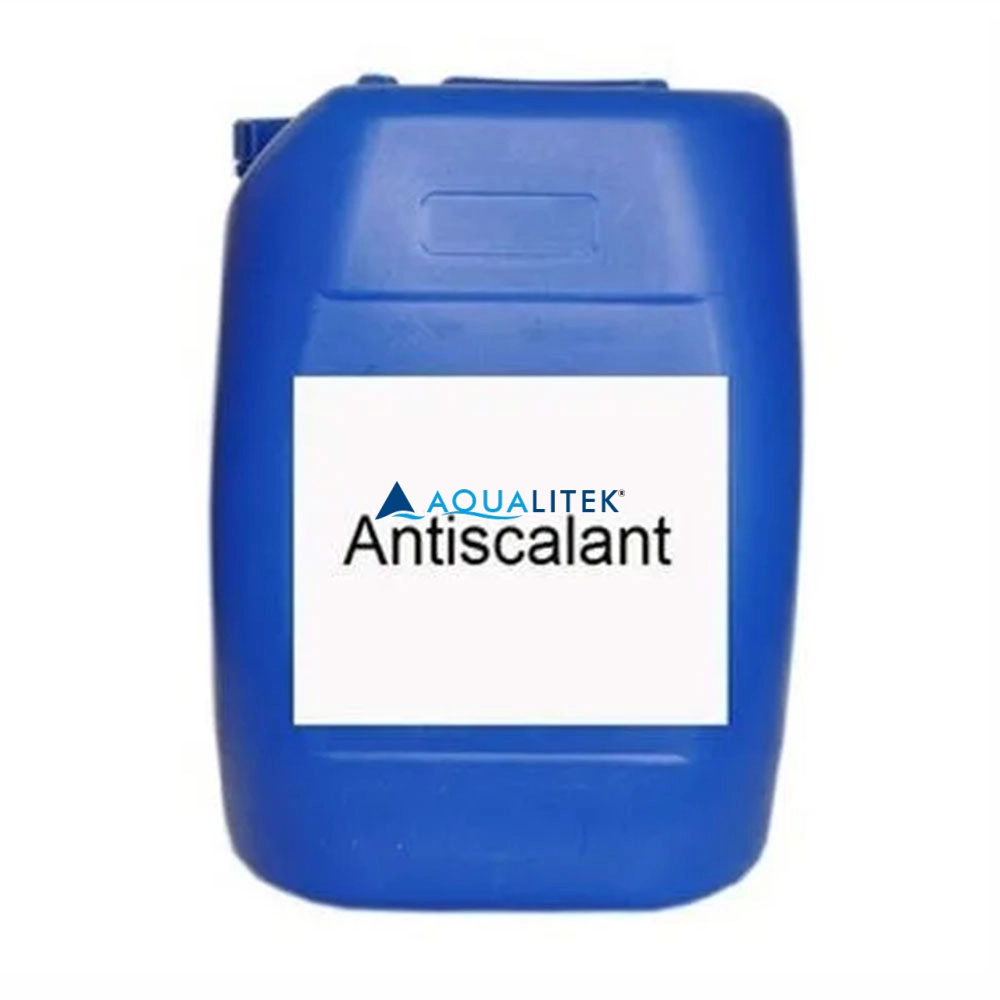
Anti-Scalant is a specialized water treatment chemical designed to prevent the formation of scale in reverse osmosis (RO) systems. Scaling is a common issue in RO systems, where minerals like calcium, magnesium, and silica precipitate and form hard deposits on the membrane surface. These deposits can clog the membranes, reduce water production efficiency, and increase operational costs.
RO chemical anti-scalants work by inhibiting the crystallization of scale-forming minerals, effectively keeping them in solution and preventing them from adhering to the membrane. This ensures the longevity and optimal performance of the RO system.
Anti-scalants are essential in applications with hard water or high mineral content, such as in industrial, municipal, and desalination plants.
These chemicals are highly effective in preventing scaling caused by common minerals such as calcium carbonate, calcium sulfate, barium sulfate, and silica, helping to extend the lifespan of the membranes, reduce cleaning cycles, and enhance system efficiency.
By incorporating an RO chemical anti-scalant into your water treatment process, you can improve the reliability and overall performance of your reverse osmosis system, ensuring consistent, high-quality water output while minimizing maintenance costs.
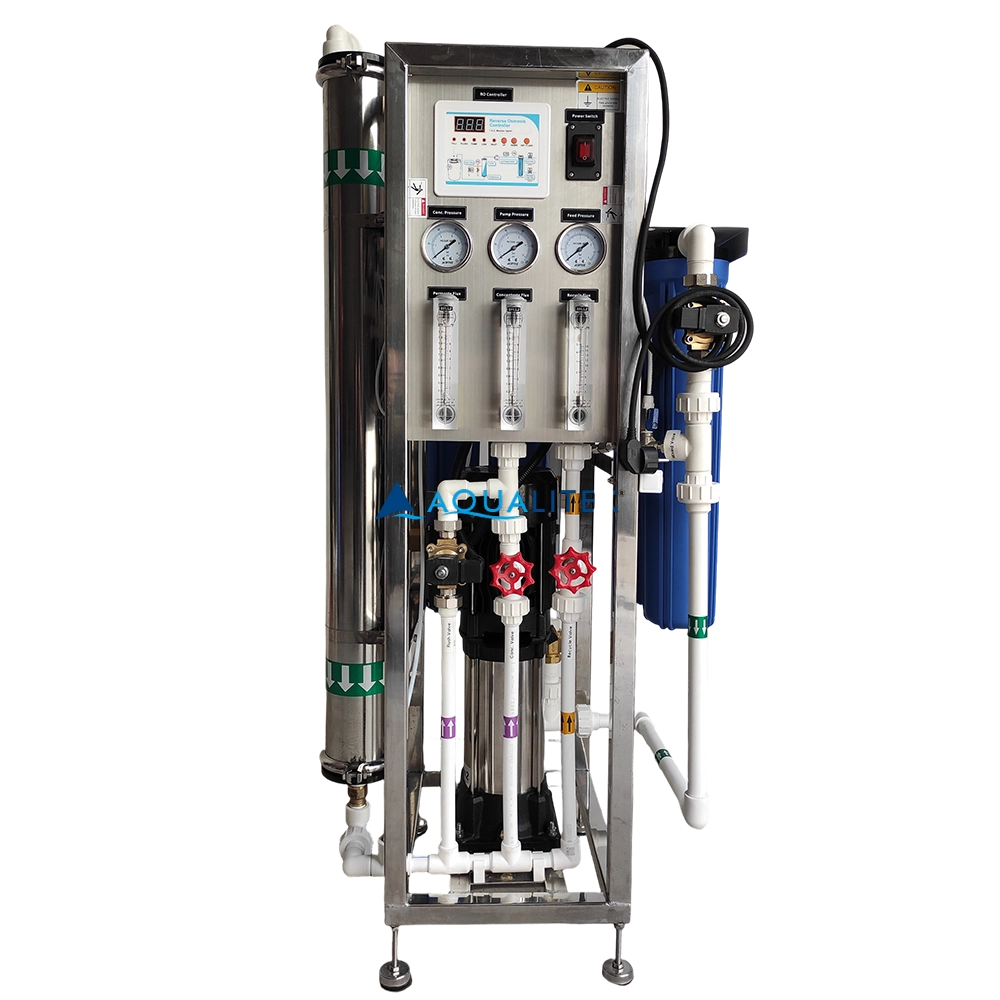
Our 500 LPH Reverse Osmosis (RO) System is engineered to provide high-quality purified water for commercial applications. Designed with advanced RO technology, durable components, and a user-friendly interface, this system ensures consistent performance, low maintenance, and long-term reliability.
With its compact design and robust skid-mounted frame, it’s an excellent choice for businesses that demand efficiency and quality in water purification.
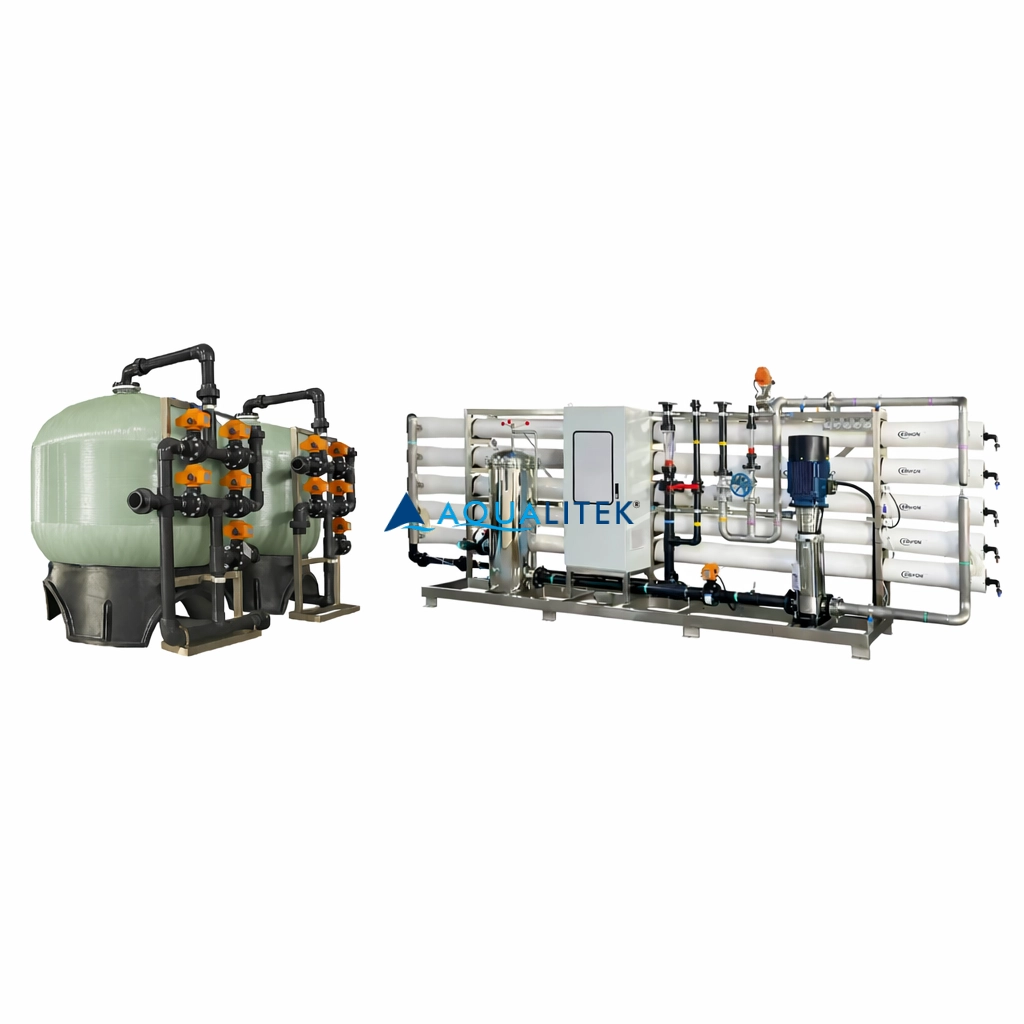
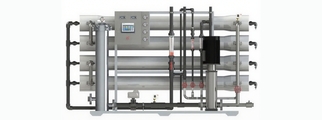
30TPH Industrial Reverse Osmosis (RO) System designed for industrial and municipal water treatment. High salt rejection, energy-efficient design, PLC control, and customizable configuration.
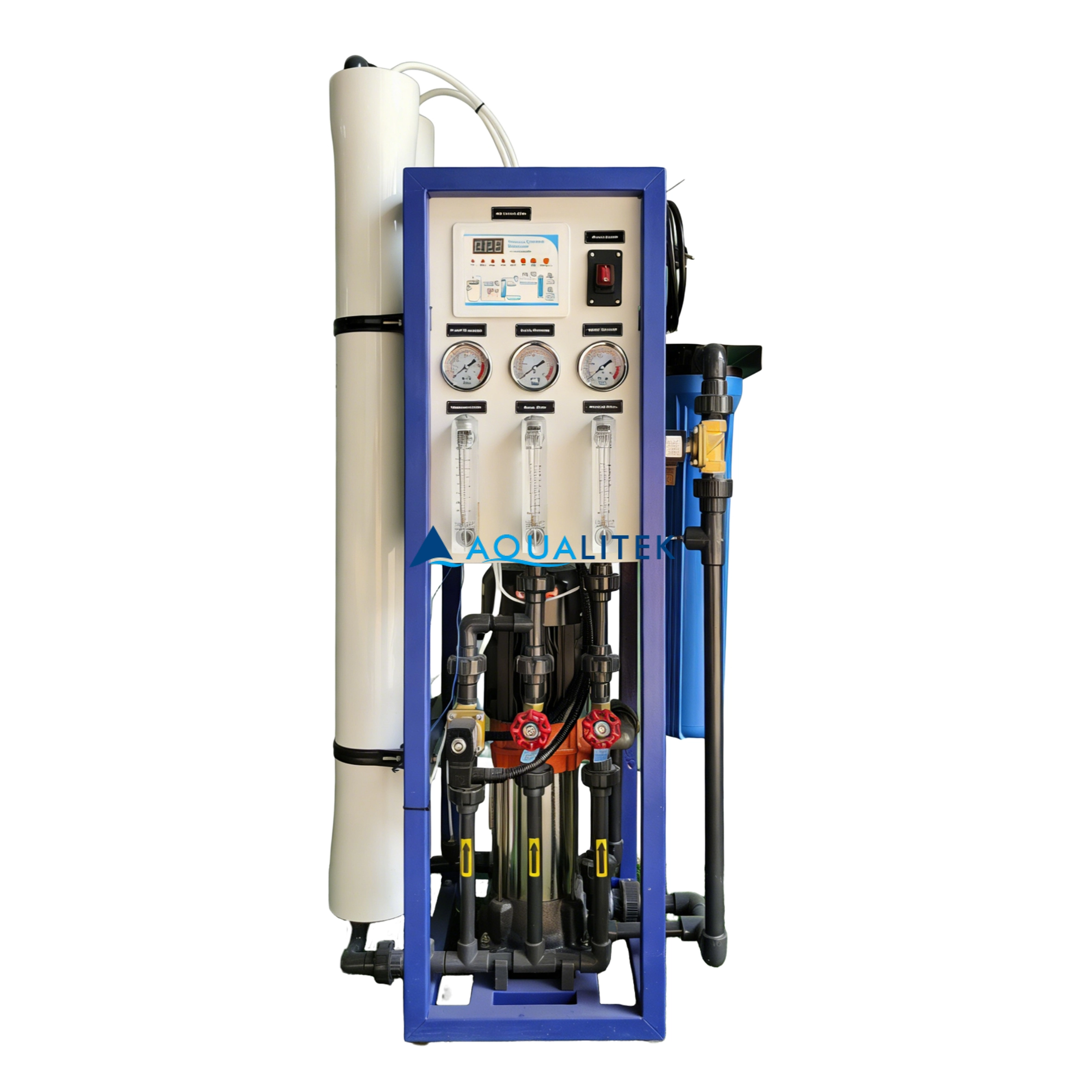
AQUALITEK's 500LPH Panel Mounted Reverse Osmosis Water Purification System delivers reliable 500 LPH RO water production. This compact industrial reverse osmosis unit is ideal for small scale industrial RO needs, ensuring efficient and high-quality purified water in a space-saving design.
© 2026 AQUALITEK. All rights reserved.
AQUALITEK- Aimee Hoo
AQUALITEK - Aimee Hoo