




Energy Efficiency Tips for Commercial Reverse Osmosis Systems
- Design Decisions That Lower Operating Energy
- Choose the right membranes and element staging
- Incorporate energy recovery devices (ERDs)
- Optimize pump selection and hydraulics
- Operational Practices That Reduce Energy Use
- Use PLC control and automated setpoints
- Operate at optimal recovery and flux
- Leverage variable frequency drives (VFDs)
- Pretreatment, Cleaning and Maintenance to Preserve Efficiency
- Effective pretreatment to minimize fouling
- Scheduled cleaning and monitoring to maintain low TMP
- Real-time sensors and diagnostics
- System-Level Strategies, Economics and Site Planning
- Match system configuration to duty cycle
- Energy audit and continuous improvement
- Cost-benefit table: common upgrades
- Implementation Roadmap and Monitoring
- Stepwise retrofit approach
- Key performance indicators (KPIs) to track
- Regulatory and quality considerations
- FAQ — Energy Efficiency & the 30TPH Industrial RO System
- Q: How much energy can I expect to save by adding an ERD to a commercial RO?
- Q: What is a reasonable target for specific energy consumption (kWh/m3) for an industrial RO?
- Q: How often should membranes be cleaned to maintain energy efficiency?
- Q: Will adding VFDs harm membrane life?
- Q: Is the 30TPH Industrial Reverse Osmosis (RO) System suitable for municipal applications?
- Q: What standards should I follow to ensure safe and efficient operation?
Optimizing energy consumption for a commercial reverse osmosis system requires a combination of right-sized equipment, smart controls, and water-quality driven operational tactics. Energy use depends on feedwater salinity, system recovery, plant layout, and local conditions — so strategies that combine energy recovery, efficient pumping, PLC-based control and proactive pretreatment deliver the fastest measurable savings across different locations and scales.
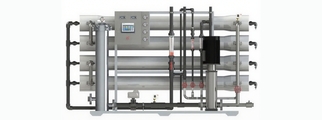
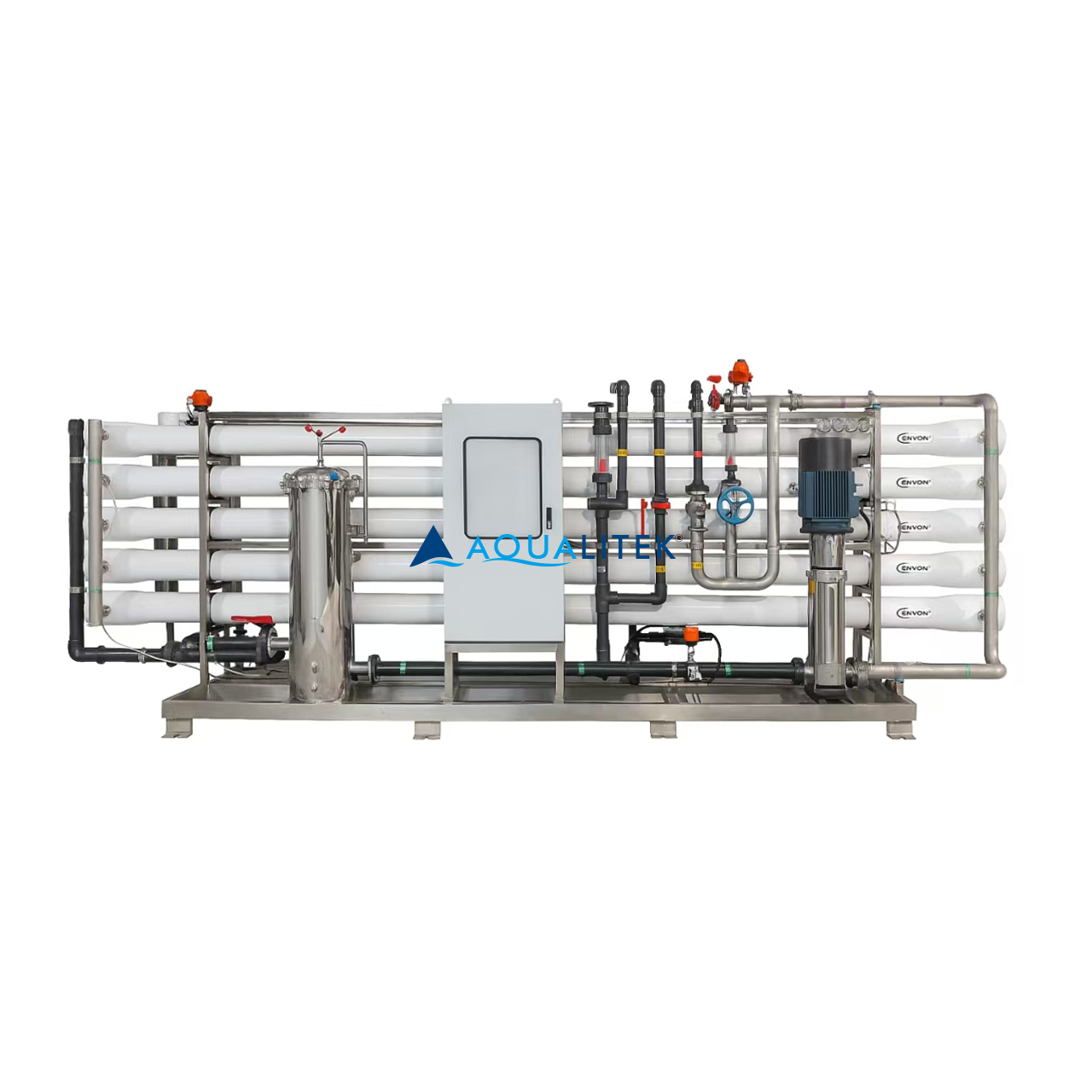
30TPH Industrial Reverse Osmosis (RO) System designed for industrial and municipal water treatment. High salt rejection, energy-efficient design, PLC control, and customizable configuration.
Design Decisions That Lower Operating Energy
Choose the right membranes and element staging
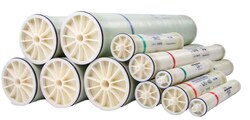
Membrane selection directly impacts transmembrane pressure (TMP) and thus pump power. For a commercial reverse osmosis system, favor high-permeability, low-fouling brackish RO membranes when feedwater salinity allows — they reduce feedpressure for the same permeate flow. Consider element staging (multiple pressure vessels in series) to balance flux and pressure across the train and avoid overpressurizing early-stage membranes. Manufacturers publish permeability and salt rejection curves you can use to model expected feed pressures at site operating temperatures.
Incorporate energy recovery devices (ERDs)
Energy recovery devices such as pressure exchangers or isobaric ERDs recover hydraulic energy from brine concentrate and reuse it on the feed side, cutting net energy consumption significantly. For brackish and high-recovery commercial RO plants, ERDs commonly reduce specific energy consumption by 20–60% depending on recovery and feed TDS. Use an ERD matched to your flow rate and recovery targets to avoid efficiency losses from improper sizing.
Optimize pump selection and hydraulics
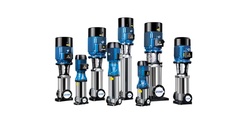
High-efficiency multistage pumps with optimized impellers and minimal piping losses can reduce motor energy use. Minimize friction head by designing straight, short piping with gradual bends, proper pipe diameters and quality fittings. Pay attention to Net Positive Suction Head available (NPSHa) to avoid cavitation, which reduces pump efficiency and increases maintenance costs.
Operational Practices That Reduce Energy Use
Use PLC control and automated setpoints
A programmable PLC control system enables dynamic optimization: adjust recovery, feed flow, and pump speeds based on real-time feedwater quality and demand. The 30TPH Industrial Reverse Osmosis (RO) System supports PLC-based control, which can automate transitions, stage up/down equipment, and run diagnostic routines that maintain efficient operation while reducing human error.
Operate at optimal recovery and flux
Higher recovery yields more product water per unit energy but can increase fouling and require higher pressure. Determine a site-specific optimal recovery that balances permeate production against elevated TMP and chemical use. Likewise, control membrane flux to avoid boundary-layer concentration polarization — lower flux avoids rapid fouling and reduces overall energy used for cleaning and downtime.
Leverage variable frequency drives (VFDs)
Installing VFDs on feed and booster pumps allows precise speed control and significant energy savings when demand fluctuates. Instead of throttling valves (which waste energy), vary pump speed to match flow, especially during intermittent production periods. VFDs also enable soft-starts and reduce mechanical stress on equipment.
Pretreatment, Cleaning and Maintenance to Preserve Efficiency
Effective pretreatment to minimize fouling
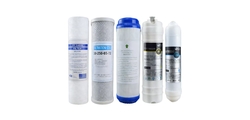
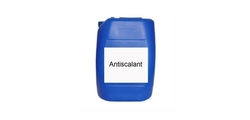
Pretreatment tailored to your feedwater (e.g., multimedia filtration, cartridge filters, activated carbon, antiscalant dosing, softening) reduces suspended solids, organics and scale-forming ions that raise TMP and energy use. Regular monitoring of silt density index (SDI) or turbidity upstream of membranes helps schedule maintenance before performance degrades. Refer to industry guidance from organizations like the American Water Works Association (AWWA) for pretreatment best practices: AWWA.
Scheduled cleaning and monitoring to maintain low TMP
Establish a cleaning-in-place (CIP) program driven by normalized performance metrics such as specific energy consumption (kWh/m3), permeate flow decline and salt passage. Frequent, targeted cleaning maintains membrane permeability and avoids the nonlinear energy penalty of heavily fouled membranes. Track membrane performance and plan replacements when cleaning no longer restores original flux.
Real-time sensors and diagnostics
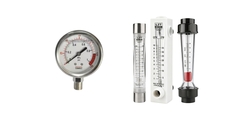
Install pressure transducers, flow meters, conductivity sensors and online turbidity/SDI monitoring to detect trends early. Real-time alarms for rising feed pressure, declining flux, or increasing salt passage enable operators to react before energy penalties escalate. Data logging integrated with PLC/SCADA systems helps refine operational setpoints for long-term efficiency.
System-Level Strategies, Economics and Site Planning
Match system configuration to duty cycle
Designing the commercial reverse osmosis system to match production schedules lowers idle run-hours and avoids inefficiencies. For plants with variable demand, modular skids or parallel trains allow part-loading without penalizing energy per m3. The 30TPH Industrial Reverse Osmosis (RO) System's customizable configuration supports modular expansion and staged operation to align production with demand.
Energy audit and continuous improvement
Conduct a baseline energy audit to identify the highest return efficiency upgrades. Typical items include ERD retrofit evaluation, pump and motor replacements, VFD additions, and automation upgrades. After implementing measures, track metrics such as kWh/m3, cost per cubic meter, and overall plant availability to quantify ROI and prioritize future improvements. International organizations and research on membrane desalination provide useful benchmarks (see International Desalination Association): IDA.
Cost-benefit table: common upgrades
| Upgrade | Typical Energy Reduction | Estimated Payback | Notes |
|---|---|---|---|
| Energy Recovery Device (ERD) | 20–50% (site dependent) | 1–3 years | Best for high recovery, higher feed salinity; careful sizing required |
| Variable Frequency Drives (VFDs) on pumps | 10–40% | 6 months–2 years | Great for variable load; reduces mechanical stress |
| High-efficiency pumps & motors | 5–15% | 1–4 years | Combine with hydraulic optimization for best results |
| Improved pretreatment (antiscalant, filters) | Indirect: reduces energy penalty over time | Varies | Reduces cleaning demand and maintains low TMP |
Note: Energy reduction ranges are typical estimates; site-specific modeling is recommended. For general context on energy in membrane processes and desalination, review the overview at Wikipedia: Reverse osmosis and the WHO guidelines on water treatment energy considerations: WHO Drinking-water Guidelines.
Implementation Roadmap and Monitoring
Stepwise retrofit approach
Start with low-cost, high-impact measures: tightening operating procedures, tuning setpoints in the PLC, adding monitoring, and optimizing pretreatment. Next, install VFDs and perform hydraulic corrections. Finally, evaluate ERD installation or membrane element upgrades. This phased approach reduces capital exposure and provides measurable intermediate returns.
Key performance indicators (KPIs) to track
Essential KPIs include specific energy consumption (kWh/m3), feed pressure (bar), permeate conductivity (µS/cm), recovery (%), and downtime. Record these daily and analyze trends monthly. Use KPIs to decide when to clean, when to replace membranes, and when to escalate capital projects.
Regulatory and quality considerations
Energy improvements must not compromise product water quality or regulatory compliance. Ensure any changes maintain compliance with local and international standards for treated water. For authoritative standards and technical guidance, consult industry groups such as the American Water Works Association and regional regulatory agencies: AWWA.
FAQ — Energy Efficiency & the 30TPH Industrial RO System
Q: How much energy can I expect to save by adding an ERD to a commercial RO?
A: ERDs commonly reduce net energy use by 20–50% depending on feed salinity, recovery rate and system layout. Brackish-water systems at moderate recoveries typically see substantial savings; perform a site-specific engineering assessment to estimate exact savings and payback.
Q: What is a reasonable target for specific energy consumption (kWh/m3) for an industrial RO?
A: Targets vary with feedwater TDS and temperature. Brackish RO systems commonly operate between roughly 0.5–2.0 kWh/m3 after ERD optimization; seawater systems are higher. Use baseline measurements for your plant to set realistic, site-specific targets.
Q: How often should membranes be cleaned to maintain energy efficiency?
A: Cleaning frequency depends on fouling rates; many plants clean on scheduled intervals (monthly to quarterly) or when TMP or normalized permeate flow reaches predetermined thresholds. Use SDI/turbidity monitoring and normalized performance indicators to trigger cleanings rather than calendar-based rules alone.
Q: Will adding VFDs harm membrane life?
A: No — VFDs typically improve operation by reducing start/stop stresses and allowing soft ramps. Proper commissioning is required to avoid pressure surges. VFDs can extend equipment life when integrated with PLC control and pump protection schemes.
Q: Is the 30TPH Industrial Reverse Osmosis (RO) System suitable for municipal applications?
A: Yes. The 30TPH system is designed for industrial and municipal water treatment, offering high salt rejection, energy-efficient design, PLC control, and customizable configuration to meet diverse municipal feedwater and demand profiles.
Q: What standards should I follow to ensure safe and efficient operation?
A: Follow local drinking water regulations and international guidance where relevant. Industry best practices and standards are available from organizations such as the American Water Works Association (AWWA), the International Desalination Association (IDA), and WHO technical guidelines on drinking water (WHO).
Want to assess energy-saving opportunities for your site or learn how the 30TPH Industrial Reverse Osmosis (RO) System can help lower operating costs? Contact our engineering team for a plant-specific energy audit or view the product details and request a quote.
Improve Tap Water Taste: Best Purification Tips
Top Mistakes When Buying a Water Purification System: Practical Buyer’s Guide
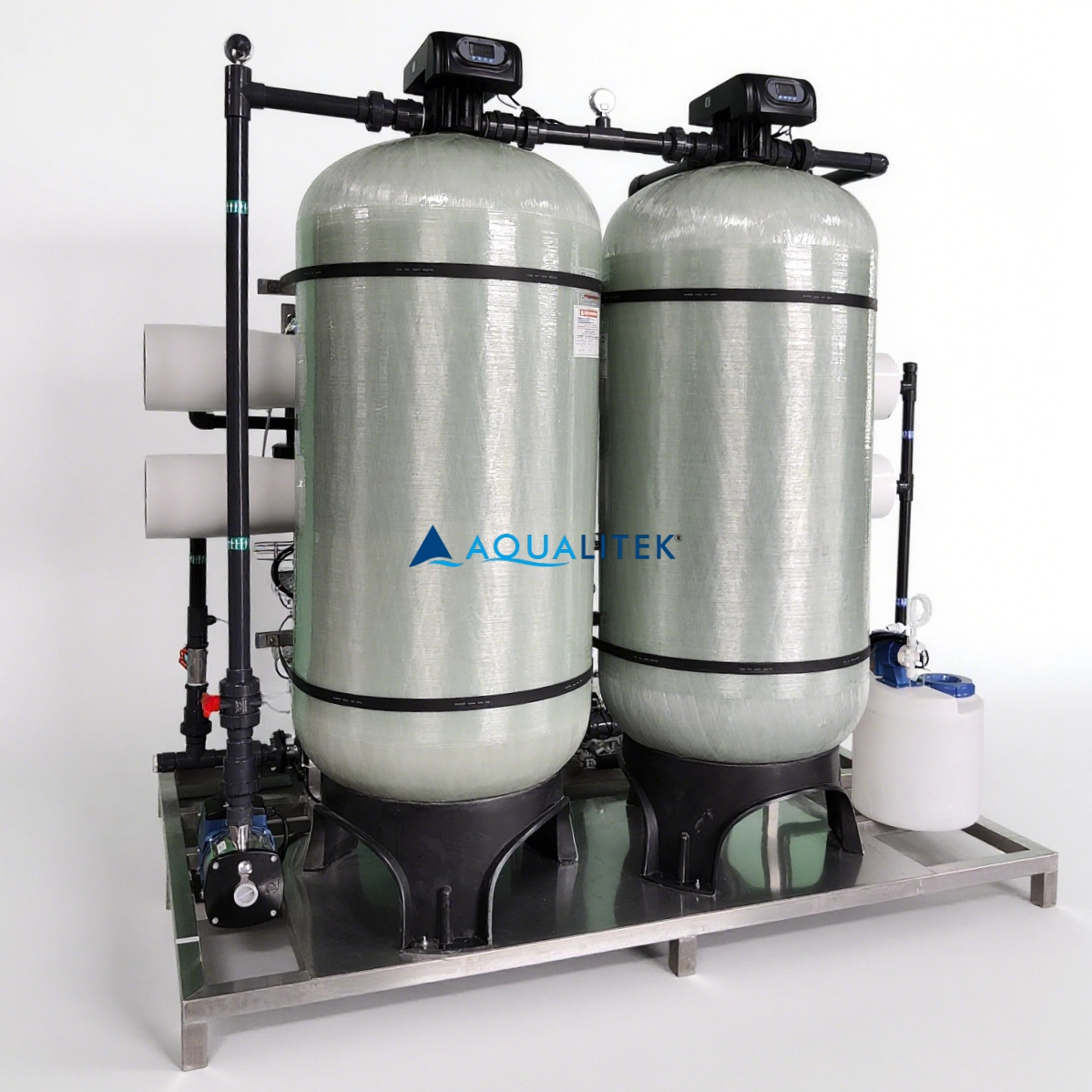
How 4TPH Industrial RO System Improves Plant Water Quality
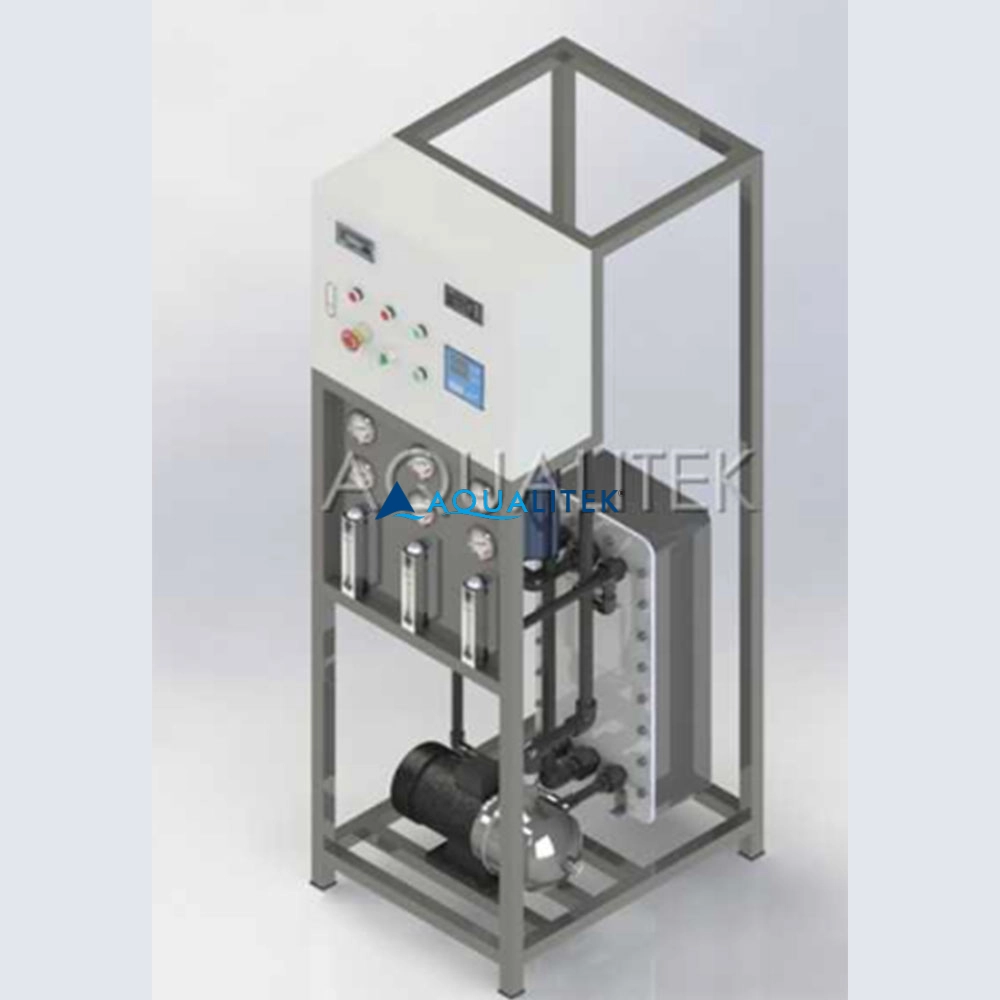
Maintenance and Lifecycle Considerations for Electrodeionization
Solutions
Can I use AQT’s water treatment systems for seawater desalination?
Yes! We provide seawater desalination systems using advanced reverse osmosis (RO) technology, specifically designed to convert seawater into fresh, drinkable water. These systems are ideal for coastal communities, marine applications, and industrial desalination projects.
FAQ-aqualitek
What industries does AQT serve?
We provide water treatment solutions for a wide range of industries, including:
Industrial Manufacturing – Process water treatment, cooling water, and boiler feed.
Hospitality & Commercial – Hotels, restaurants, and office buildings.
Residential Applications – Drinking water purification and softening.
Healthcare & Pharmaceuticals – Ultra-pure water for laboratories and hospitals.
Municipal & Public Utilities – Water supply and wastewater treatment.
Food & Beverage Processing – Filtration for beverage production and food safety.
Blog
Do softener systems remove iron or chlorine?
Not typically. If your water contains iron, manganese, or chlorine, consider a dual-system setup or add specialized pre-filters.
Is softened water safe to drink?
Yes, but those on low-sodium diets should consider potassium-based softeners or install a separate drinking water filter.
Membrane Water Treatment Systems
How long do membranes last?
With proper maintenance and CIP, UF and RO membranes can last 3–5 years, depending on feed water quality and system design.
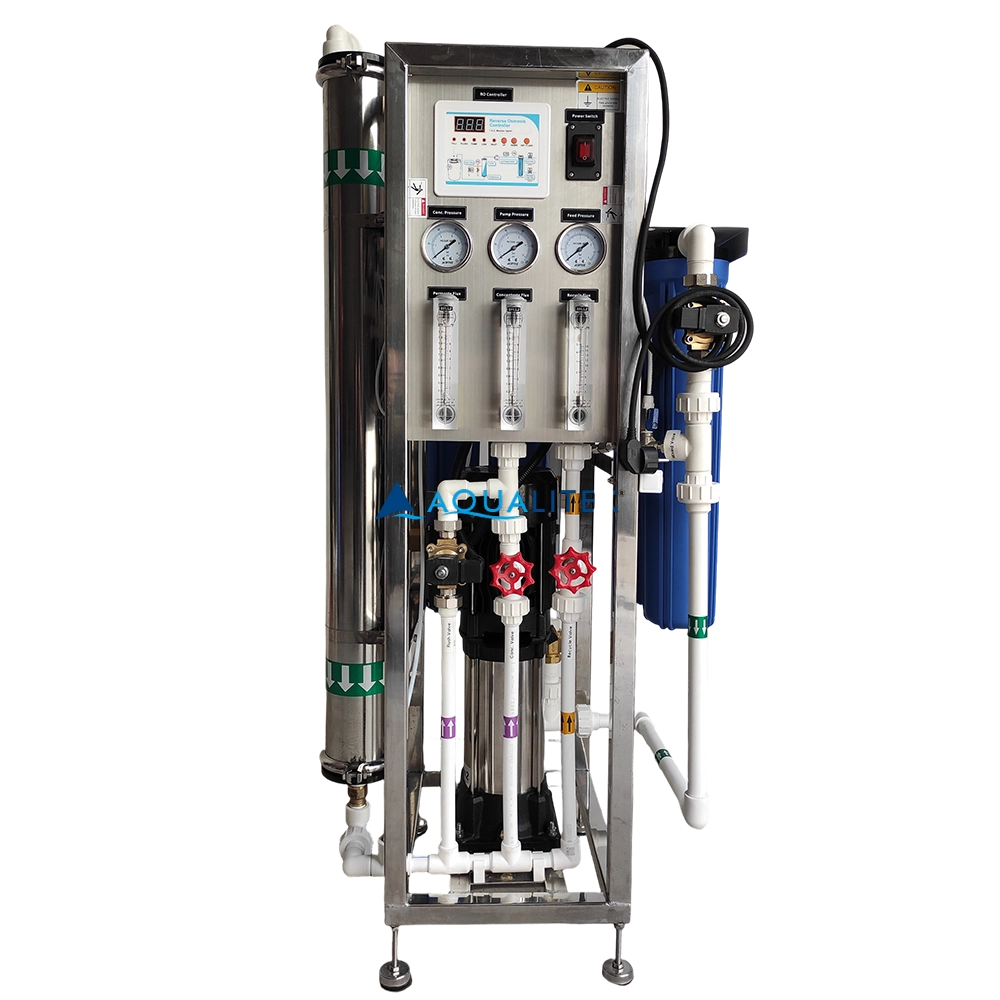
500 LPH Reverse Osmosis (RO) Water Purification Machine TWV - 412
Our 500 LPH Reverse Osmosis (RO) System is engineered to provide high-quality purified water for commercial applications. Designed with advanced RO technology, durable components, and a user-friendly interface, this system ensures consistent performance, low maintenance, and long-term reliability.
With its compact design and robust skid-mounted frame, it’s an excellent choice for businesses that demand efficiency and quality in water purification.
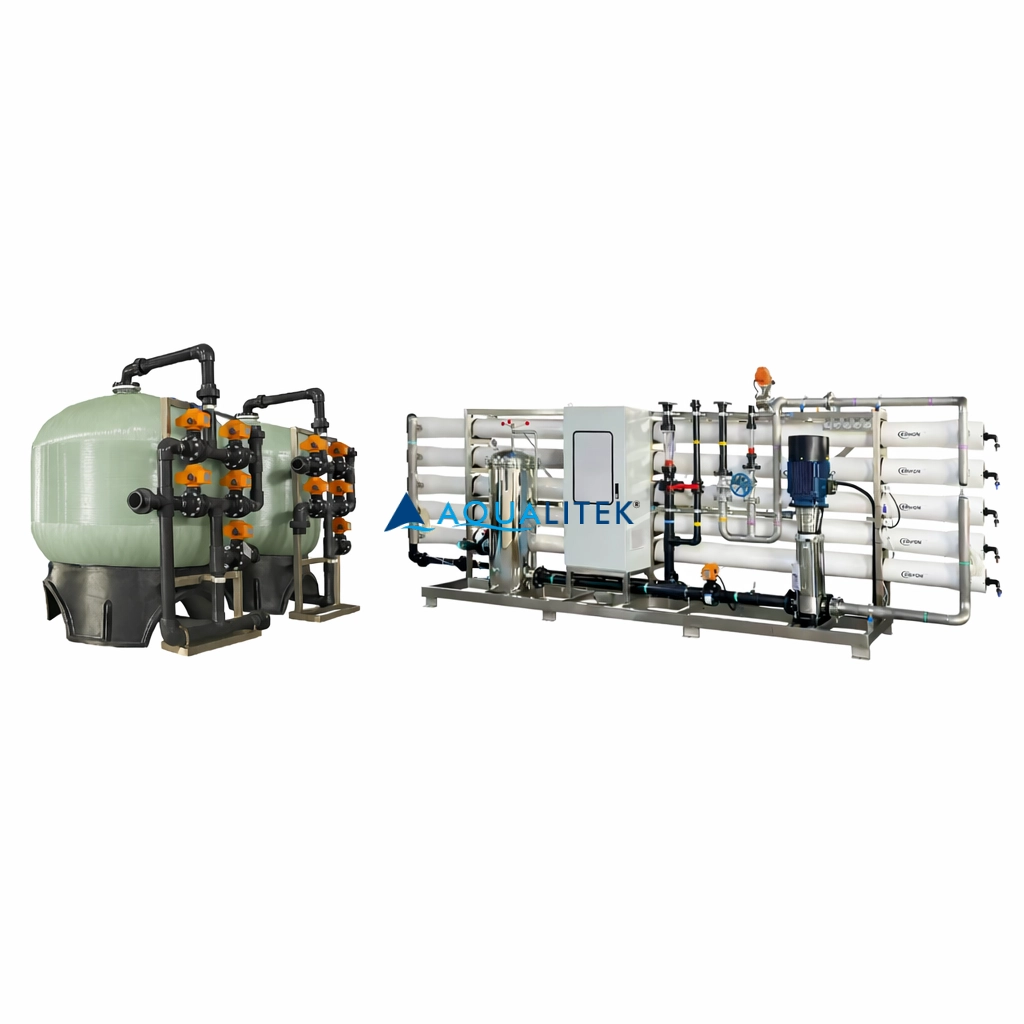
30TPH Industrial Reverse Osmosis (RO) System
30TPH Industrial Reverse Osmosis (RO) System designed for industrial and municipal water treatment. High salt rejection, energy-efficient design, PLC control, and customizable configuration.
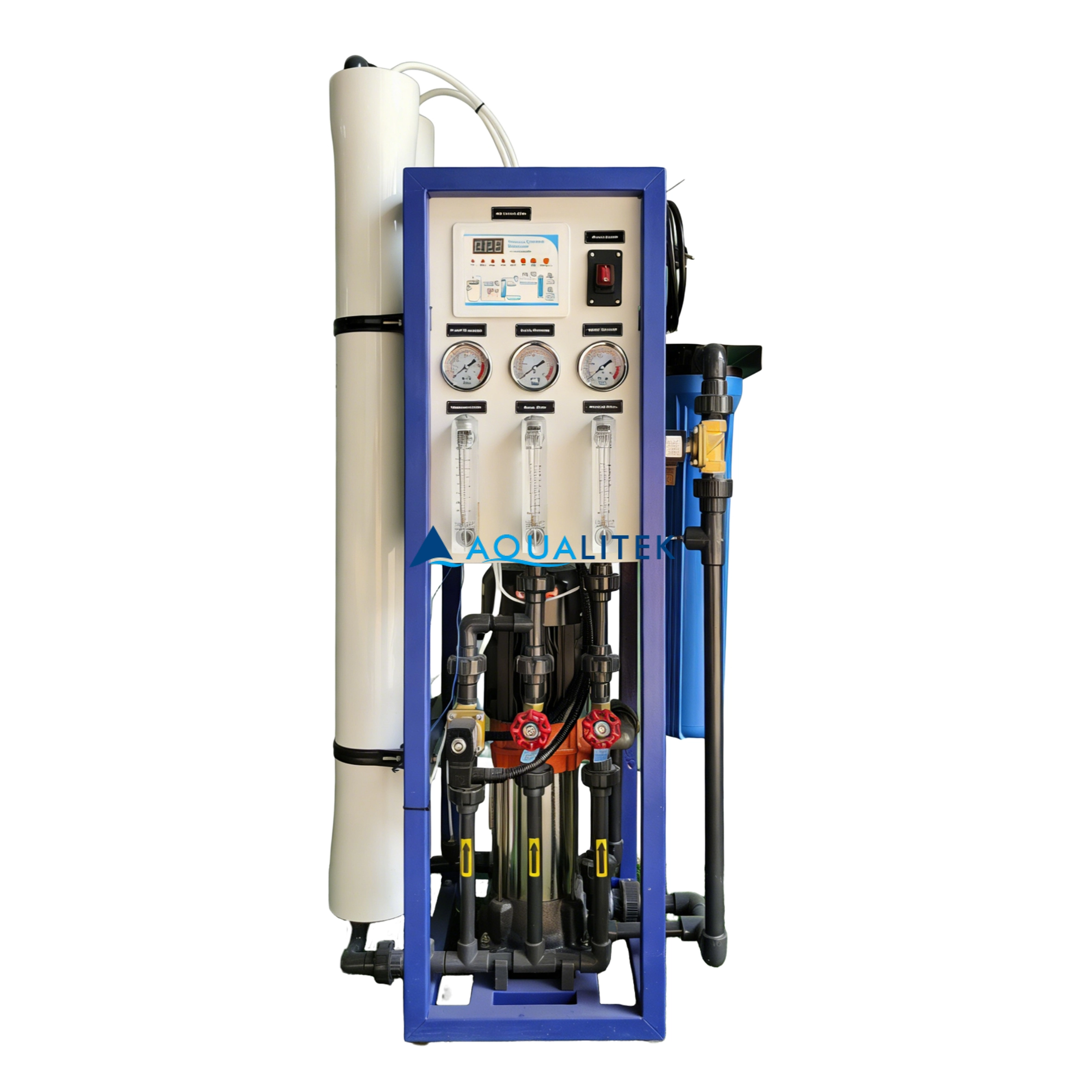
500LPH Panel Mounted Reverse Osmosis Water Purification System
AQUALITEK's 500LPH Panel Mounted Reverse Osmosis Water Purification System delivers reliable 500 LPH RO water production. This compact industrial reverse osmosis unit is ideal for small scale industrial RO needs, ensuring efficient and high-quality purified water in a space-saving design.
Electrodeionization Systems to Get UltraPure Water
Electrodeionization (EDI) system is an advanced water purification technology that combines ion exchange and electrochemical processes to produce ultra-pure water. Unlike traditional deionization methods, which rely on chemical regeneration, EDI utilizes electric fields to drive the movement of ions through ion-exchange membranes, effectively removing dissolved salts and other ionic contaminants.
This process is continuous and does not require the use of chemicals for regeneration, making it an environmentally friendly and cost-effective solution for producing high-quality deionized water. EDI systems are widely used in applications requiring ultrapure water, such as in the pharmaceutical, semiconductor, power generation, and biotechnology industries, as well as for laboratory use.
By offering high-purity water without the need for chemical regeneration, EDI systems provide a sustainable, efficient, and reliable alternative to traditional deionization methods, making them an ideal choice for industries where water quality and process control are critical.
Request More Information
Contact us today for product catalogs, customization options, and a free quotation designed for your business needs.
Rest assured that your privacy is important to us, and all information provided will be handled with the utmost confidentiality.
© 2026 AQUALITEK. All rights reserved.
AQUALITEK- Aimee Hoo
AQUALITEK - Aimee Hoo